Exhibition preview·Global
$46M Rockwells and a $1bn Museum: Illustration Art Moves From the Margins to the Mainstream
Once dismissed as commercial publishing work, original illustration art now commands millions at auction and has its own dedicated museums, led by the $1 billion Lucas Museum of Narrative Art in Los Angeles and record prices for Norman Rockwell and his peers.
The market for original illustration art has travelled far in sixty years. In the 1960s, pictures made for children's books, magazine covers and advertising were lifted out of their publishing context and sold simply as paintings. Today they fetch millions at auction, fill dedicated museums, and are collected by some of the art world's most powerful figures.
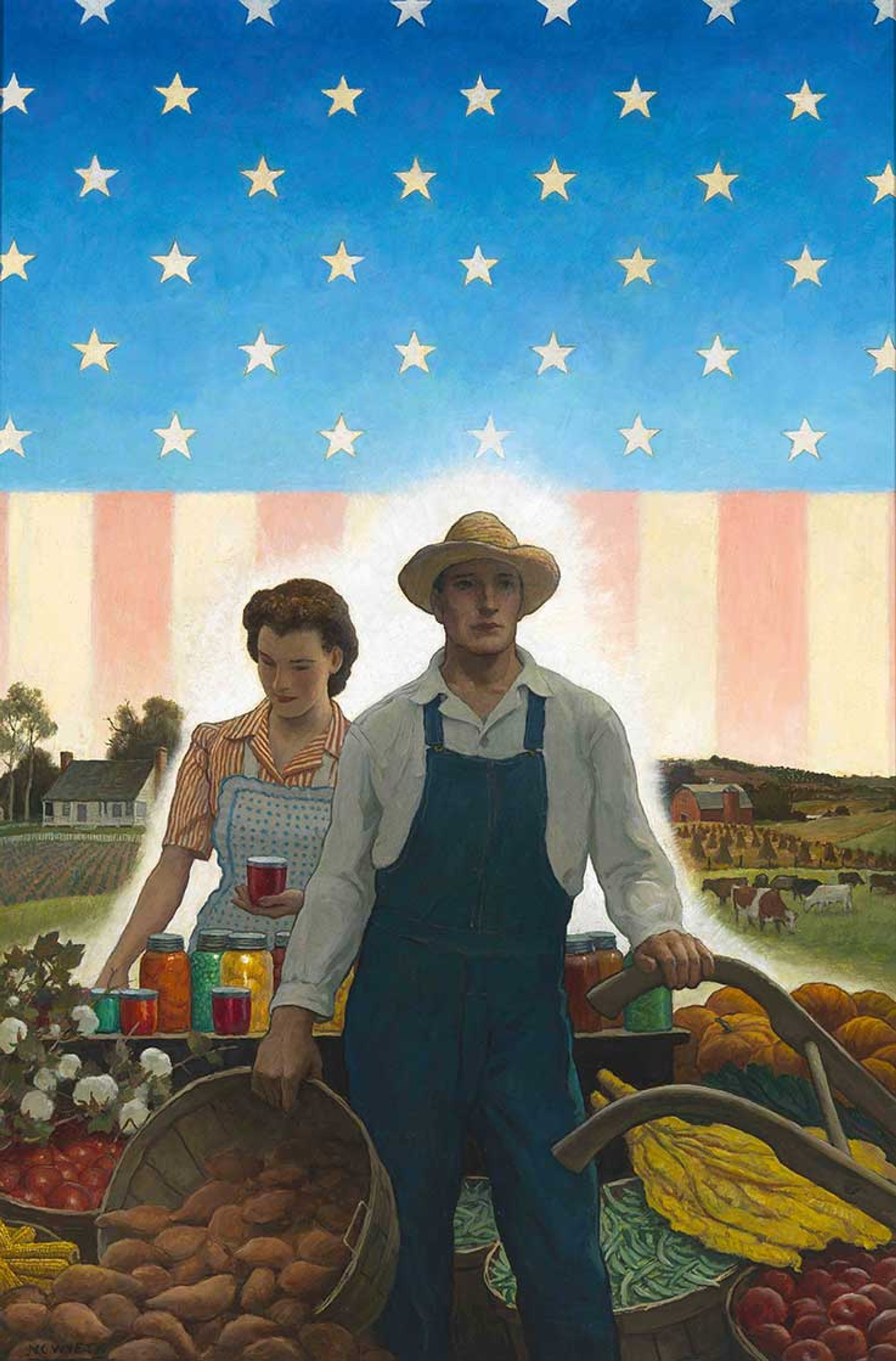
The clearest sign of the shift is the Lucas Museum of Narrative Art in Los Angeles, George Lucas's $1 billion institution devoted to children's book art, fantasy art, cartoons, movie posters, film stills and magazine illustration, plus fine art by Paul Cadmus, Diego Rivera and Carrie Mae Weems. Lucas and Steven Spielberg have collected illustrators' original art for decades, and many others have followed suit. Rockwell leads the market: his 1951 Saturday Evening Post cover Saying Grace made $46 million at Sotheby's in 2013, and his 1957 painting The Rookie sold for $22.5 million at Christie's a year later. Maxfield Parrish's Daybreak earned $7.6 million in 2006 and N.C. Wyeth's Portrait of a Farmer made $5.9 million in 2018.
Museums have followed the money. Alongside the Lucas Museum sit the Brandywine River Museum of Art, the Norman Rockwell Museum, the Eric Carle Museum of Picture Book Art and the National Museum of American Illustration, founded in 1998 by dealer Judy Goffman Cutler, who says she sold Lucas hundreds of works. The New Britain Museum of American Art holds almost 1,800 works in its illustration collection.
Yet the field's new prominence comes with a tension. Works by Rockwell and his peers remain largely confined to specialist museums rather than hung in American art galleries, even though the Metropolitan Museum of Art and the Museum of Fine Arts, Boston own Parrish paintings they do not display. The Art Institute of Chicago and the Crystal Bridges Museum of American Art are exceptions, hanging Rockwell alongside canonical American painting. As one dealer put it, the greatest test for illustration art is no longer winning record prices, but earning a secure place inside the art historical canon.