Exhibition preview·New York
'Shaping Time': Ibrahim Said Opens New York Solo Show Steeped in Ancient Craft
Ibrahim Said's new solo exhibition at Yossi Milo, covered October 22, draws on Fustat ware and ancient Egyptian and Islamic pottery traditions, informed by his 18-month artisan residency with the Met and Vacheron Constantin.
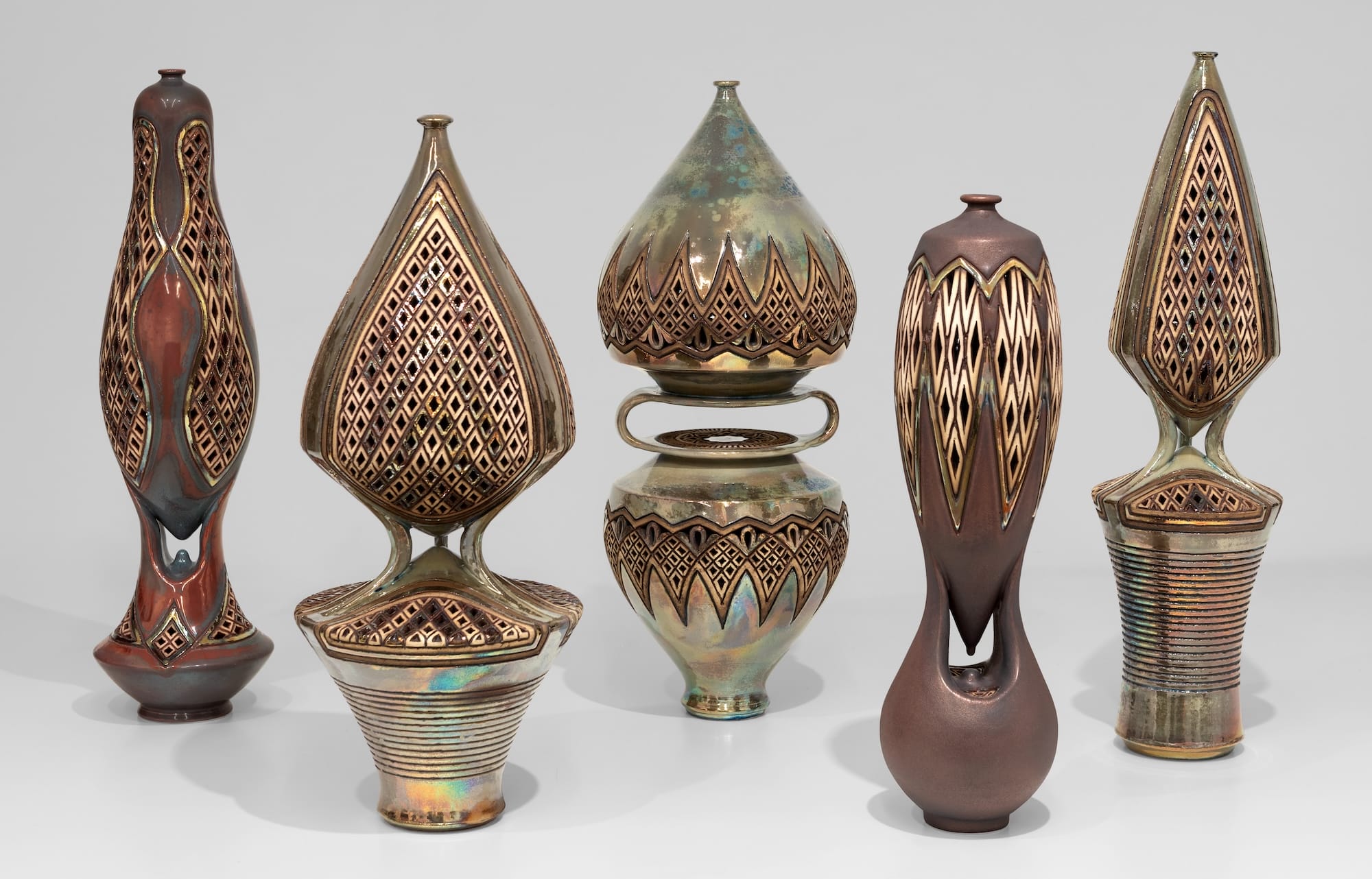
Egyptian-American ceramicist Ibrahim Said has opened a solo exhibition at Yossi Milo in New York that brings centuries of pottery tradition into the present. Shaping Time presents new ceramic sculptures rooted in the techniques and motifs of Islamic and ancient Egyptian craft, reworked through a contemporary sculptural language.
Said was born in Old Cairo and grew up watching the ceramics industry at work in the dozens of workshops that make up the district's Pottery Village. The exhibition draws on Fustat ware - the luster-glazed pottery excavated in the historic district of Fustat, once the Islamic capital of Egypt - where incised decoration and iridescent surfaces carry centuries of craft knowledge. In pieces such as Delta Vase (2025), a 24-inch white earthenware work, Said expands the vessel into sculptural territory, linking ceramic bodies with concave pillars and curved bands.
The new body of work was shaped in part by Said's completion of the inaugural Metropolitan Museum of Art and Vacheron Constantin Artisan Residency, an 18-month program that gave him access to the Met's collections. The residency's influence is visible in the work's dialogue with ancient Egyptian and Islamic objects - and in the discipline of labor-intensive process itself.
For Said, time is not a fixed march from past to future but a layered condition in which histories and imagined futures continually overlap, as the gallery describes his thinking. His works carry latticework and geometric patterning that recall both Islamic ornament and the precision of watchmaking, while the slowness of hand-building becomes part of the meaning. The sculptures look backward and forward at once, treating time as material - suggesting that shaping an object can also be a way of shaping our relationship to time.