Profile·San Francisco
San Francisco Painter Hiroshi Sato Turns Sincere Realism Against the AI Age
In a new Hyperallergic profile, San Francisco painter Hiroshi Sato argues that careful, figurative painting is an antidote to a world losing touch with what is real, drawing on Bay Area figurative traditions and Hopper-like scenes of contemporary life.
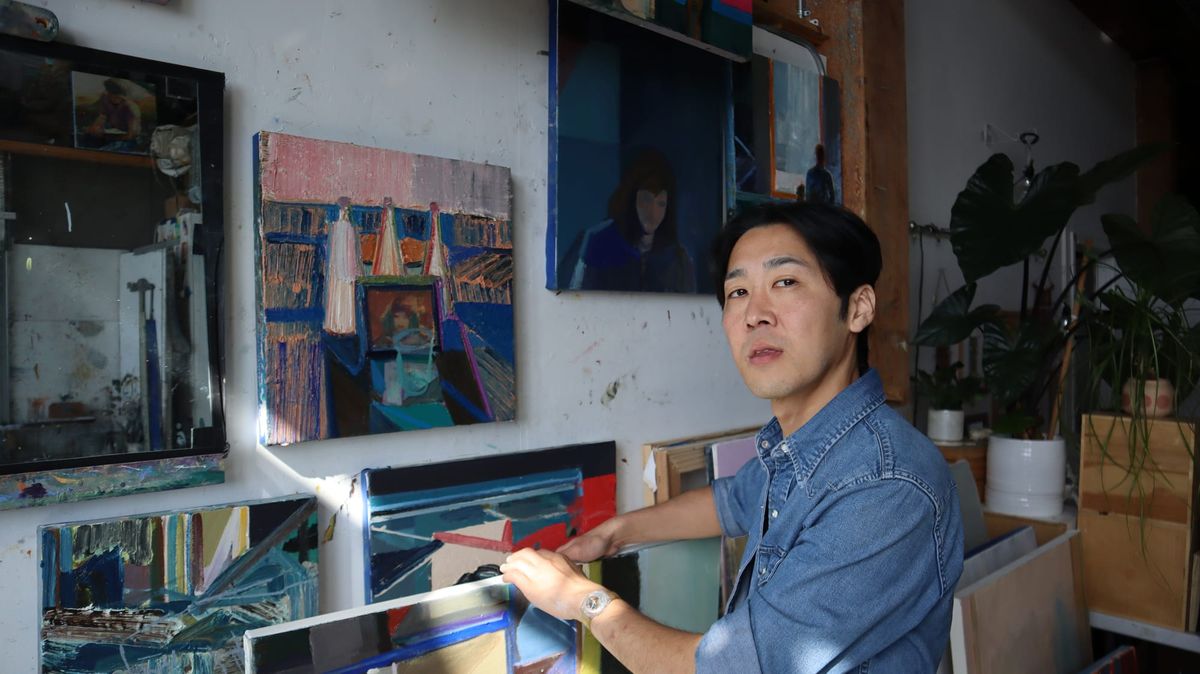
What does reality look like in the age of artificial intelligence? For San Francisco painter Hiroshi Sato, the answer is to paint it carefully, by hand, in oil. In a new profile, he presents representational figurative painting as an antidote to losing touch with what is real, blending Bay Area Figurative Movement stylings with Hopper-like compositions to make uneasy portraits of life today.
Sato was born in Japan in 1987 and spent his childhood in Tanzania, where his parents worked for the United Nations, before returning to Japan for secondary school. He later trained in San Francisco, drawing on influences from Diebenkorn, Park and Avery to Vermeer, Degas, Wyeth and Chuck Close, alongside traditional Japanese ideas about composition. He works from a cramped studio in the Mission District, one of the last such buildings in a neighbourhood artists were pushed out of during the dot-com boom.
He credits the pandemic with shifting his outlook on politics and painting. Before Covid, he says, his practice was not about subject matter at all, but the years since have made his pictures' content central. He calls insincere ironic detachment abundant, arguing that sincere depictions of the present are now the niche position. His figures are deliberately nonspecific, blurring lines of gender, race and class so viewers project their own assumptions onto them.
Recent work includes Potato Chip Board (2026), and his newest paintings, Cumulus, form his sixth solo show with Marrow Gallery in San Francisco. A recent show, Grounds, at Dominican University of California, drew on an Ansel Adams archive and Adam Curtis's documentary Hypernormalisation to examine campus politics, online alienation and fine art in America.
His work has been shown widely across the United States and Britain, and he was most recently artist in residence at Cheekwood in Nashville. His paintings sit in public collections including Cheekwood and Ionis Pharmaceuticals, and he was a finalist for the Rise Art Prize in 2018. The profile casts him as a painter betting that looking closely, and painting what he sees without irony, is itself resistance.