Exhibition preview·Amsterdam
Half a Century of Subway Graffiti: Henry Chalfant's Archive Lands in Northern Europe for the First Time
More than 800 photographs by Henry Chalfant — the documentarist who spent the 1970s and 1980s capturing New York's painted subway trains — are on view at Amsterdam's STRAAT Museum in 'Art Is Not A Crime', running until 13 March 2027. It is only the second time his complete archive has been shown outside the US, and its Northern European debut, with some images reproduced at the scale of the original trains.
When Henry Chalfant started photographing New York's subway graffiti in the early 1970s, he was not thinking about art history. He was fascinated by the act of catching something with a habit of disappearing — likening it to 'big game hunting', the pursuit of a rare trophy before it vanished down the track or was buffed away by the transit authority.
More than four decades on, that obsessive documentation has become the visual record of an entire culture. Chalfant co-produced Tony Silver's landmark 1983 documentary Style Wars on New York graffiti and hip-hop, and a year later published Subway Art with the photographer Martha Cooper — a book that became known as the bible of graffiti and inspired a generation of writers around the world. His archive now holds more than 800 photographs.
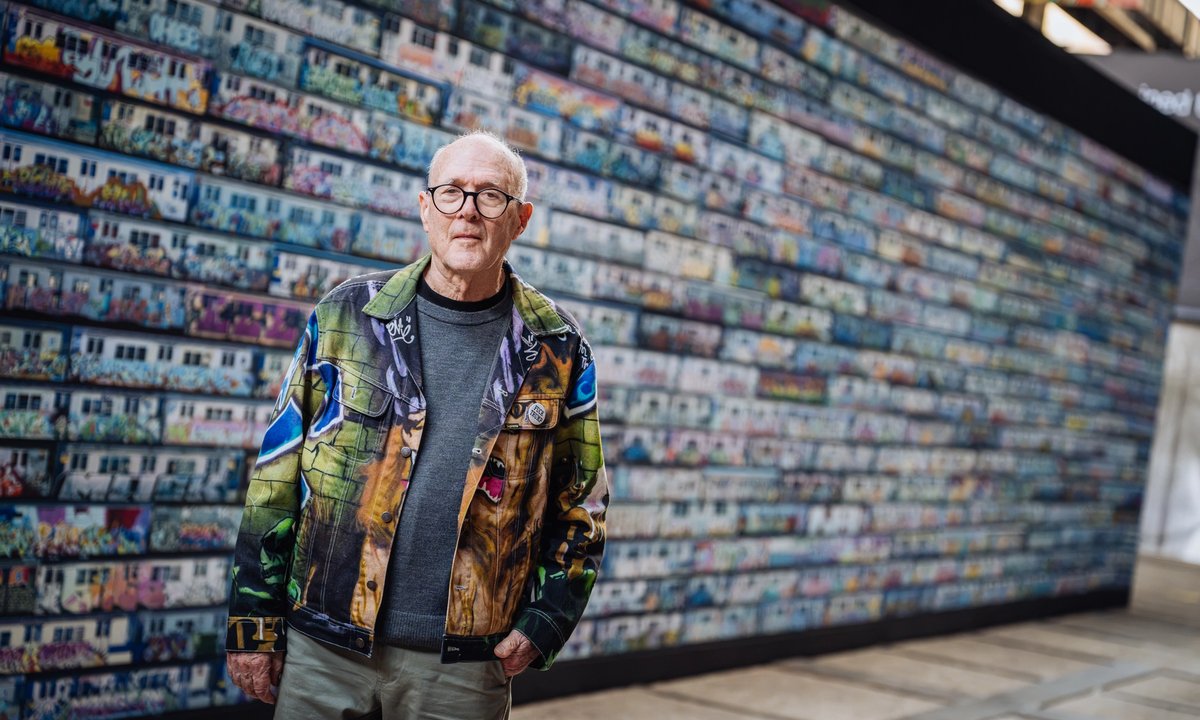
The archive is the subject of Art Is Not A Crime at STRAAT Museum in Amsterdam, a vast warehouse space devoted to street art, on view until 13 March 2027. It is only the second time Chalfant's complete archive has been shown outside the United States, and its debut in Northern Europe. Some of the subway photographs have been reproduced at the scale of the original trains — more than three metres high and, in some cases, 25 metres wide.
Chalfant himself was an outsider to the culture he documented. A Stanford-educated sculptor who moved to New York from suburban Pittsburgh in 1973, he was a white, middle-class artist photographing a scene rooted largely in the city's outer boroughs. At first the writers assumed he was a policeman; it took two years before one of them approached him and led him to the 'writer's bench' at 149th Street, where graffiti artists gathered to exchange ideas, watch trains and settle disputes.


