Museum report·Global
The dealer who smuggled looted Mesoamerican antiquities into LA museums gets a reckoning in a new Getty book
A new Getty Research Institute book by Andrew D. Turner, Mary E. Miller, and Khristaan D. Villela traces how dealer Earl Stendahl funneled looted pre-Columbian objects into Los Angeles museums and private collections, including a forged 'King Chak Mool' bought for $10,000 by the Minneapolis Institute of Art.
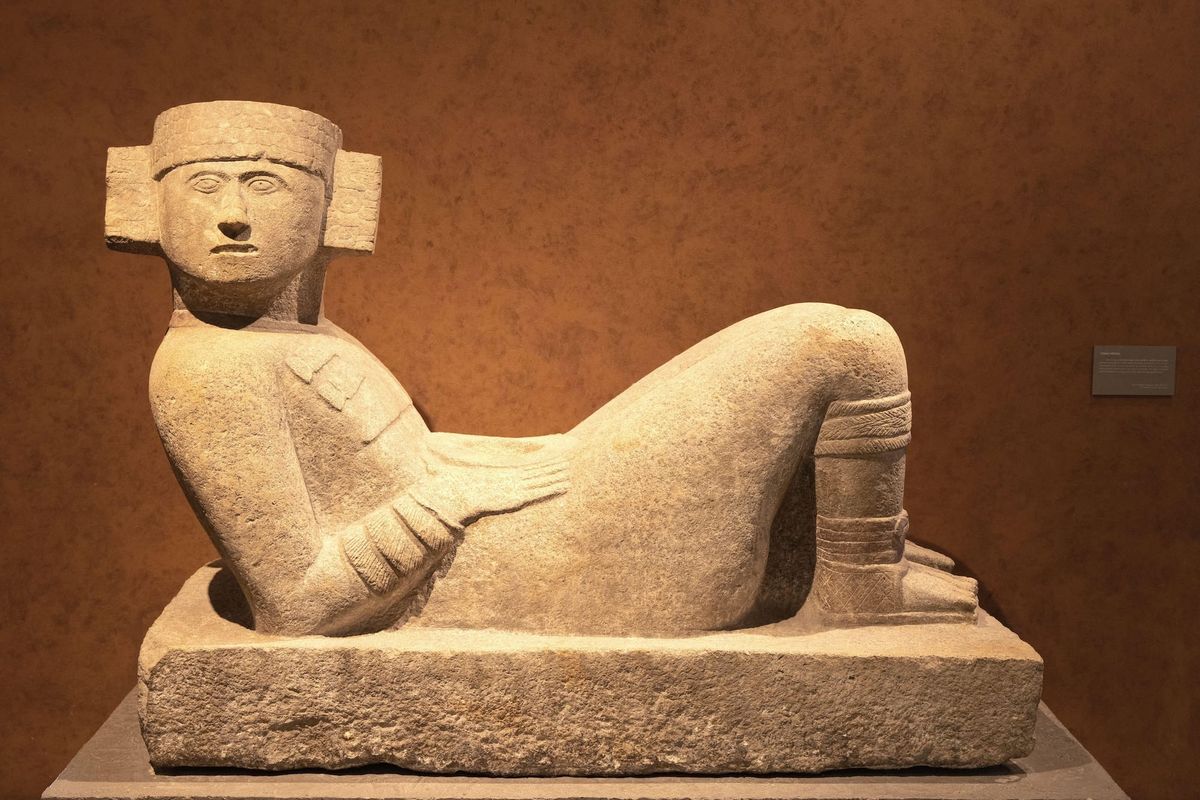
A new book published by the Getty Research Institute pulls back the curtain on one of the most consequential, and least scrutinized, figures in the history of American museum collecting. Artifacts to Art: Collecting Ancient America in Midcentury L.A., by Andrew D. Turner, Mary E. Miller, and Khristaan D. Villela, reconstructs the career of Earl Stendahl, whose galleries supplied Mesoamerican antiquities to museums and collectors across the country at a time when few questions were asked about where the objects came from. Stendahl opened his first gallery at the Ambassador Hotel in 1921, a decade after relocating to California from Wisconsin. Over the following decades he became the leading conduit for ancient American art in Los Angeles, working with Mexican collector Guillermo Echániz and networks of huaqueros, professional looters, who extracted sculpture and ceramics from archaeological sites including Jaina, the Maya burial island off the Yucatán coast. Among his clients were the celebrated collectors Walter and Louise Arensberg, whose holdings eventually seeded major American museum collections. The book documents episodes that still embarrass the institutions involved. In 1947 the Minneapolis Institute of Art paid $10,000 for what was billed as a 'King Chak Mool' — a sum that would be roughly equivalent to a six-figure acquisition today — only for the sculpture to be exposed as a forgery; the museum then toured it around Europe between 1958 and 1960 as though it were genuine. Such episodes, the authors argue, reveal a midcentury art market in which scholarly verification lagged far behind commercial appetite. Stendahl's influence extended beyond the pre-Columbian trade. In 1939 he mounted the only Los Angeles presentation of Picasso's Guernica, keeping the monumental canvas on view for eleven days — a reminder that the same operator who moved looted antiquities also shaped the city's modernist coming-of-age. For readers of Hyperallergic's review by Armando Pulido, the book lands as part of a broader reckoning: as provenance research accelerates and museums confront looted holdings, the comfortable midcentury narrative of the adventurous connoisseur-dealer no longer holds.