Exhibition preview·Hong Kong
Rigged Pinball Machines and the Trap of Labor: Mitchell F. Chan's First Asia Solo Opens in Hong Kong
DE SARTHE Hong Kong opened 'Workers' Playtime,' the first Asian solo exhibition by Toronto-based conceptual artist Mitchell F. Chan, on October 10, 2026, on view through November 21. The gallery has been converted into a game arcade of six interactive sculptures built from pinball components and custom video games: machines designed to demonstrate how labor is made to feel like play.
A Hong Kong gallery has been turned into an arcade where every game is rigged. DE SARTHE opened Workers' Playtime, the first solo exhibition in Asia by Toronto-based conceptual digital media artist Mitchell F. Chan, on October 10, 2026; it runs through November 21. The show consists of six interactive sculptures assembled from electromechanical pinball parts and custom-built video game systems, each one a working demonstration of how the rules of play can double as instruments of social control.
Chan has long used the mechanics of games as a medium for critique, and these new pieces extend that line of work. They invite viewers to play, then lock them into the role of ineffectual laborers: the mechanisms deny the user's agency while demanding relentless effort. The point is not metaphorical. By making work feel like play, the systems on display expose the loop of late-capitalist labor functioning exactly as designed, reinforcing the structure it pretends to let you escape.
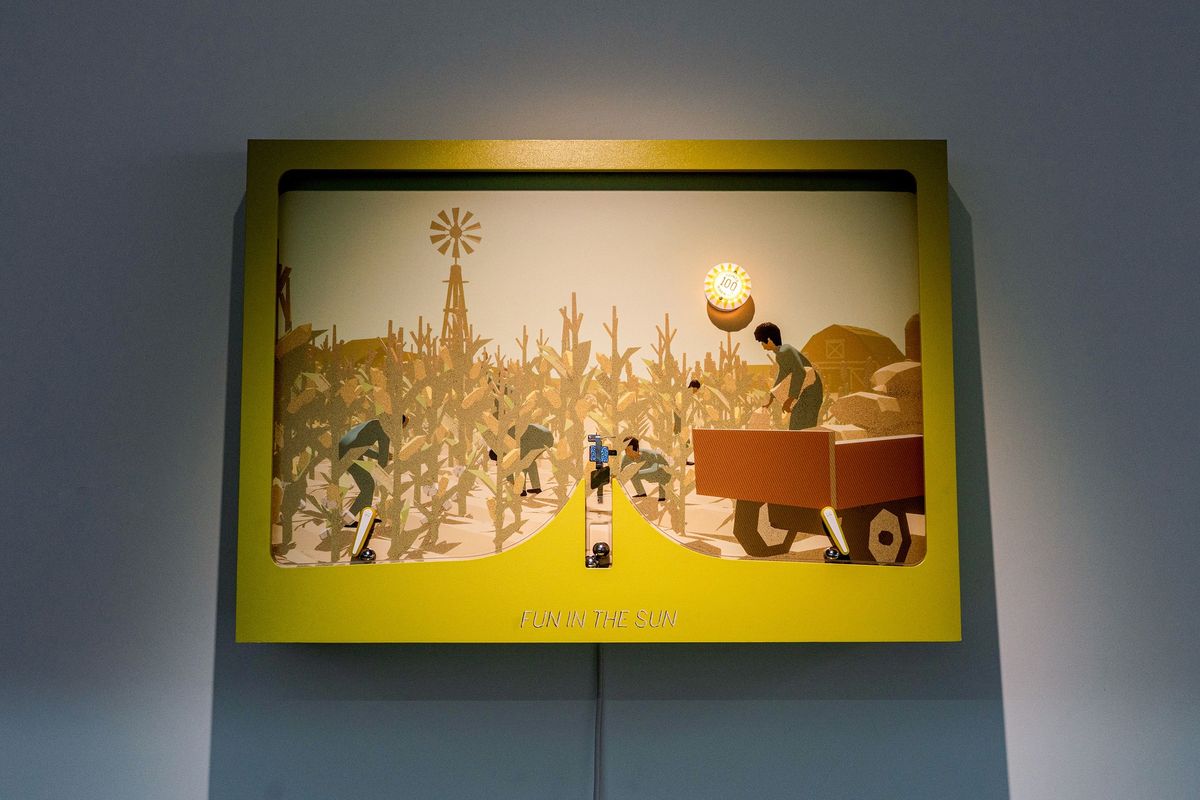
Each sculpture is housed in a thick, brightly colored shadow box backed by imagery of a different labor regime: corporate, industrial, agricultural, domestic, live-streaming, and finance. In Cliff Hangers (2026), an open-plan office promises freedom while the flippers offer only the illusion of skill; the ball never quite reaches its target no matter how the player adjusts. Daddy's Home (2026) sets a nursery scene, a woman with a baby, her back turned, beneath an inverted track where two pinballs perpetually fail to meet. Roundtrippin' (2026) stages the financial sector as a closed loop: the ball strikes its targets endlessly while the player controls nothing at all.
Together, the machines trace a single logic from the office to the home to the market: systems that entice and flatter their participants while serving only capital. For an artist showing in Asia for the first time, it is a deliberately confrontational debut, one that asks visitors to feel, in their own hands, how little room the game leaves them.


