Market dispatch·New York
$2.93M Twombly Tops Its Low Estimate by Half Again at Sotheby's New York
Cy Twombly's Death of Giuliano de Medici (1962) sold for $2.93 million at Sotheby's in New York on 16 November 2026, more than one and a half times its low estimate and $746,000 above the work's previous auction result.
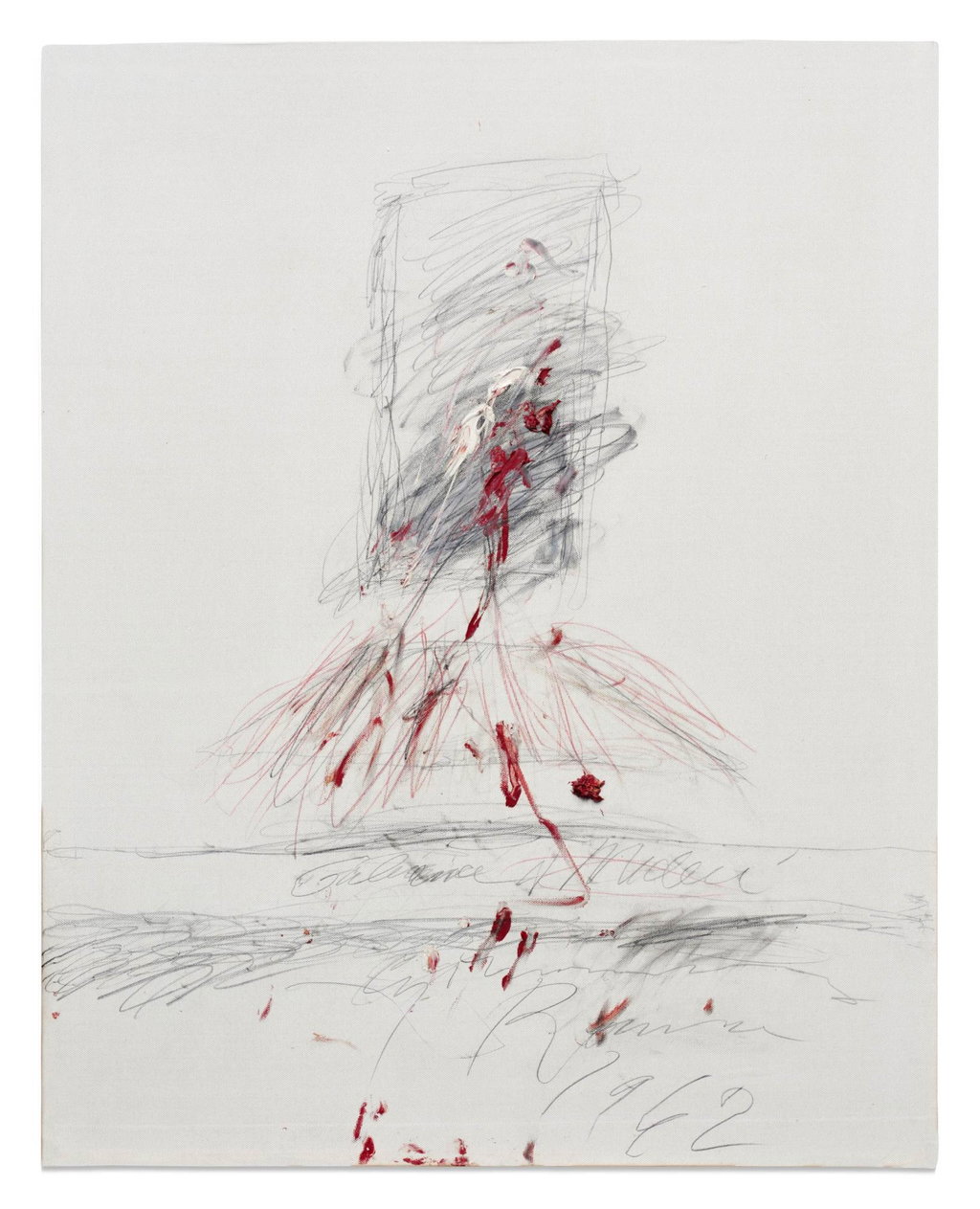
Cy Twombly's Death of Giuliano de Medici, painted in 1962, changed hands for $2.93 million at Sotheby's in New York on 16 November 2026. The result came in at more than one and a half times the work's low estimate, a comfortable margin in a November season where the major houses have been testing the appetite for post-war material at the top end of the market.
The painting is executed in wax crayon, graphite and oil on canvas, and measures 100 by 80 centimetres. It is a work with a known auction history: it has now been traded four times at auction, and the latest result sits $746,000 above the price it achieved on its previous outing. Measured against that earlier sale, the gain works out at an annualised return of about three per cent for the seller.
That steady rather than spectacular return tells its own story about this corner of the market. Twombly remains one of the most collected names of his generation, and works on paper and canvas from the early 1960s continue to draw bidding, but the result here is a solid trade rather than a record-chasing one. The painting cleared its estimate by a clear distance without approaching the eight-figure sums commanded by the artist's largest canvases.
The sale took place during Sotheby's November evening sessions in New York, a week in which the house has been running its marquee contemporary sales alongside headline single-owner collections. Within that context, the Twombly result fits a pattern of measured bidding for established post-war names: works finding buyers above estimate, but without the frenzied competition that marks the very top lots.
For collectors tracking Twombly's market, the outing adds another data point to a long trading record. The work has now passed through the saleroom four times, and its latest price, while well above its low estimate, reflects a holding-period gain of roughly three per cent a year rather than a sharp revaluation.