Market dispatch·New York
$14.48M and a 2,300% Record Leap: Aaron Douglas's 'Harriet Tubman' Sells at Sotheby's
Aaron Douglas's 1931 mural 'Harriet Tubman' sold for $14.48 million at Sotheby's in New York on 18 November, shattering the artist's previous auction record by $13.88 million. The monumental work was consigned by Bennett College, a historically Black women's college in North Carolina, and had never been traded before.
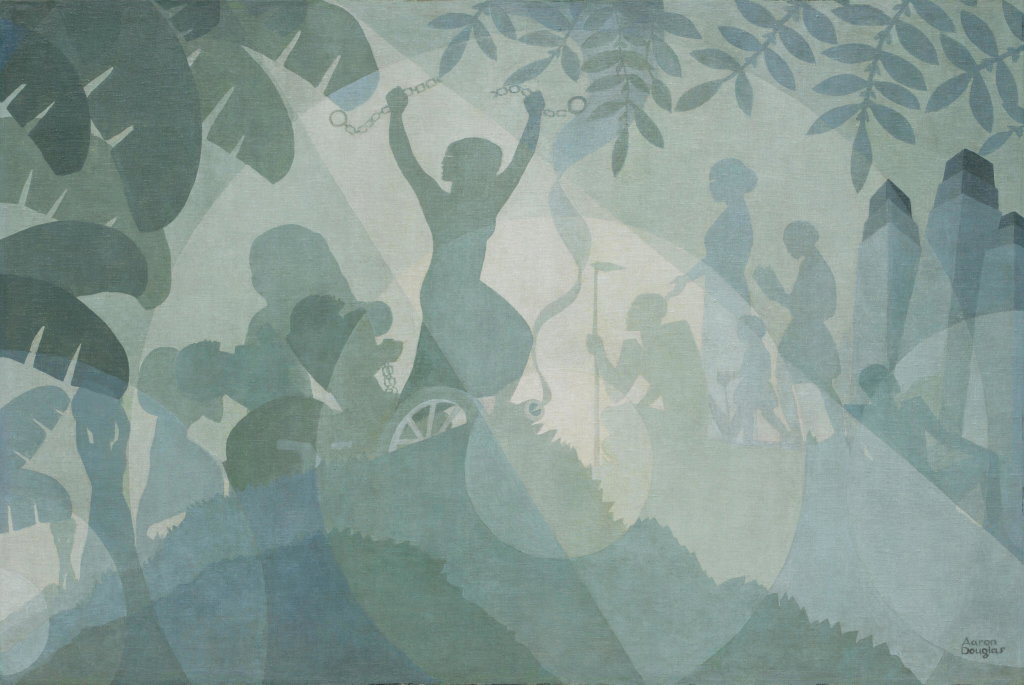
Aaron Douglas's Harriet Tubman, painted in 1931, sold for $14.48 million at Sotheby's in New York on 18 November, setting a new auction record for the artist by an extraordinary margin. The price beat Douglas's previous auction record by $13.88 million, a rise of roughly 2,300 per cent, and came in at more than five and a half times the work's low estimate. The result was one of the standout lots of Sotheby's November sales in New York.
The painting is a monumental mural, executed in oil on canvas laid down on aluminium panel and measuring 122 by 182 centimetres. It depicts Harriet Tubman, the abolitionist who escaped enslavement and led others to freedom through the Underground Railroad, a subject that places the work at the centre of Douglas's engagement with Black history. The painting had never appeared at auction before, having been held by its consignor since it was made.
That consignor was Bennett College in Greensboro, North Carolina, a historically Black women's college. The sale of a work of this importance by a small college drew attention well beyond the saleroom, raising questions about how under-resourced institutions weigh the value of cultural holdings against their financial needs. Bennett College has not publicly detailed how it plans to use the proceeds.
Douglas, who lived from 1899 to 1979, was a leading visual artist of the Harlem Renaissance, best known for murals and illustrations that gave the movement its defining graphic language. His previous auction record was held by Building More Stately Mansions, painted in 1944. The new result, more than twenty times that earlier benchmark, reflects the sharp rise in market demand for modern Black American artists, whose work has been reassessed by museums and collectors in recent years.