Market dispatch·Hong Kong
Long-lost Tang calligraphy masterwork resurfaces to fetch HK$177.45 million at China Guardian Hong Kong
A letter-manuscript by the Tang dynasty calligrapher Yu Shinan, believed lost for 81 years after the Xiaobailou incident, sold for HK$177.45 million including premium at China Guardian Hong Kong's 2026 autumn sale on 7 October, after opening at HK$130 million.
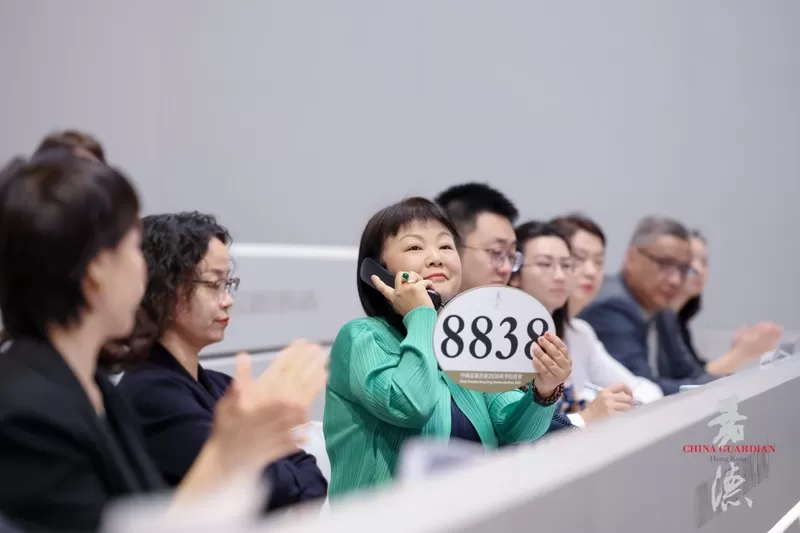
One of the most fabled works of classical Chinese calligraphy changed hands in Hong Kong on 7 October, as Yu Shinan's 'Ji Shi Tie' sold for HK$177.45 million including buyer's premium at China Guardian Hong Kong's 2026 autumn sale. The short letter-manuscript, written in the artist's running-cursive hand to a friend, opened at HK$130 million before a room of determined bidders pushed it to its final price. The work carries an extraordinary history. Composed by Yu Shinan (558-638), the Tang emperor Taizong's own calligraphy teacher and one of the celebrated Lingyan Pavilion meritorious officials, the scroll once sat alongside the Jin and Tang masterpieces of Wang Xizhi, Wang Xianzhi, Wang Xun and Yan Zhenqing in the collection of the late-Ming connoisseur Wu Ting. It later entered the Qing imperial household and was catalogued in the Shiqu Baoji Xubian, the Qing court's celebrated register of the imperial collection. In the modern era it was thought to have been destroyed in the notorious Xiaobailou ('Small White Building') fire, and scholars long assumed the original survived only through carved reproductions. Its reappearance has ended an 81-year silence. A half 'Siyin' seal at the opening of the scroll certifies its Ming-dynasty imperial provenance, while a colophon by Dong Qichang records his admiration for the piece. Dong weighed its qualities against the famous 'Rumao' stele inscription by the Princess of Runan and judged the Yu Shinan manuscript the finer work, noting the lean, wiry strength of its axe-like brushwork. Specialists point out that the scroll is no longer the complete object described in the Qing catalogue: the head and tail sections were lost in the Xiaobailou damage and later remounted, so the Shiqu Baoji record remains the key document for reconstructing its original form. Even so, the market has now rendered its verdict on a work some commentators rank among the rarest surviving Tang-dynasty ink manuscripts, and the result stands as one of the landmark calligraphy prices of the 2026 Hong Kong autumn season.