Exhibition preview·London
Cecilia Vicuña's six-decade survey opens Whitechapel Gallery's autumn season
Cecilia Vicuña: Living Threads opened at Whitechapel Gallery on 7 October 2026, the Chilean artist's first major UK exhibition, surveying six decades of work across installation, painting and poetry through 14 February 2027.
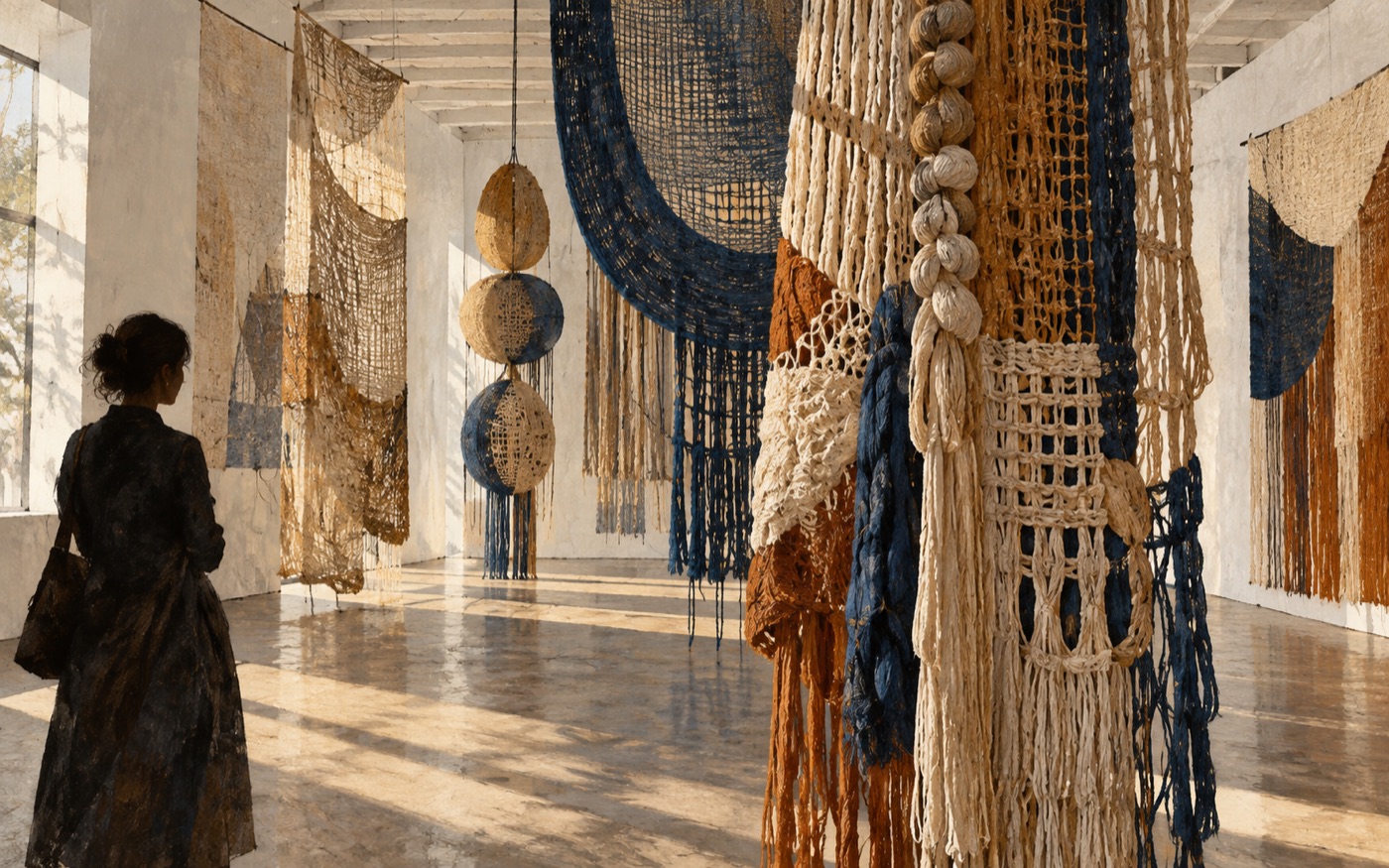
The Whitechapel Gallery has opened its autumn season with the first major UK survey of Cecilia Vicuña, the Chilean artist, poet and activist whose six-decade practice has moved between visual art, poetry, performance and ritual. Cecilia Vicuña: Living Threads, which runs from 7 October 2026 to 14 February 2027, brings together early paintings, suspended wool installations, sculptures and new work, tracing a career shaped by exile, Indigenous knowledge and political resistance. Vicuña, born in Santiago in 1948, studied at the Slade and lived in London after fleeing Chile following the 1973 military coup — a history the exhibition revisits through paintings made during her London years and surviving material from Artists for Democracy, the solidarity group she co-founded in 1974. Central to the show is Quipu Menstrual, her installation of unspun wool that draws on the quipu, the ancient Andean system of knotted cords used to record information, alongside fragile precarios assembled from foraged sticks, feathers and thread. The exhibition also presents Ciudad Geométrica (2025), a new large-scale installation shown in the UK for the first time, constructed from driftwood, feathers, shells and bones gathered in Belgium, Chile and New York. A companion commission, Cecilia Vicuña: Foraging Quipu, continues her long engagement with the quipu form and its capacity to connect people, histories and the natural world. Living Threads anchors a wider autumn programme at the gallery: This Must Be the Place, a 125th-anniversary exhibition and sale gathering 23 international artists; Screen Portraits: Whitechapel Gallery Artists – Part 2; and the Film London Jarman Award 2026, showcasing this year's four shortlisted filmmakers. The season marks one of the most ambitious autumn programmes in the gallery's recent history.