Market dispatch·London
£350,000 top estimate for 1613 watch made for King James I
A silver and gilt pocket watch made around 1613 by David Ramsay for King James VI of Scotland and I of England, one of only three known surviving examples from the commission, will be offered at Bonhams in London on 3 December estimated at £250,000–350,000.
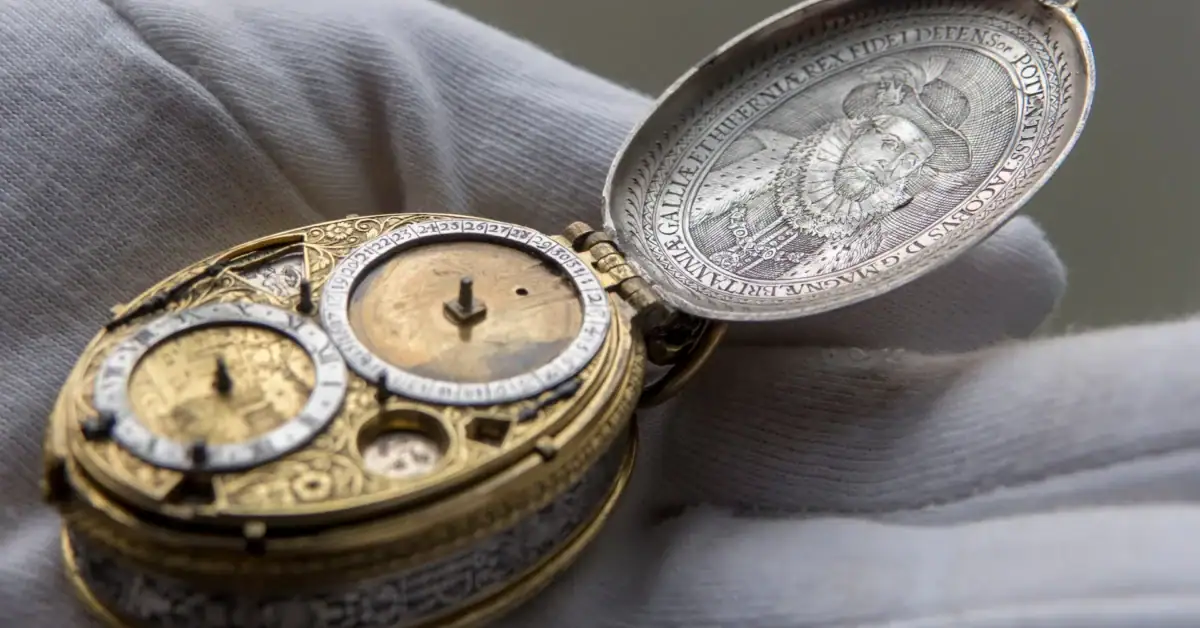
One of the earliest complicated watches ever made is heading back to the auction room. Bonhams will offer a silver and gilt pocket watch created around 1613 by David Ramsay for James VI of Scotland, who became James I of England, at its Historical and Extraordinary Watches sale in London on 3 December. The estimate is £250,000 to £350,000.
Ramsay, a Scot who had been summoned back from France when James took the English throne in 1603, was appointed royal clockmaker and later became the first Master of the Worshipful Company of Clockmakers in 1632. The watch is one of three similar pieces the king commissioned in the early 1600s, and one of only three known to survive. Only fourteen timepieces attributed to Ramsay are known to exist at all. Records show the king paid £61 for the three watches, a sum then large enough to buy a small village.
The watch is as much a piece of goldsmiths' work as a machine. Its case carries an engraved portrait of the king by Simon de Passe and decoration attributed to Gérard de Heck, including scenes from the tenth chapter of the Gospel of Luke, the royal coat of arms and James's motto, Beati Pacifici, meaning blessed are the peacemakers. Inside, a pre-balance verge movement with a fusée drives displays for the time, the day of the week, the month, the phase and age of the moon, the zodiac sign and the ruling planet. At the time it was built, it ranked among the most complicated mechanical objects in the world.
Its later history is unusually well documented. Queen Anne presented the watch to her maid of honour, Lady Elizabeth Russell, who married Peter Bowlby around 1750, and it stayed with their descendants until the present owner placed it on long-term loan to the British Museum in 1961. It moved to the Victoria and Albert Museum in 1974 and has remained there until this year. Bonhams' global head of watches, Jonathan Darracott, has described the watch as an extraordinary survivor from the earliest days of horology.