Exhibition preview·London
Barbican Asks You to Just Stand Still: The UK's First Ryman Survey in 30 Years
The Barbican Art Gallery has opened 'Robert Ryman: The Real Thing', the first in-depth UK exhibition of the American painter in over 30 years. Running 8 October 2026 to 28 February 2027, it brings together more than 60 works across six decades.
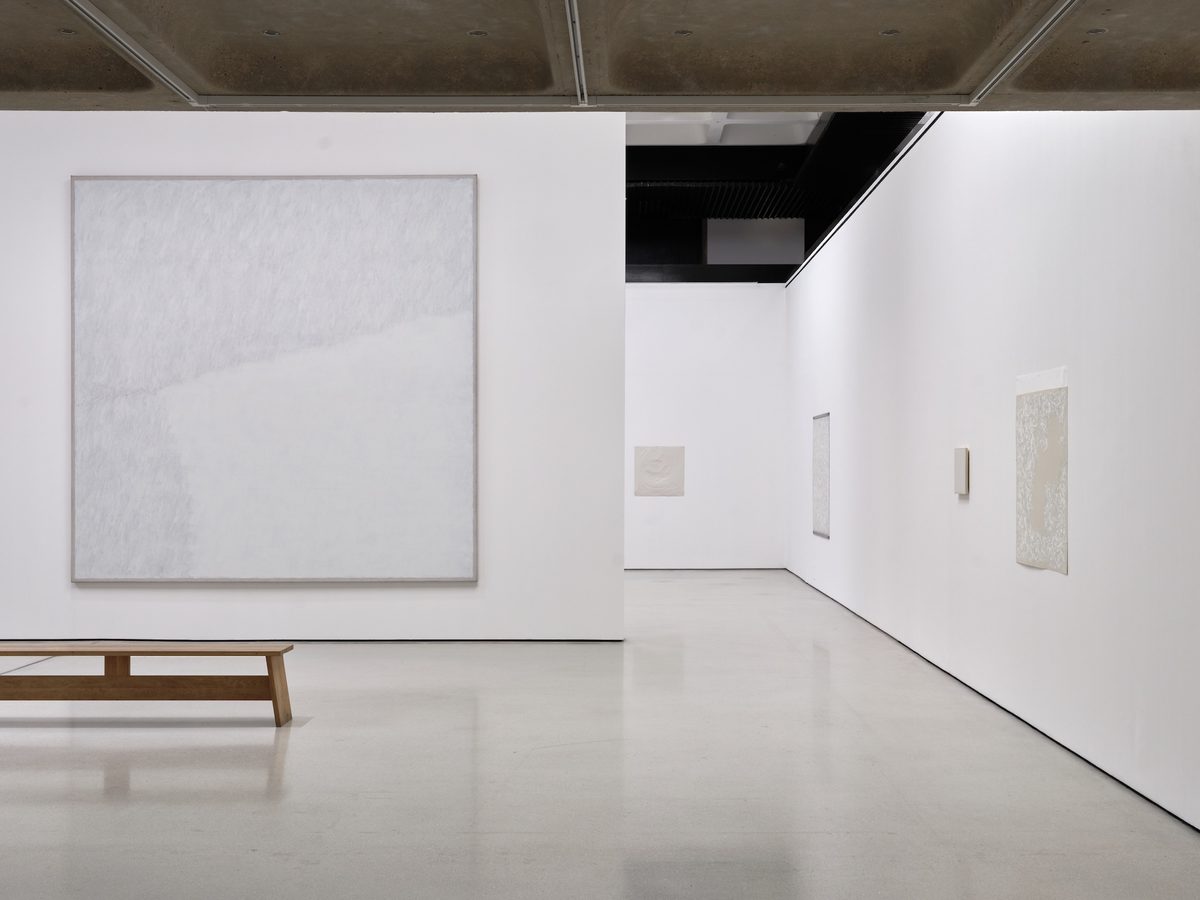
The Barbican has opened the first in-depth UK survey of Robert Ryman in more than thirty years, and it asks visitors to do something increasingly rare during Frieze Week: stand still and look. 'Robert Ryman: The Real Thing' opened on 8 October 2026 at the Barbican Art Gallery and runs to 28 February 2027, with more than 60 works spanning almost six decades, from the mid-1950s to the early 2010s. Ryman, the Nashville-born painter who died in 2019, trained as a jazz saxophonist and worked as a security guard at New York's Museum of Modern Art from 1953 before committing to painting. He became known for predominantly white, square-format works, but the exhibition insists that whiteness was never the subject: it was a means of revealing texture, edge, surface and the way light changes what the eye sees. Oil, acrylic, enamel and epoxy appear on linen, cotton, steel, aluminium, fibreglass, Plexiglas, tracing paper and even coffee filter paper, with every fastening, from custom-made brackets to masking tape, left visible as part of the work. The show's central section, 'Experiencing Ryman', hangs works from different periods together with no wall text or interpretation, following the artist's belief that a painting, like music, must be experienced directly rather than explained. Among its centrepieces is 'Surface Veil II', a painting of around three and a half metres square made unstretched on the studio floor, shown in London for the first time since 1993, alongside 'Standard' (1967), a sequence of twelve painted steel panels given its own room. A 432-page catalogue published by Pre-Echo Press and edited by Wells Fray-Smith and Matt Connors accompanies the exhibition, with new scholarship and contributions from artists, writers and musicians. A public programme includes a November symposium organised with the Courtauld's Research Forum and a series of live jazz performances, nodding to the musical thinking that shaped Ryman's art.