Art world report·Plymouth
Plymouth interiors students win national BIID challenge with sensory playground 'Little Creatures'
A team of third-year interior design students at Arts University Plymouth has won the British Institute of Interior Design's Student Design Challenge 2026 with 'Little Creatures', an inclusive sensory playground and learning environment for a special educational needs school, beating five other university teams.
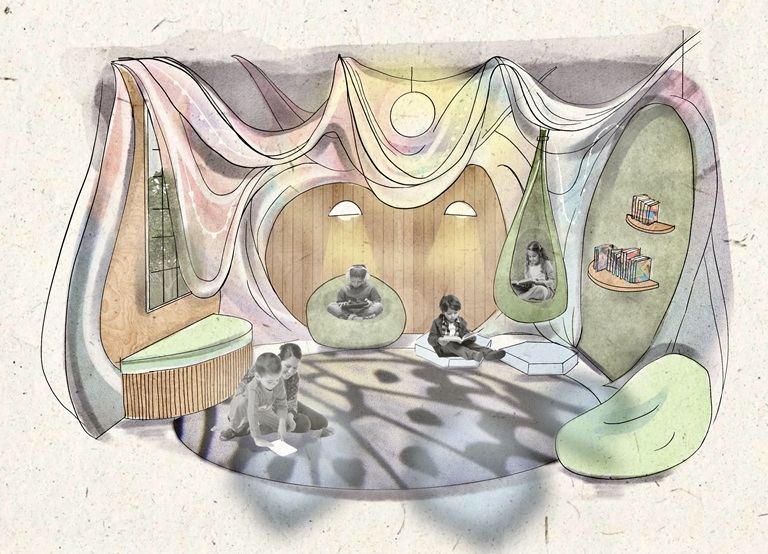
Interior design students at Arts University Plymouth have won a national competition with a design for a sensory playground for children with special educational needs. Their proposal, Little Creatures, took the top prize in the British Institute of Interior Design's Student Design Challenge 2026, with Cardiff Metropolitan University highly commended.
The challenge ran from November 9 to 12 and was open to third-year interior design and interior architecture students across the UK. Teams of five to seven students were given the brief on a Monday morning and had four days to produce a design proposal. This year six universities took part: Arts University Plymouth, Cardiff Metropolitan University, De Montfort University, London Metropolitan University, Sheffield Hallam University and the University of Portsmouth. Each team was supported by experienced registered interior designers acting as mentors.
The brief asked for an inspiring, inclusive sensory playground and learning environment for a special educational needs school, designed around a real floor plan for children aged five to eleven with diverse needs. The spaces had to allow for active play as well as quieter places children could retreat to, and show how design could help children feel safe, manage their sensory experiences, play, learn and become more independent.
The Plymouth team took its idea from the cocoon-like shape of sensory swings. They made collages, turned them into a wallpaper pattern and chose a dragonfly, a ladybird and a worm for the project's logo. In a room they called the Beehive of Activity, they designed honeycomb-shaped booths and storage for a space where children could learn and eat lunch. A hand-drawn sketch showed the Caterpillar Quiet Regulation Room, with a green hanging seat and floor cushions beneath a draped fabric canopy, acoustic wall panels to soften sound, and a window bench overlooking the playground. The judges praised the research, creativity and thoughtfulness of the winning design, and its balance of fun with practicality.