Exhibition preview·New York
Colonial Embroidery, Carved in Wood: Aspen Golann's Vessels Reclaim Women's Needlework
Furniture maker Aspen Golann has turned 17th-century crewel embroidery into carved wooden vessels, including the five-foot Crewel Cabinet, made during her residency at the Metropolitan Museum of Art.
Furniture maker and artist Aspen Golann has found a new language for an old craft, translating the motifs of 17th-century embroidery into hand-carved wooden vessels that give women's needlework a monumental, permanent form.
Golann's interest began with early American furniture. In the second half of the 17th century, colonists in New England were making their own chairs, chests and cabinets, drawing on English motifs and techniques. In Boston, a distinctive interpretation of the high-backed Windsor chair emerged, and Golann has made sculptural contemporary versions of it, including Meeting Bench, made with chairmaker Peter Galbert, and Union Settee, both celebrations of furniture's role in bringing people together.
Her research into that period led her to another centuries-old tradition: embroidery. Needlework was pursued almost exclusively by women and girls, and the sewn compositions they produced, often as dowry objects, have received little attention from major institutions. Golann began a series of wooden vessels during the Metropolitan Museum of Art and Vacheron Constantin Artisan Residency, an 18-month programme in which she took part alongside ceramicist Ibrahim Said and jeweller Joy Harvey.
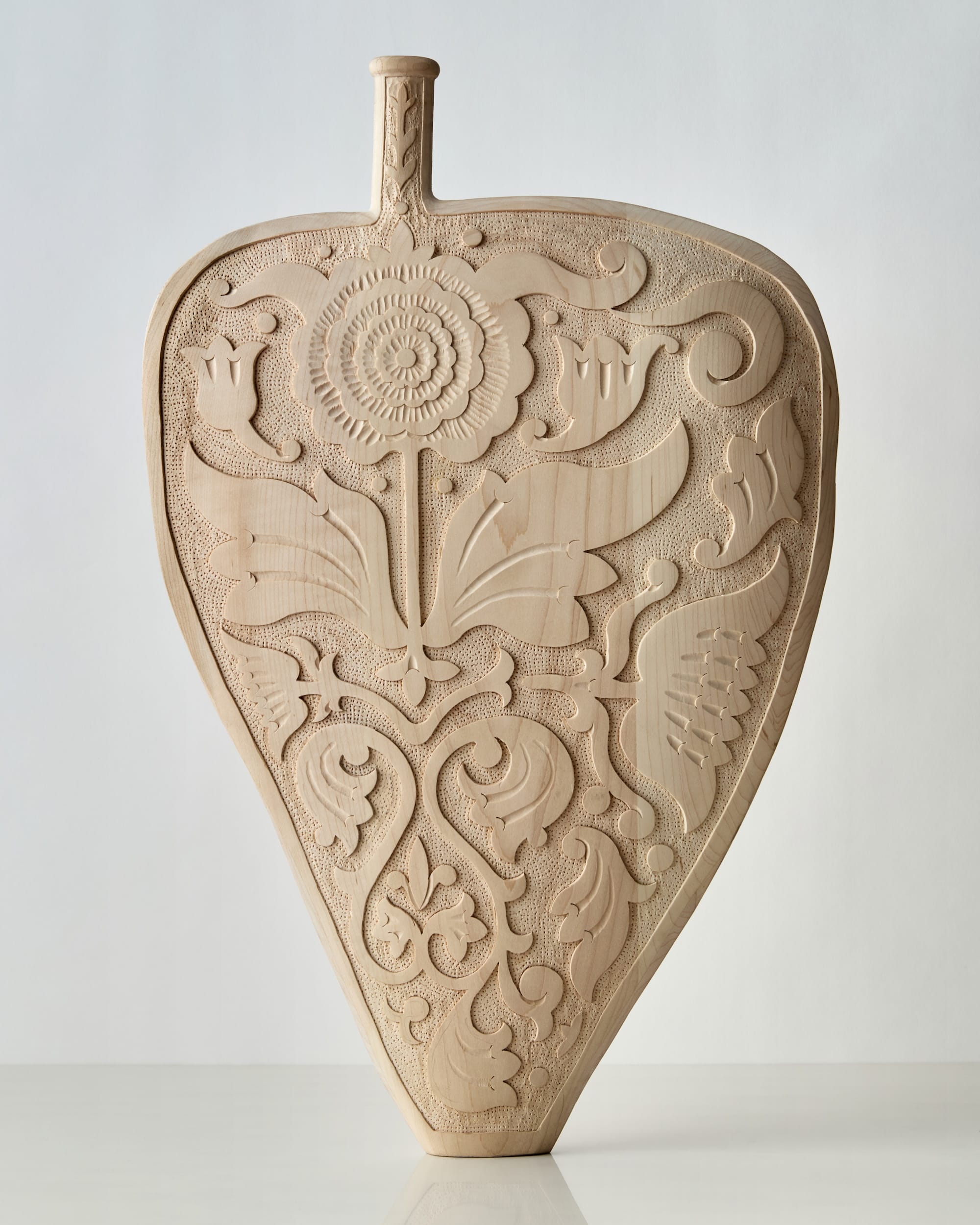
The centrepiece is Crewel Cabinet, a vessel-like cabinet standing five feet four inches tall, about the average height of an American woman. It is built from 37 staves, each made from 14 coloured layers, from which Golann has carved plants, rabbits, dogs and other motifs, the changing colours echoing the threads of colonial-era crewel work. Other pieces, such as Pouring Vessel, interpret needlework patterns in wood using a strapworking technique, while the flattened Strap-Carved Vessel remains hollow despite its pancaked form.
Golann has said she wanted to make a version of these embroideries that could not be put away, in contrast to the fragile originals, which are easily stored and overlooked. Her next project is a commission for the US Treasury, which orders a piece of furniture for its collection once every 50 years, and she is working toward a solo exhibition at the Fuller Craft Museum opening next November. Crewel Cabinet will be on view in Pattern Recognition: Superhouse at Five, opening on 6 November and running to 19 December at Superhouse in New York.


