Museum report·Oxford
3,000-Year-Old Egyptian Shrine to Glow Again as Oxford Restores Its Lost Colours
The Ashmolean Museum will use a digital projection from 13 November to return the Shrine of King Taharqa to its original painted appearance, after microscopic analysis and hyperspectral imaging recovered traces of red, yellow and Egyptian blue pigment invisible to the naked eye.
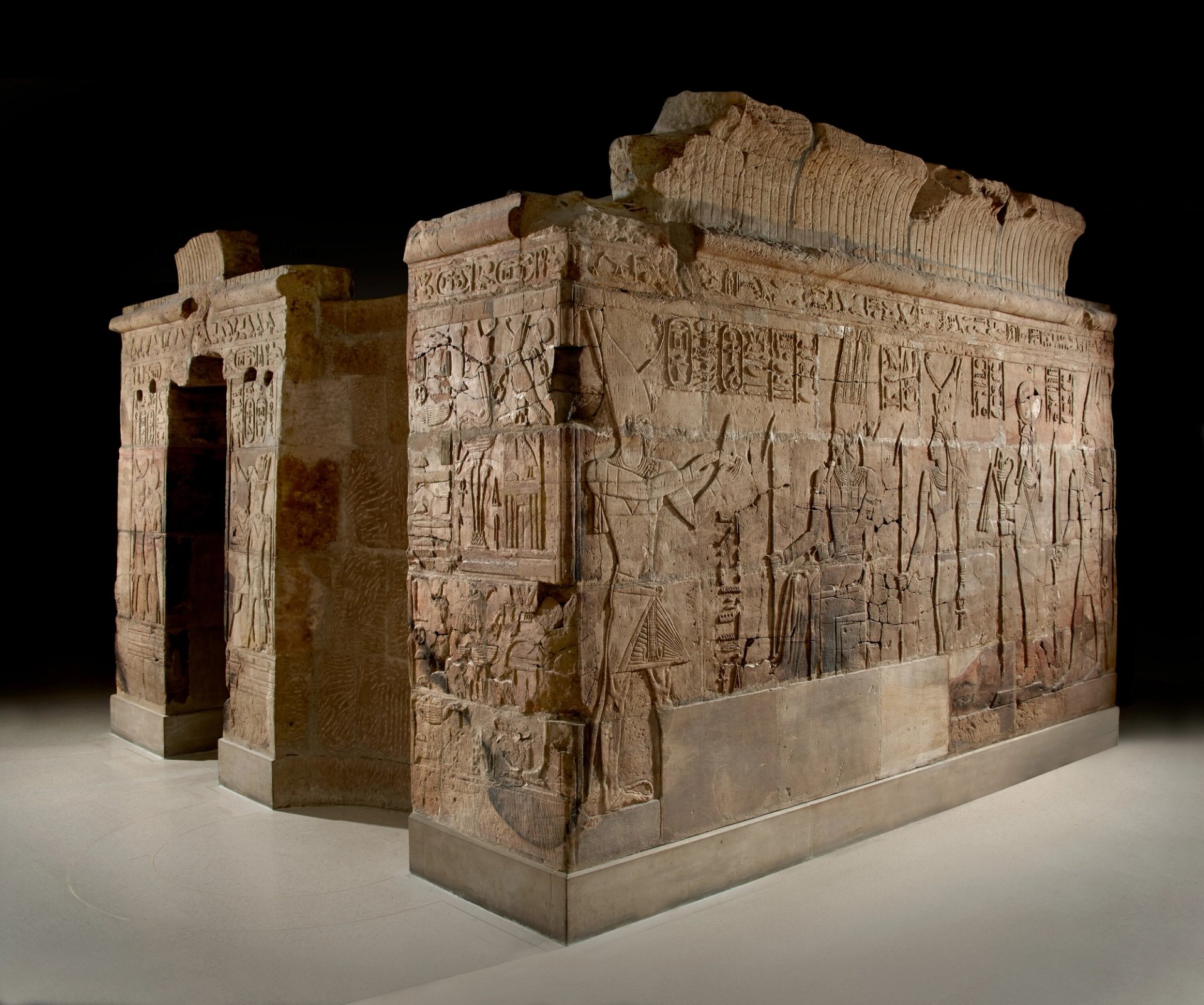
A shrine built almost 3,000 years ago in northern Sudan is about to recover its original glowing colour. Housed at the Ashmolean Museum in Oxford, the Shrine of King Taharqa is the only freestanding building in Britain dating from the time of the pharaohs, and from 13 November a digital projection will recolour it for visitors, based on years of research into surviving scraps and traces of pigment.
Fragments of red paint still survive in the crevices of the sandstone carvings, but the research went further. Microscopic analysis and hyperspectral imaging, a technique combining photography and spectroscopy, revealed evidence of colours that can no longer be seen at all, including yellow and Egyptian blue, a brilliant pigment once used to depict divine figures. The relief blocks were originally plastered and brightly painted, showing Taharqa alongside the gods of Memphis, Heliopolis and Amun-Re.
The carvings also tell the story of how the shrine came to be. They describe the young Taharqa, later king of Kush in Nubia and pharaoh of Egypt, finding the ruins of an earlier brick temple to Amun-Re built by Tutankhamen, its roof drifted over with sand, as he travelled north towards Thebes. At his coronation he vowed to restore it and built the new shrine inside a new temple. Scorch marks on the stones record the shrine's own eventual destruction.
The monument reached Oxford from Khartoum in 150 crates 90 years ago, a gift from the Sudanese government to the Oxford University excavations in Nubia. It was given to the museum in 1936 by Nora Griffith, in memory of her husband Francis Llewellyn Griffith, who led and largely paid for the expeditions. The projection, supported by James Lupton, the Ashmolean's chair of the board of visitors, and his wife Beatrice, will be free for all visitors to the Ancient Egypt and Sudan galleries. Liam McNamara, the museum's keeper of antiquities, said the work will let visitors appreciate the shrine's original painted decoration as never before.