Exhibition preview·Paris
Apollo Revisits Tintoretto's Painterly Intelligence at the Jacquemart-Andre
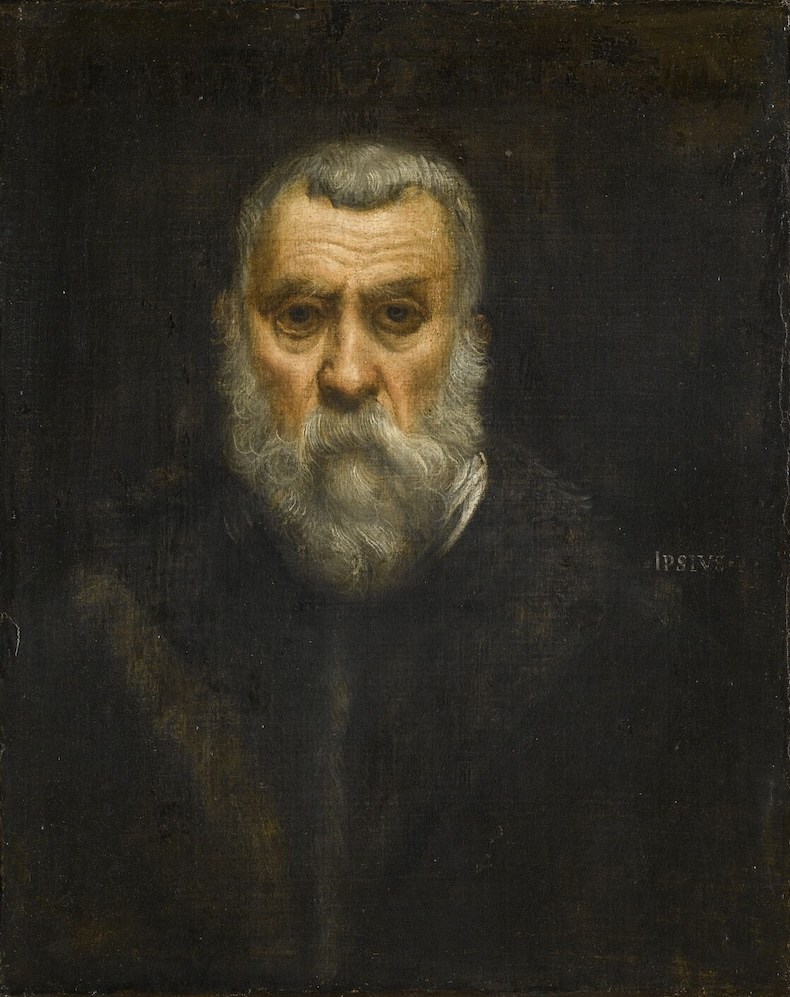
Apollo's October issue reviews 'Timeless Tintoretto' at Paris's Musée Jacquemart-André, closing on the pairing of Tintoretto's c.1588 self-portrait with Manet's 1854 copy. The critic finds a painter obsessed with the mechanics of painting itself.
Apollo's October issue carries a fresh assessment of 'Timeless Tintoretto', the Musée Jacquemart-André's survey of the Venetian master, arguing that the painter's true subject was never narrative at all but the mechanics of painting itself. The review opens at the exhibition's exit, where two near-identical paintings hang side by side: Tintoretto's self-portrait of about 1588 and Édouard Manet's 1854 copy of it. The pairing, the critic suggests, states the show's thesis — two artists, three centuries apart, each thinking through what a loaded brush can do. Around them, fanciful nineteenth-century reconstructions of Tintoretto's life by Ingres and Léon Cogniet only underline how little his achievement was understood in its afterlife; Manet, who truly looked, is the exception. What distinguishes the Paris hang is its scale. Rather than attempting the impossible — a comprehensive Tintoretto, when half the churches of Venice already amount to one — the curators gathered comparatively small canvases into the museum's domestic rooms, where the intelligence of the process becomes visible. In 'The Creation of the Animals' of 1550–53, a weave of brushmarks doubles as both tree bark and a metaphor for creation; in 'Orpheus imploring Pluto', improvised curls of paint anticipate devices later taken up by Munch and Van Gogh. The mythological rooms make the case most forcefully. 'Leda and the Swan' undercuts grandeur with a cat chasing a duck in the corner; 'Susanna and the Elders' splits the scene with a rose trellis that denies its leering onlookers — and the viewer — the expected sight. For Apollo's critic, Tintoretto emerges not as a painter ahead of his time but outside it entirely: playful, physical, and permanently unfinished in the best sense.