Policy brief·Global
Every Art Student Uses AI, Taiwanese Survey Finds — But Few Let It Finish the Work
A survey of 56 art students and teachers in Taiwan found that all of the students have used generative AI, mostly for research, translation and brainstorming, while only a small minority let it generate finished work — raising the question of what art education should still teach.
Every art student surveyed in Taiwan has used generative AI, but very few hand it the finished work. That is the picture emerging from a survey carried out for a special report on learning art after AI, which gathered 56 responses: 45 from students at colleges and graduate schools, and 11 from teachers and other art educators.
All 45 students said they had used generative AI tools. Four in five use them at least occasionally, and two in five said they use them often or almost every time they work. The most common uses sit well away from making the artwork itself. More than nine in ten respondents use the tools to search for, organise or summarise material; over four in five use them to translate or revise text; and three quarters use them to brainstorm and look for ideas.
The picture changes closer to the finished object. Fewer than half of those surveyed use AI to produce reference images, and only about one in six said they let it generate part of a work. Just 8.9 percent reported submitting AI-generated material as a finished piece. The gap suggests students are treating the technology mainly as a research and drafting aid, while keeping the act of making largely in their own hands.
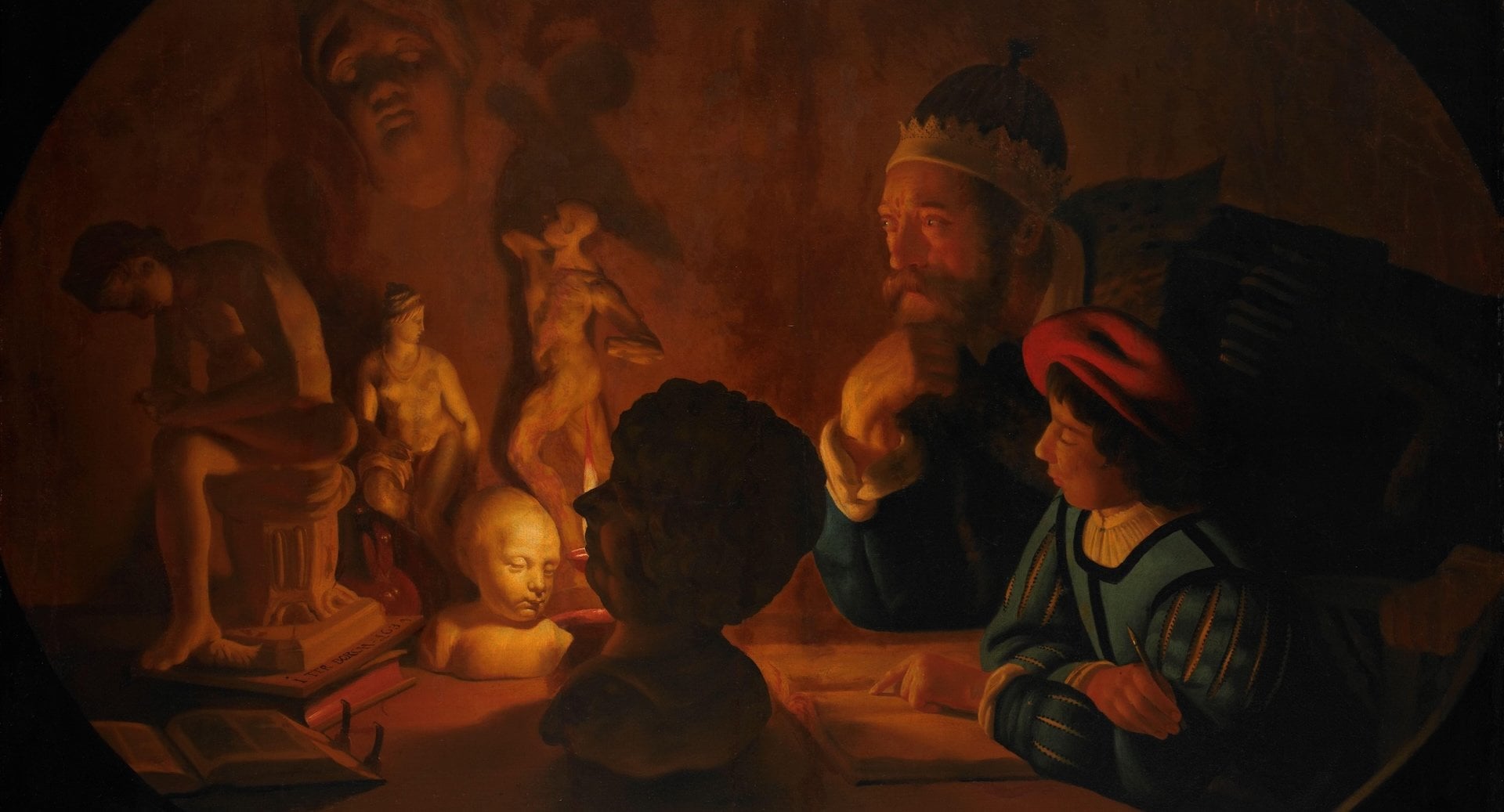
The findings frame a broader question the report poses to teachers: when answers arrive faster than ever, which capacities should art education protect? The article opens with a 1634 painting of a drawing lesson, in which a teacher guides a pupil through copying plaster casts, and asks what survives of that slow, observational training once a machine can supply the image. The survey offers no single answer, but it shows a generation of students already drawing their own line between assistance and authorship.