Museum report·New Delhi
Delhi's Colonial-Era Government Blocks to Become a Museum With the World's Largest Display Area
India's cabinet has approved a ₹3,230-crore plan to turn New Delhi's historic North and South Block into the Yuge Yugeen Bharat Museum, a vast new national museum expected to hold the world's largest display area.
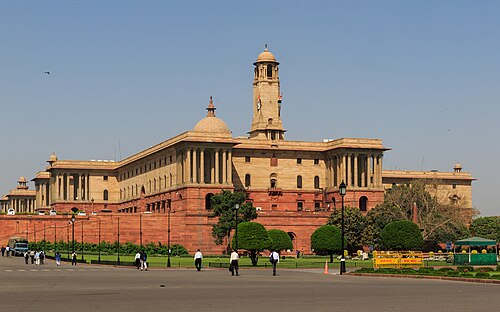
India's government has given the go-ahead to one of the largest museum projects in the country's history. On 11 November 2026, the Cabinet Committee on Economic Affairs, chaired by Prime Minister Narendra Modi, approved the creation of the Yuge Yugeen Bharat Museum in New Delhi's North and South Block complex, at an estimated cost of ₹3,230 crore. The project will be delivered in phases between the 2026-27 and 2030-31 financial years.
Rather than demolishing the two sandstone secretariat buildings at the heart of Lutyens' Delhi, the plan adapts them for public use. The North and South Blocks once housed key government offices; under the scheme they will keep their heritage character while becoming galleries, conservation facilities and visitor spaces. The museum will cover roughly 178,509 square metres of built-up area, and the government says it is designed to have the largest museum display area in the world.
Around 1.8 million objects have been identified as potential exhibits, drawn from the National Museum, other Ministry of Culture museums, 52 Archaeological Survey of India site museums, state museums and private collections. Planned gallery themes include Adornment, which is expected to open in the North Block in late 2027 as the museum's first public gallery, alongside Architecture and Cityscapes, Mathematics and Astronomy, Languages and Scripts, Faith and Spirituality, and Bharat Connects: Trade and Ideas.
Officials expect the museum to become a major cultural destination, designed to receive up to one crore visitors a year, with income from tickets, tours, retail, food and drink, events and venue hire. The project is also presented as a source of employment across construction, museum operations, hospitality and tourism, with work for artisans, researchers, museologists, designers, performers and conservation specialists. Planning is aligned with international practice in heritage conservation, exhibition design and sustainable cultural management.