Exhibition preview·New York
26,000 in Week One: Yoshitomo Nara's Wide-Eyed Figures Take Over Two Zwirner Galleries
Yoshitomo Nara's first New York solo show in nearly a decade, and his first with David Zwirner, has drawn 26,000 visitors in its first week, with nearly 100 paintings, drawings and monumental bronze heads spread across the gallery's two Chelsea spaces until 12 December.
Yoshitomo Nara's return to New York has turned into one of the season's biggest draws. The Japanese artist's first solo show in the city in nearly a decade, and his first with David Zwirner since leaving Pace, has filled two Chelsea galleries with close to 100 works, and the queue on opening night stretched to 4,000 people. The gallery says 26,000 visitors came through in the first week alone.
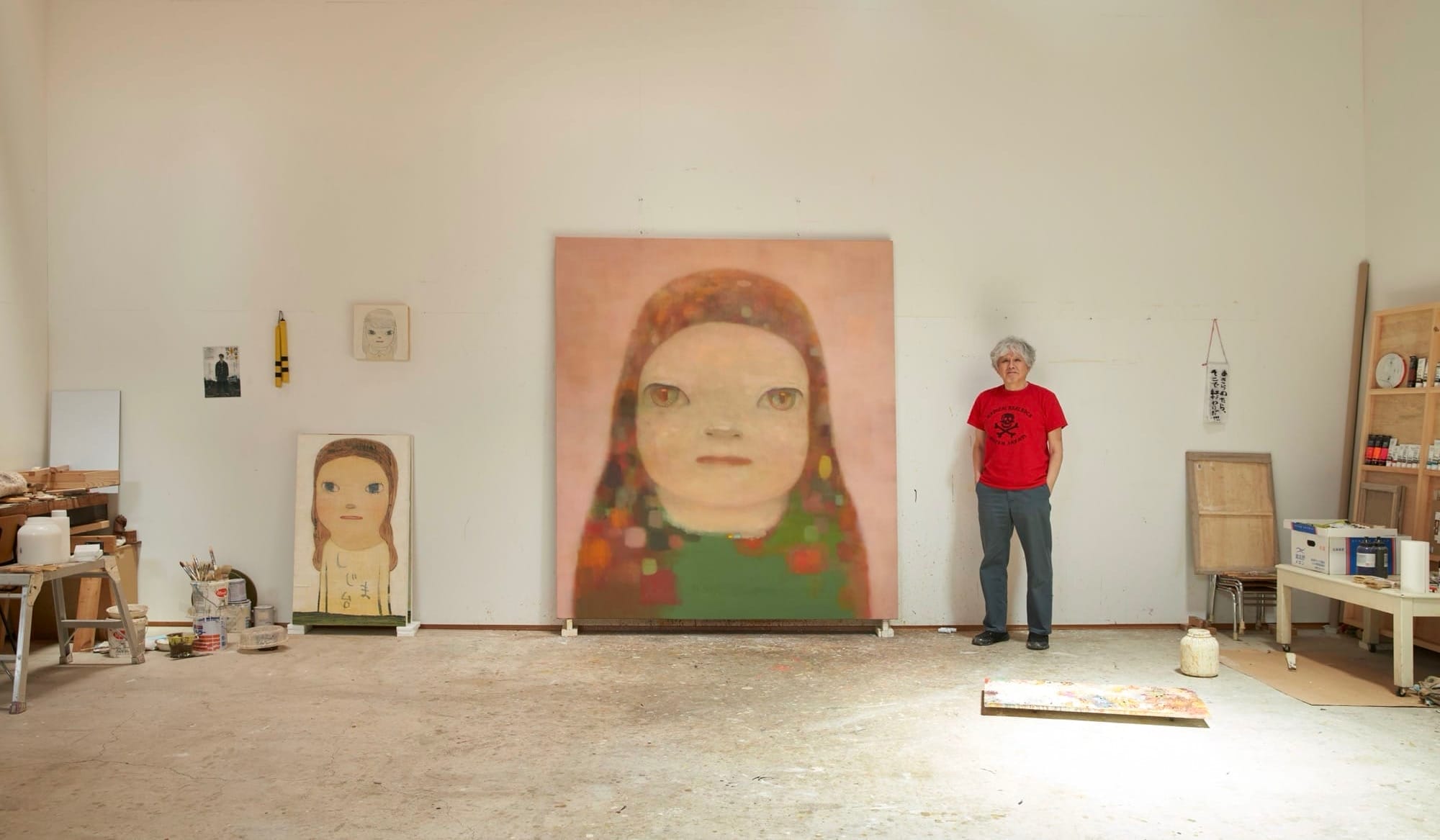
The self-titled exhibition, which opened on 5 November and runs until 12 December, splits across Zwirner's 19th and 20th Street spaces. Paintings and drawings occupy the 20th Street gallery, where Nara's wide-eyed, large-headed figures, sceptical, bored, sometimes defiant, appear in soft pastel palettes, several carrying short handwritten phrases about war and peace. Around the block, thirteen monumental bronze heads from 2024 fill the 19th Street gallery, their white urethane surfaces echoing the snow-covered landscapes of Nara's childhood in Aomori.
New paintings anchor the show, among them Foggy Tale, Matryoshka and War Birth, the last of which pairs a tightly cropped portrait with blunt text about war. The political edge is deliberate: Nara's titles this time include Little Patriot, From the Bomb Shelter, Guns in Hands and Eve of Destruction, and the artist has said he turns to art to say what he cannot put into words. His turn to clay, which produced the bronze heads, began after the 2011 Tohoku earthquake and tsunami devastated the region around his home town.
The exhibition coincides with Nara's outdoor installation at the Hirshhorn Sculpture Garden in Washington, and a major retrospective is scheduled at the San Francisco Museum of Modern Art next autumn. Until then, the Chelsea show offers the fullest view in years of an artist whose apparently simple figures have carried, for decades, a much sharper view of the world than their innocence suggests.