Exhibition preview·New York
Sculptor Yasue Maetake turns hardware-store clutter into mineral myth in Queens studio
BOMB visits sculptor Yasue Maetake in her Queens studio, where she converts hardware-store detritus and coastal salvage into a mineral-rich binding medium she calls "prima materia". She is preparing two solo shows: Orb Materia — Carved Algos at Clara Darrason in Paris (through October 10) and a second at Silverlens in New York in early 2027.
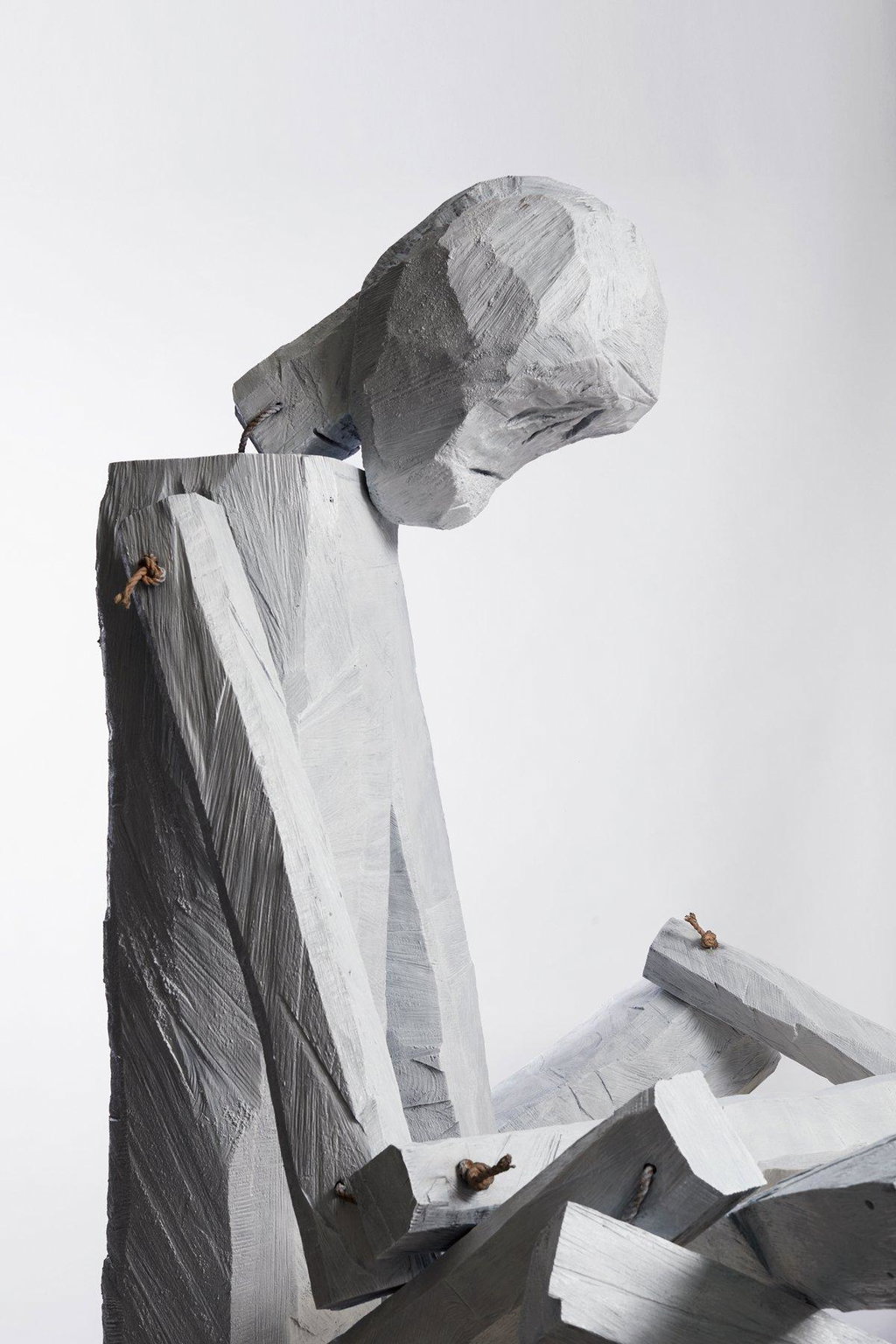
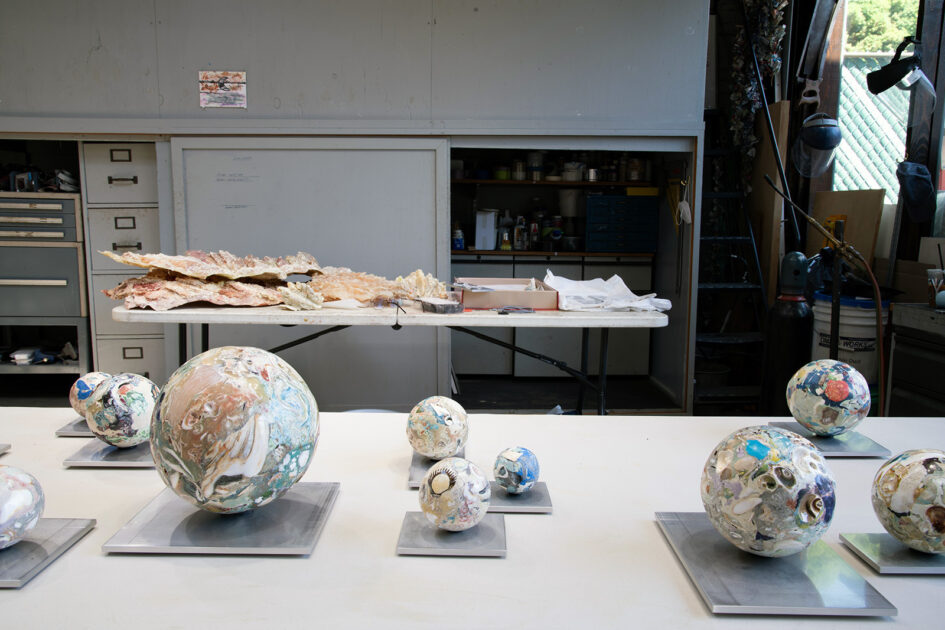
Behind a hardware store in Queens, the sculptor Yasue Maetake maintains a working Anthropocene of her own. Her studio shares its yard with the Platz Hardware True Value store operated by her husband, and the setting suits her method: propane tanks, steel trash bins and crates of anonymous machine parts rise overhead in strata, while supplies of animal bones and shells collected from Deadhorse Bay wait in milk crates below. From this stockpile of urban detritus and coastal salvage she distills a substance she calls "prima materia," a binding medium blended from marine calcite, fossilized bone, quartz and polymer. Because many of her chosen materials, once reduced to their mineral essences, become the very ingredients of that compound, her sculptures enact a peculiar geology — works that rust and teeter toward collapse while surging, at the same time, with a sense of new becoming. The studio itself is a study in contrast: rigged with clever storage systems and customized tool holders, it runs like a finely calibrated operation, and even her most tornado-like assemblages conceal ingenious mounting points designed for easy shipping. On one long worktable, spherical pieces of prima materia, shells, sand, resin, sea glass, agate and pigment sit on small aluminum plinths. Nearby, a form several times the artist's height compresses erratic globs of once-molten metal onto a crooked skeleton of rusting steel rods, with masses of metastasizing prima materia growing coral-like through an airborne swirl of crumpled sheet-metal sails. Two solo exhibitions mark this phase of the practice. Orb Materia — Carved Algos has recently opened at Clara Darrason in Paris, where it stays on view until October 10, while a second solo opens at Silverlens in New York City in early 2027. The range in the studio — wall-mounted, floor-mounted and table-mounted works, immense and jewellike by turns — confirms a practice that treats sculpture as slow alchemy, fusing industrial scrap and marine matter into something feral and new.