Profile·United States
Only 5 Artists in 40 Flats: Why America's Affordable Housing for Artists Is Missing Its Artists
Affordable housing schemes for artists in the United States are faltering on patchy regulation, with projects in Colorado and California unable to guarantee homes actually go to artists, and in one case only five of forty residents were artists.
Affordable housing built for artists is struggling to reach the people it was designed for, held back by uneven regulation and weak oversight. In Colorado, where more than 35 percent of residents spend over 30 percent of their income on housing, the state allocates $300 million a year to its affordable housing fund, a small share of which supports homes for artists and creative districts. But without clear rules, the money does not reliably deliver long-term homes for working artists.
National non-profits such as Artspace and the Community Arts Stabilization Trust now run artist housing in the state, yet Colorado has no artist certification programme of the kind used in Boston, New York and San Francisco. Without one, giving preference to artist applicants risks breaching fair housing law, and cities and states have few ways to check that public funding produces lasting homes and studios. Artspace, which develops workforce housing across 23 states including seven projects in Colorado, markets its buildings to people in the creative sector and says its homes prioritise creative use, but it did not respond to repeated requests for comment.
In Trinidad, a town of 8,000 near Colorado's southern border that became the state's first creative district in 2015, an Artspace building holds forty homes. One resident says that in Michigan City she had to present her work to a board of practising artists and sit for an interview, while in Trinidad she was asked only to prove her income. In three years there she has encountered just five artists among the forty households, and the leasing office says it does not track how many residents are artists.
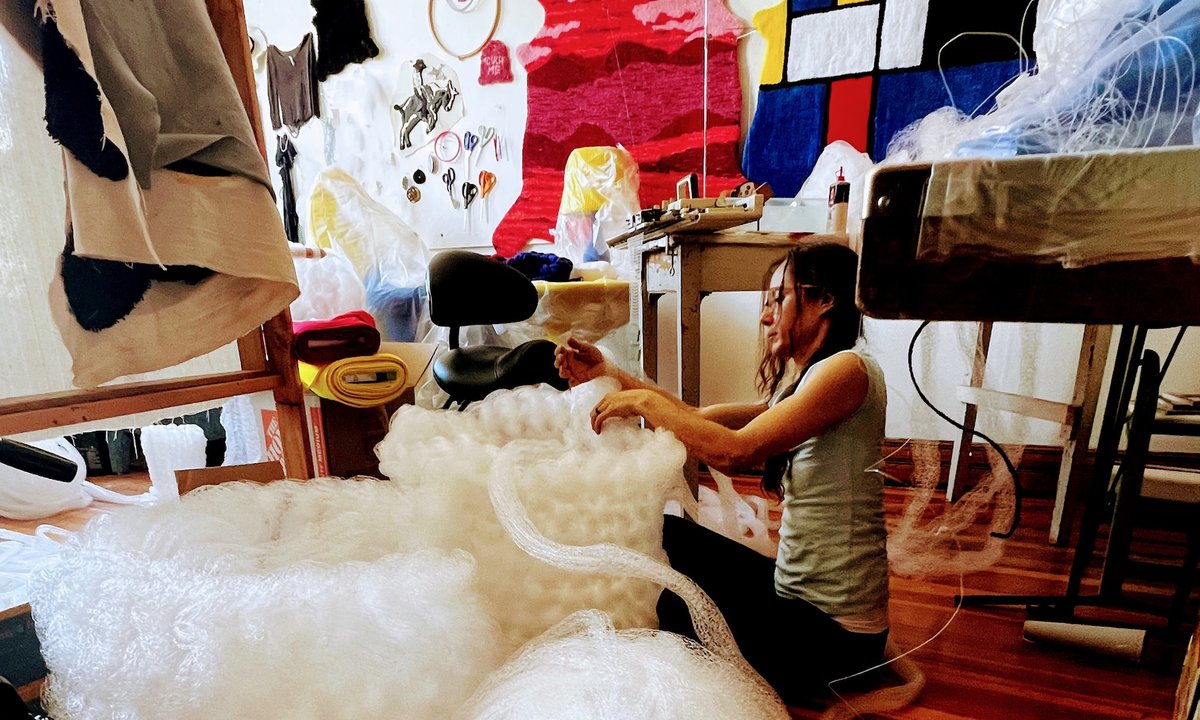
A fibre work by Emilie Dundee Odeile and Ken Lee Chapin drew more than 10,000 visitors to Trinidad, a town of 8,000, showing how artists can animate small communities. Yet as long as the rules for who qualifies as an artist, and who checks, remain unsettled, the housing built in their name may keep going to almost anyone except the artists themselves.