Profile·New York
Ursula von Rydingsvard, sculptor who turned cedar beams into monuments, dies at 84
Ursula von Rydingsvard, whose towering sculptures built from rough cedar beams made her one of the most distinctive sculptors of her generation, has died at her Manhattan home aged 84 after living with Alzheimer's disease.
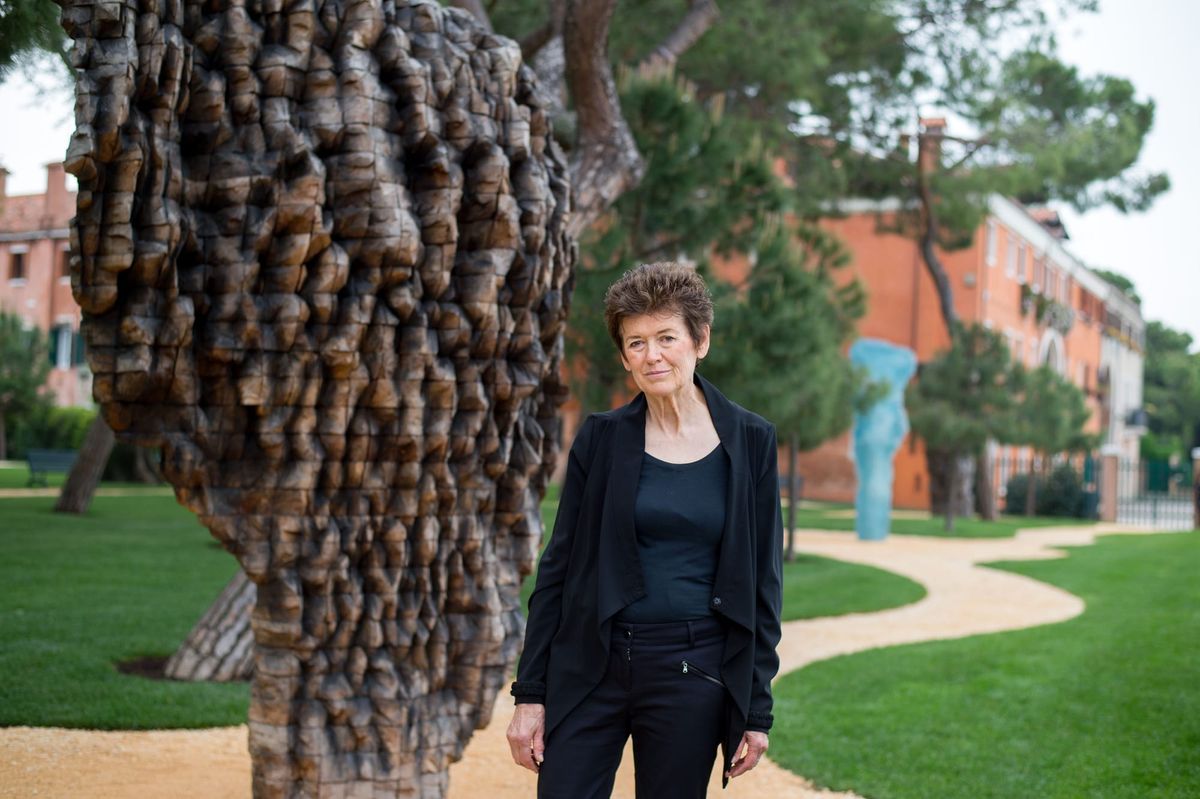
Ursula von Rydingsvard, a sculptor whose monumental works were assembled from ordinary cedar beams into undulating, organic forms, died at her home in Manhattan on the morning of 27 October, aged 84. Her studio manager, Courtney Childress, said the cause was Alzheimer's disease. Von Rydingsvard worked for more than five decades, and her pieces ranged from clusters of cones to a tornado-shaped tower some 17 feet tall and built from 15,000 pounds of timber.
Her signature material was the standard four-by-four cedar beam. She and her assistants marked the beams in pencil, scored them with circular saws, and stacked them like bricks into rising structures that widened as they climbed, sometimes dusting the surfaces with graphite or chalk. The finished forms suggested cave walls, breaking waves, seashells and ancient trees. Though she also worked in bronze, textiles and, early on, animal intestines, cedar remained the defining medium of her practice.
Her childhood shaped that practice. Born in 1942 in Deensen, Germany, to a Polish mother and a Ukrainian father, she spent her earliest years amid the upheaval of the Second World War, and her family of nine passed through eight labour and refugee camps before emigrating to the United States. That history of displacement and endurance fed directly into work that treated humble timber as something monumental.
Among her best-known public works is Ona, unveiled in 2013 beneath the oculus of Brooklyn's Barclays Center: a rippling cedar mass weighing 12,000 pounds and standing 19 feet tall, its title the Polish word for "she" or "her". Von Rydingsvard welcomed visitors touching the work, saying she liked the way handling polished the wood. She is survived by a body of public sculpture across the United States and Europe that turned a builder's material into objects of startling, bodily presence.