Museum report·Washington
Trump Declares the Oval Office a National Monument
President Trump has signed a proclamation under the Antiquities Act designating the Oval Office, the Outer Oval and the Cabinet Room as a national monument, to be managed by the National Park Service.
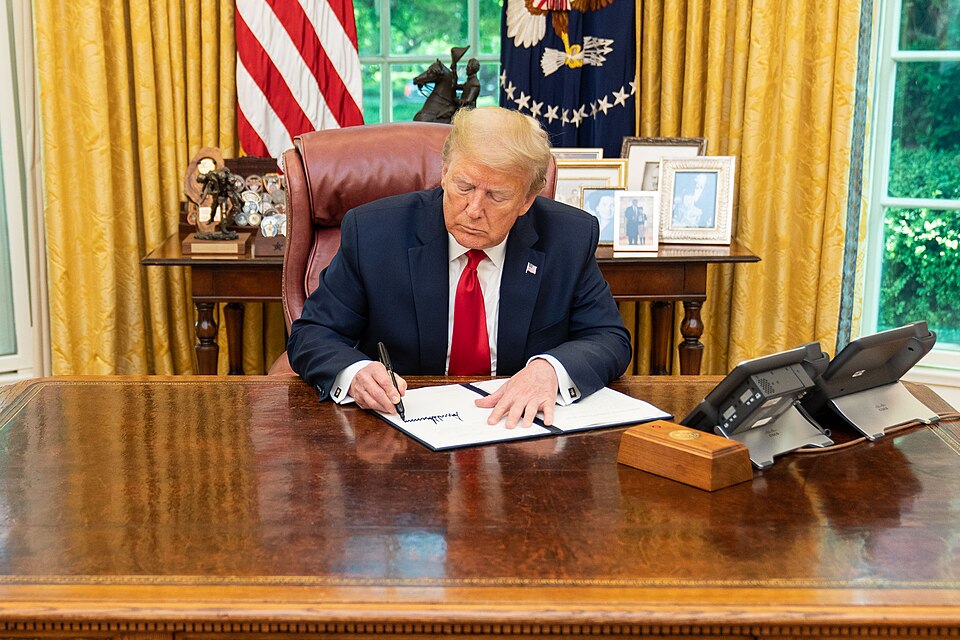
President Donald Trump has signed a proclamation designating the Oval Office as a national monument, using the Antiquities Act to place the most famous room in American politics under formal federal protection. The proclamation, signed on 5 November, covers the Oval Office itself, Room 110, together with the Outer Oval, rooms 106 and 108, and the Cabinet Room, Room 105, at the White House.
Under the designation, the National Park Service will take responsibility for managing the rooms and drawing up a preservation plan. The move does not freeze the spaces in time: redecoration and changes to furnishings will still be permitted, so future presidents will retain the long-standing freedom to reshape the office to their taste. The White House as a whole is already listed as a National Historic Landmark.
The use of the Antiquities Act, a 1906 law that allows presidents to protect historic and scientific sites without Congress, is striking because it has almost always been applied to landscapes, archaeological sites and natural features rather than to working rooms inside a residence. The designation places the Oval Office in the same legal category as places such as the Statue of Liberty and the Grand Canyon.
The decision is expected to draw legal and political scrutiny, including questions about whether a sitting president can use the Act to protect the very office he occupies, and about how the Park Service will balance preservation duties with the daily functioning of the presidency. For now, the rooms continue to operate as before, with the new status recorded as a formal layer of protection.