Market dispatch·Buda
159 Years in a Cigar Box: Civil War-Era Gold Coin Found in a Texas Closet Sells for $97,600
A previously unknown 1867-S Liberty Half Eagle, discovered in a cigar box inside a Buda, Texas closet, sold for $97,600 at Heritage Auctions' GACC sale on October 8-9, more than quadrupling the auction record for the issue and earning the finest-known designation.
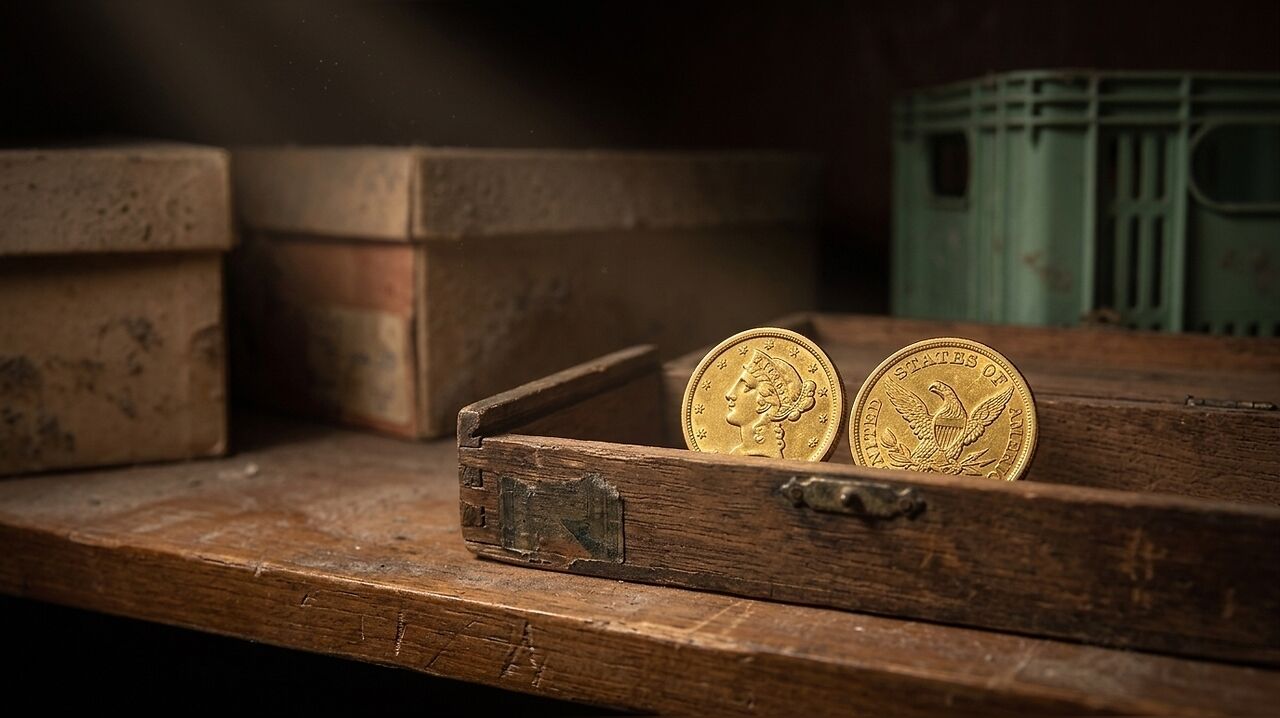
The coin that changed the condition census for 19th-century American gold began its modern life inside a green milk crate, tucked into a bedroom closet in Buda, Texas. During a routine estate appraisal, appraisers opened the crate and found two shoeboxes and an old cigar box holding assorted 19th-century currency. Inside the cigar box sat an 1867-S Liberty Half Eagle, a five-dollar gold piece struck in San Francisco in 1867.
Family heirs said the collection traced back to their great-grandfather, a Union soldier who had served in the Civil War before settling in Columbus, Ohio. Passed from one generation to the next without anyone recognizing the half eagle's significance, the coins eventually traveled with the family to Texas and sat untouched in the closet for decades.
The submitter sent the coin to the Professional Coin Grading Service, where it received a Mint State 63 grade — the first 1867-S Half Eagle ever to achieve that mark, two full points above the next-highest-graded example. Of the 29,000 Liberty Half Eagles the San Francisco Mint produced in 1867, most circulated heavily across the western frontier; Heritage estimates that fewer than 100 survive in any condition and only two are known in Mint State.
Consigned by the heirs to Heritage Auctions' GACC U.S. Coins Signature sale in Dallas on October 8-9, 2026, the coin fetched $97,600. The result more than quadrupled the previous auction record of $22,800 for the issue — a mark Heritage itself had set in 2021. The same sale was headlined by a record $2.928 million for a 1792 half disme, making the little-known gold coin's emergence one of the auction's most talked-about surprises.