Exhibition preview·Tainan
Tainan launches its first art biennial with seven walking routes through the city
The inaugural Tainan Art Biennial opens on 31 October 2026 and runs to 1 March 2027, inviting visitors to explore the city through seven themed routes linking exhibition venues, markets, temples and historic sites.
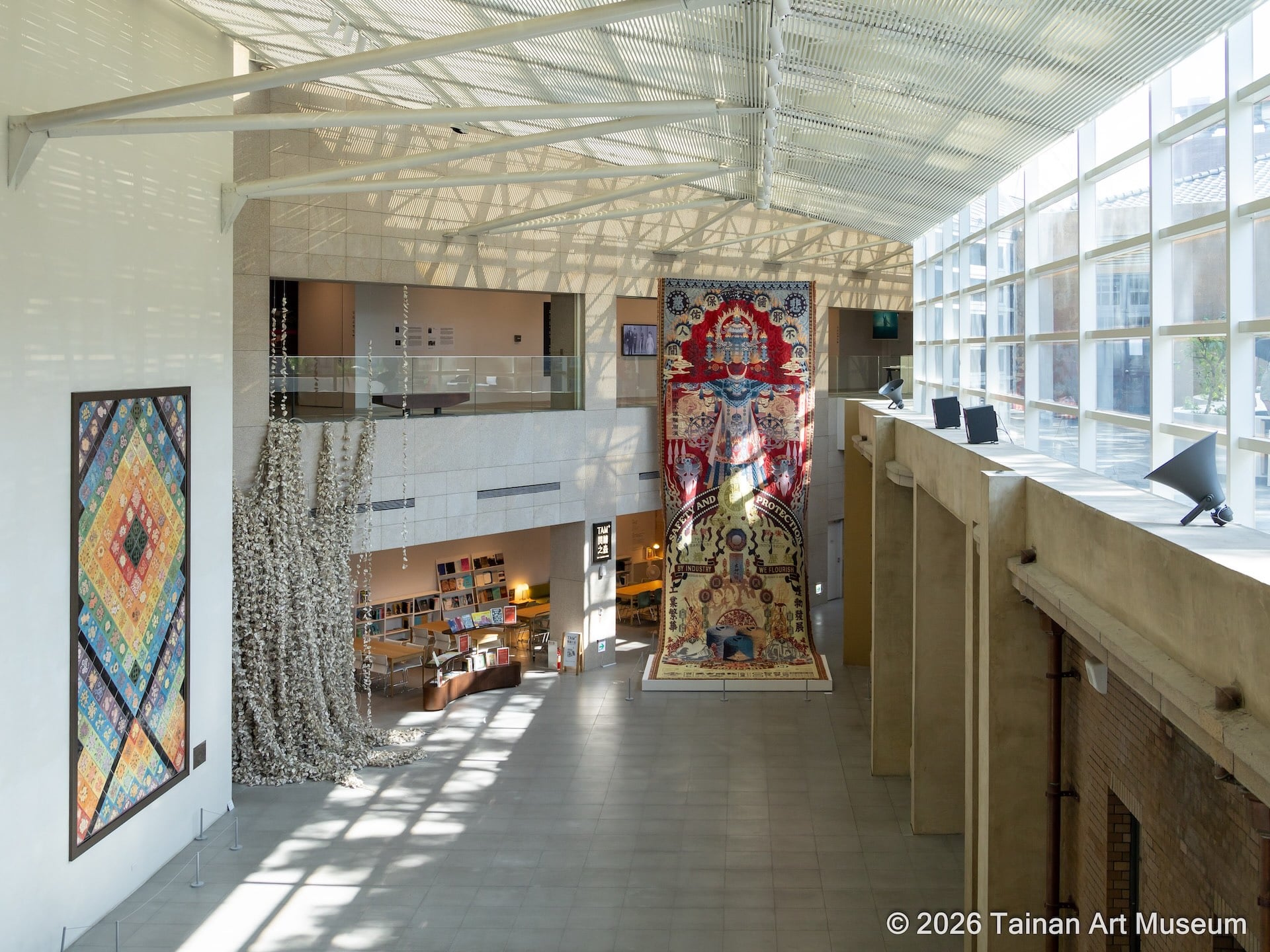
Tainan is about to get its own biennial. The first edition of the Tainan Art Biennial opens on 31 October 2026 and continues until 1 March 2027, with exhibitions spread across museums, memorial halls, temples and a market building. Rather than confining visitors to a single venue, the organisers have mapped seven routes that lead audiences out into the streets, lanes and neighbourhoods of the historic southern Taiwanese city.
Each route follows a different thread of Tainan's story. One traces design history that has slipped from public memory; another revisits the site of a colonial-era trial; a third looks back at the alternative art spaces of the 1990s. Other paths take in temple culture and the tiger gods worshipped in local shrines, and the seeds carried by migrants that took root in the city's gardens and kitchens. The premise is that the city itself becomes the exhibition, and that walking it is a way of reading its layered past.
The works on show span generations of Taiwanese artists, from modern masters such as Lin Yushan and Guo Xuehu to figures including Yang Yingfeng, Yan Shuiling and Gao Junhong, alongside contemporary makers such as Wu Gengzhen, Guo Yuping, Huang Huacheng and Liao Xuanzhen. A fibre co-creation project with local women, shown at the memorial hall and the market building, weaves community participation into its making.
For a city better known for its temples, street food and Dutch colonial fort than for large-scale contemporary art events, the biennial marks a bid to put Tainan on Taiwan's cultural map in its own right. If the seven routes draw the crowds the organisers hope for, the experiment could become a fixture, giving visitors a reason to experience the city at walking pace rather than through a single museum door.