Exhibition preview·London
Kawamata raises a timber nest over the Ruinart bar as Frieze London opens this week
Tadashi Kawamata has created a site-specific timber installation for the Ruinart Art Bar at Frieze London (14–18 October), alongside drawings and models from his Reims residency that led to three permanent works for the champagne house.
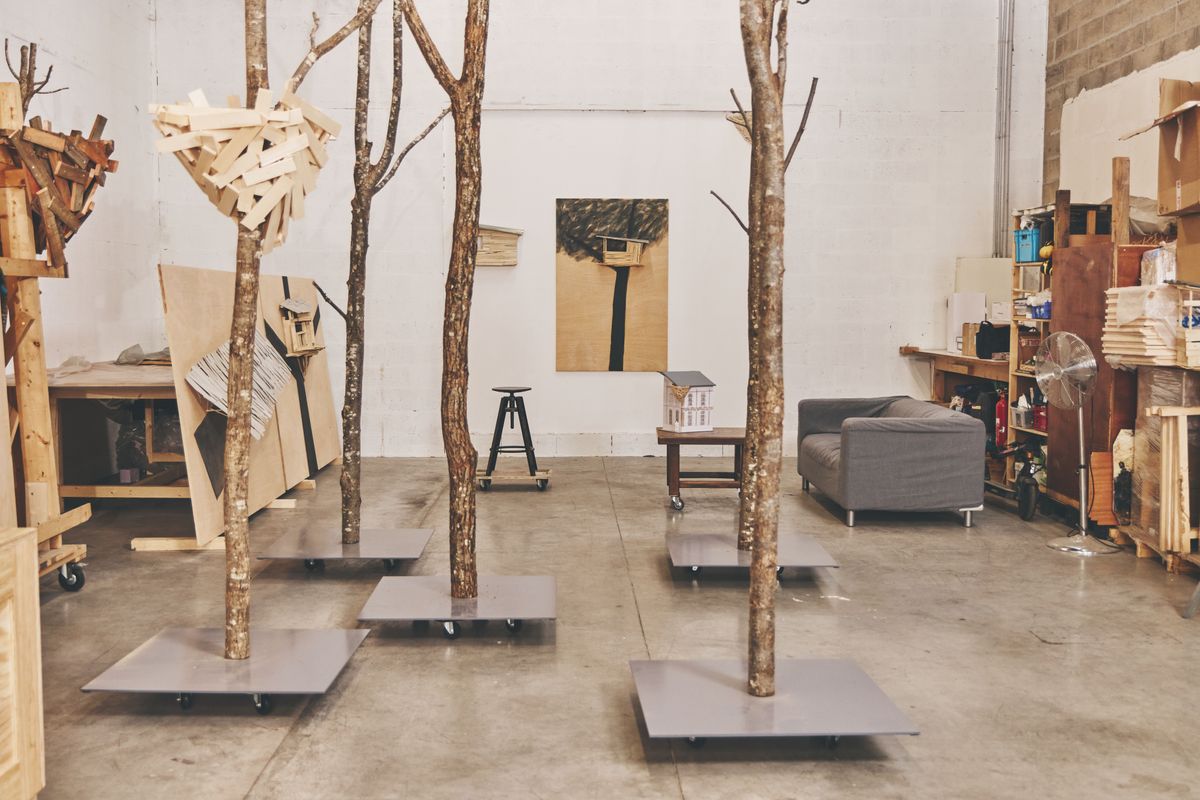
With Frieze London opening its doors on 14 October, one of the fair's most-visited social spaces is doubling as an exhibition venue. Japanese artist Tadashi Kawamata has built a site-specific installation for the Ruinart Art Bar, accompanied by drawings and models tracing the origins of his long-running collaboration with the champagne house. Kawamata, born in Hokkaido in 1953, has spent more than four decades constructing installations from reclaimed timber in public spaces and historic sites around the world. His signature structures — huts perched in trees, nests grafted onto building facades — propose alternative forms of shelter while leaving their occupants conspicuously exposed. Early in his career he gained international attention at documenta 8 in 1987, where he assembled Destroyed Church from scrap wood amid the ruins of Kassel's war-damaged Garnisonkirche, a construction that seemed permanently on the verge of collapse. For Frieze London, which runs 14–18 October 2026 in Regent's Park, Kawamata's contribution grows out of a residency at Ruinart's headquarters in Reims under the house's Conversations with Nature programme. The drawings and models on view in the Art Bar document the thinking behind three permanent works now installed at the company's site on Rue des Crayères, including Nest, a timber construction that bulges from the corner of a historic building high above the street. The artist has said he aims to create fleeting moments rather than permanent monuments, shaping fragile forms by hand in tune with their surroundings. The commission continues Frieze's habit of folding artist projects into its hospitality spaces, and lands as the fair prepares for one of its most closely watched editions, with London's market showing fresh signs of momentum ahead of the October auctions.