Market dispatch·Stockholm
A Josef Frank cabinet lined with a 1550 map of Paris anchors Stockholm's autumn Design Sale
Stockholms Auktionsverk has named a rare Josef Frank cabinet, faced with Truschet and Hoyau's 1550 map of Paris, as the highlight of The Design Sale on October 27–28, tracing its origins to Frank's collaboration with Estrid Ericson at Svenskt Tenn.
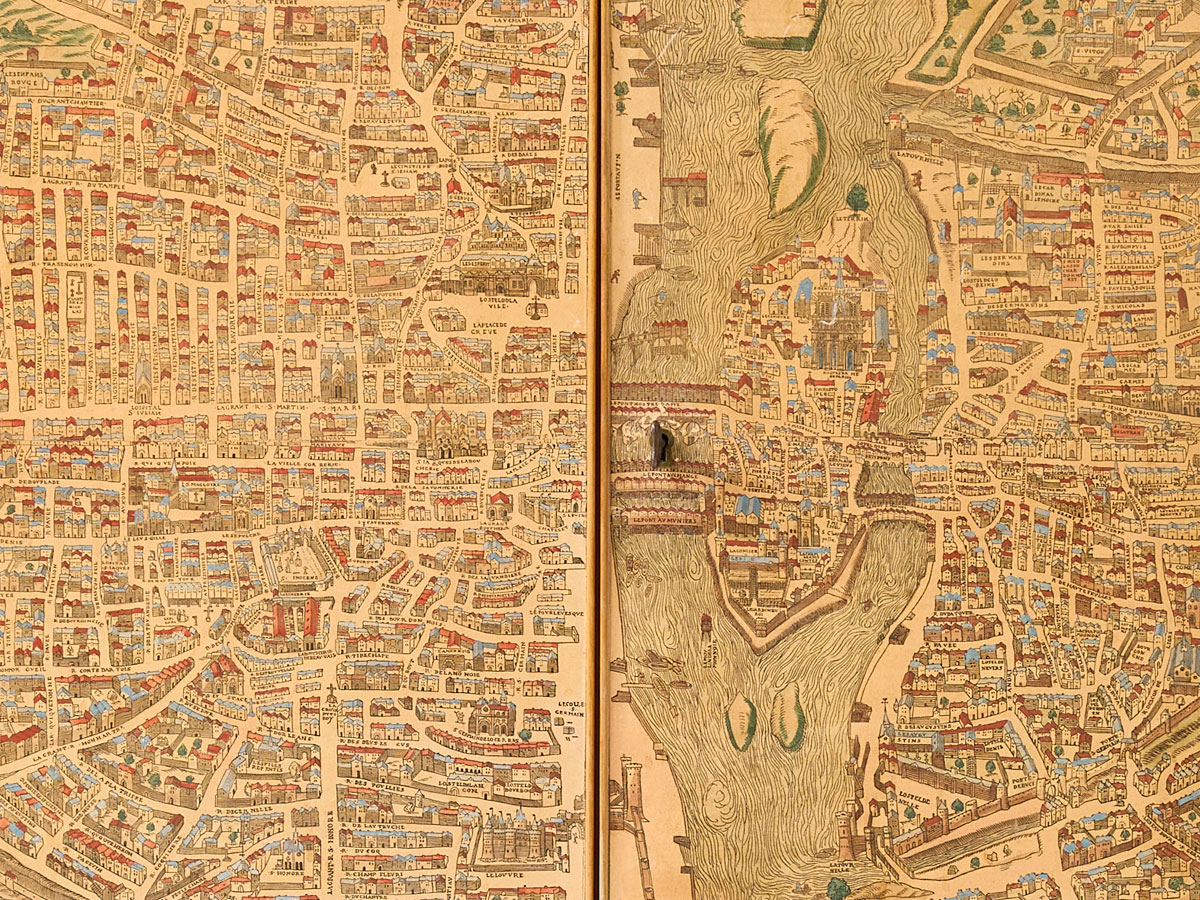
Stockholms Auktionsverk has spotlighted a rare Josef Frank cabinet faced with a sixteenth-century map of Paris as the headline piece of The Design Sale, its autumn design auction running October 27 and 28. The announcement, carried on the auction house's own news page on October 16, places the piece at the center of the season's curated design offering.
The cabinet grew out of Frank's long collaboration with Estrid Ericson, which began in the spring of 1934 at Stockholm's Svenskt Tenn, where Frank was already an established architect and furniture designer. Together they developed the practice of covering exclusive cabinets and chests of drawers with printed paper or textiles — most often floral plates, later including less common motifs such as birds or monkeys. Map-covered examples are considerably rarer: a small number used Georges Peltier's map of Paris between 1937 and 1943, and a cabinet with a London map was exhibited at the Nationalmuseum in 1952.
This example carries Truschet and Hoyau's map of Paris from 1550, a detailed rendering of the city at the height of the French Renaissance, when Paris was one of Europe's central cultural hubs. Its first owners were a professor's family with a passion for cartography and history, and Frank's own connection to the French capital — including participation in the world exhibitions of 1925 and 1937 — may explain the choice of motif. The image of a vibrant, culturally central Paris also echoes the city's postwar rebirth in the early 1950s, when it once again emerged as a leading intellectual center.
Ericson's hand in the creation cannot be ruled out either: she regularly scoured antiquarian bookshops for engraved plates with which to cover furniture, including copperplate engravings from Buffon's 1749 Histoire Naturelle found for a monkey-motif cabinet. Frank himself would later describe this reliance on chance finds as accidentism — chance operating as a principle of interior design.


