Museum report·Curahuara de Carangas
Roof Saved, Murals Safe: Bolivia's 418-Year-Old 'Sistine Chapel of the Andes' Nears Restoration's End
Conservation work is nearly complete at the Santiago de Curahuara de Carangas church in Bolivia, known as the 'Sistine Chapel of the Andes' for its murals, after a US-funded project to repair its roofs, stone buttresses and adobe walls.
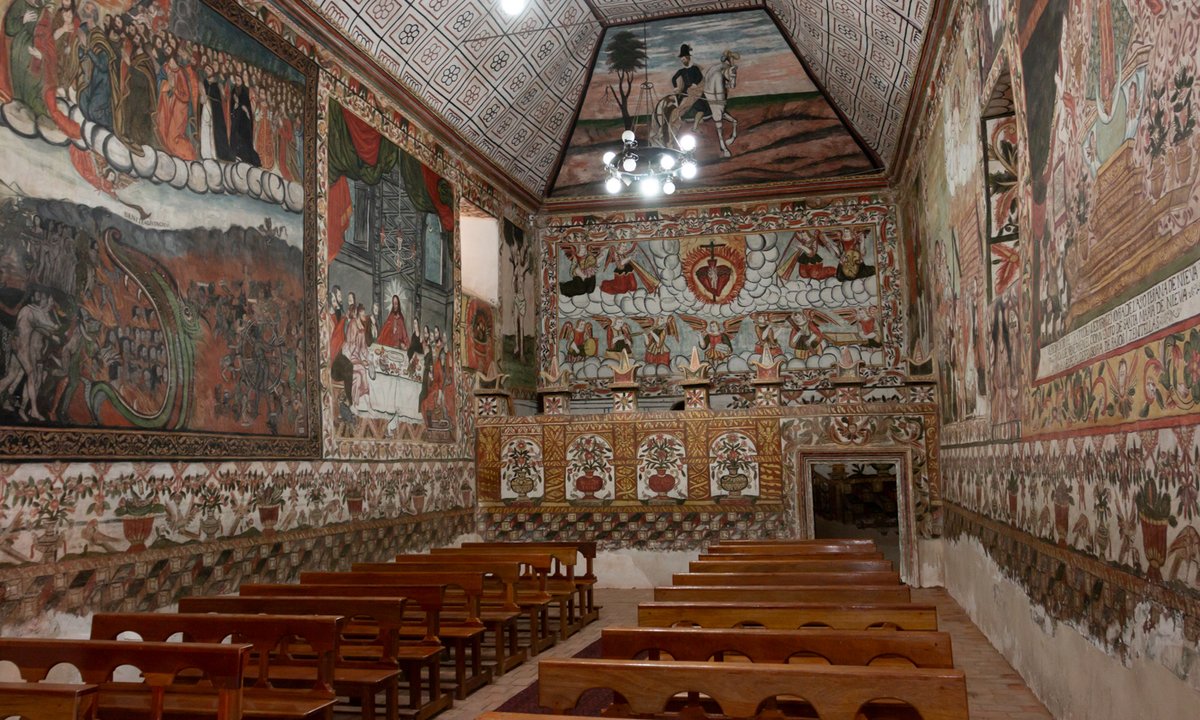
A conservation project at one of Bolivia's oldest churches is nearing completion. The Santiago de Curahuara de Carangas church, a 418-year-old adobe building celebrated as the Sistine Chapel of the Andes for its painted interior, has undergone months of work on its roofs, stone buttresses and adobe walls. The project, which began in May, is expected to finish by the end of November, with a mass planned for 15 December to mark its completion.
The church stands in the Andes at nearly 4,000 metres above sea level, about 170 kilometres west of the city of Oruro, and was declared a National Monument in 1960. Its murals, painted by Indigenous hands, set biblical scenes beside symbols of Andean belief, recording an encounter between Spanish Catholicism and older local traditions. Keeping rain out of the building was the priority of the latest work: as the architect in charge, Josefina Matas, explained, the paintings depend on the roof staying sound, since leaks would put the murals at risk.
Funding of about $66,000 came from the US Department of State's Ambassadors Fund for Cultural Preservation, with technical support from heritage specialists and the Catholic University of Bolivia. The team relearned a local roofing method, laying straw over hollow cane mats to make the covering more resilient, and about a dozen Aymara workers, including several women, have been putting the finishing touches to the thatched roof and whitewashing the walls. The new roof is expected to last around 25 years in conditions of freezing wind, intense sun, rain and hail.
The schedule slipped by about a month after protests blocked roads across Bolivia in May and June, delaying the arrival of materials. The bishop of Oruro, Krzysztof Bialasik, submitted the project for US funding, and he will lead the December mass alongside the apostolic nuncio. The work follows an earlier restoration more than a decade ago that was funded by the German embassy in La Paz.