Exhibition preview·United States
Route 66 Turns 100 and the Race Is On to Save Its Diners, Motels and Neon Signs
As US Route 66 marks its centenary on 11 November, preservationists are racing to protect what survives of the decommissioned highway, from Art Deco service stations to the Blue Whale of Catoosa, with a push for National Historic Trail status.
US Route 66 officially began on 11 November 1926, with the launch of the nation's first federal highway system. A century later, the road that became known as the Main Street of America is the focus of an accelerating preservation effort, as communities along its 2,400 miles try to save what survives of its Art Deco service stations, mid-century diners, neon signs and roadside attractions.
Route 66 was decommissioned in 1985, when the new interstate highways bypassed it. Since then, local and state associations have worked to preserve its remnants, and in 1999 the federal government created the National Park Service Route 66 Corridor Preservation Program. The National Trust for Historic Preservation now runs the Preserve Route 66 Initiative, which makes grants reflecting the range of history along the route, including stories often overlooked in the nostalgia for Americana, such as the Threatt Filling Station in Luther, Oklahoma, believed to be the only known Black-owned gas station on the highway.
Advocacy is under way to give Route 66 National Historic Trail designation, with a bipartisan bill introduced last year. The designation would formally recognise the roadway and support economic development in the eight states it crosses. The National Trust has also partnered with Google Arts and Culture on a storytelling collection of more than 130 stories from over 20 partner organisations.
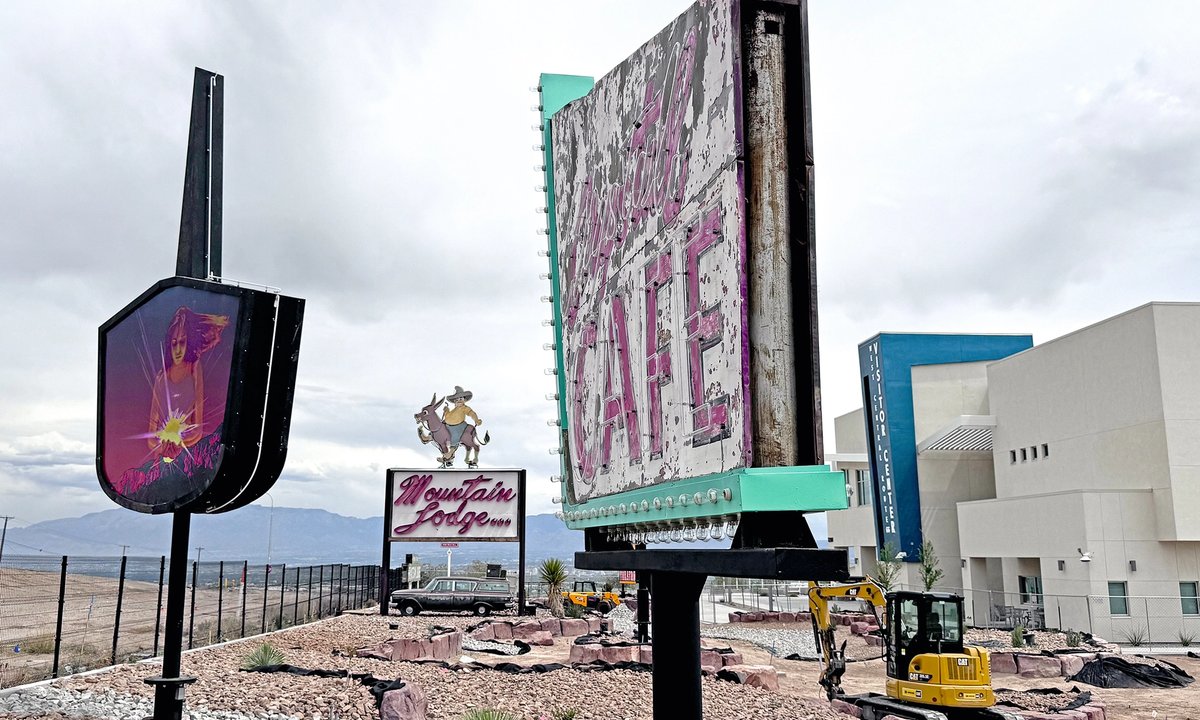
Individual towns are acting too. The city of Catoosa in Oklahoma acquired the beloved roadside Blue Whale in 2020 from the family of its creator, Hugh S. Davis. Albuquerque opened a Route 66 Visitor Center last April, with a park of restored roadside signs. The centenary has given all of it new urgency: portions of the route are lost each year, and the anniversary is seen as the moment to secure what remains.