Exhibition preview·Venice
Ronald Ventura stages dialogue between Venice and Malabon in Biennale collateral show Luna
Whitestone Gallery published an interview on 1 October with Ronald Ventura on Luna, his collateral event at the 61st Venice Biennale. Curated by Ruel Caasi at Docks Cantieri Cucchini, the show connects Venice with the artist's hometown Malabon through water, tides and memory.
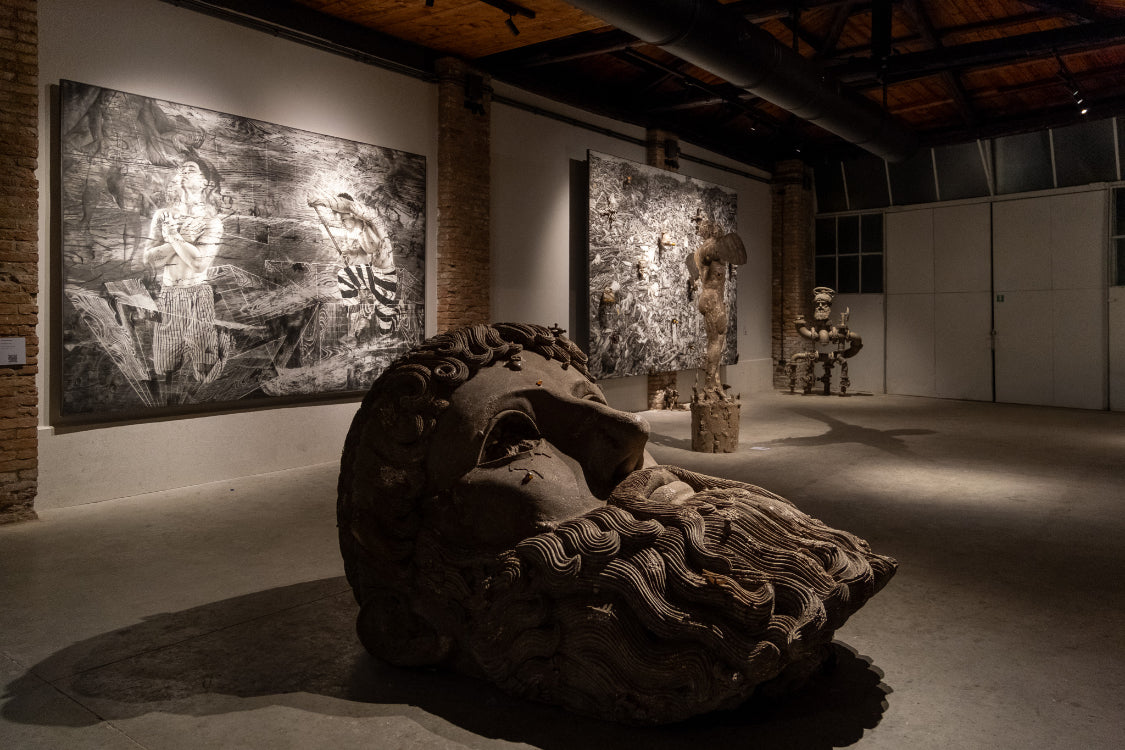
Whitestone Gallery has published an interview with Filipino artist Ronald Ventura about Luna, his large-scale collateral exhibition at the 61st Venice Biennale. The conversation, posted on 1 October, centres on the dialogue between two water-shaped cities that underpins the project. Staged at Docks Cantieri Cucchini in the Castello district of Venice, Luna runs from 9 May to 22 November 2026 as an official Collateral Event of the Biennale Arte 2026. Curated by Ruel Caasi and promoted by MUSE – the Science Museum of Trento – together with Castel Belasi, the Contemporary Art Center for Eco Thought, the exhibition brings together more than a dozen newly realised works spanning oil painting, charcoal drawing, resin sculpture, Murano glass and video installation. Ventura describes months of research, site visits and experimentation in preparation. Rather than surveying his own output, he and Caasi set out to build the show around the relationship between Venice and Malabon, the Philippine fishing community where the artist grew up. Both cities are shaped by tides, flooding and waterborne trade, and the exhibition treats water as a carrier of history, migration and survival — in the artist's words, water remembers. The lunar cycle supplies the guiding motif, linking tidal rhythms to questions of ecological vulnerability. The project also forms part of MUSE's We Are the Flood programme, which pairs contemporary art with scientific research and ecological thought. Ventura, based in Manila and regarded as one of Southeast Asia's leading artists, is known for a visual pastiche in which photorealism meets Renaissance references and cartoon imagery. In Luna that layered language is turned toward the slow sedimentation of cross-cultural exchange, using the moon as a point of connection between geographies that share the same tides.