Market dispatch·New York
Ancient Marble Emperor Sells for Record $34.3M at Sotheby's New York
A first-century cuirassed marble torso of a Roman emperor sold for $34.3 million at Sotheby's New York on Oct 21 after a 14-minute bidding war between five collectors, setting a new auction record for a Roman antiquity. The star lot of the 'Magnum Opus' evening sale, whose 64 lots totaled $63 million, had last sold for $7.4 million in 2010.
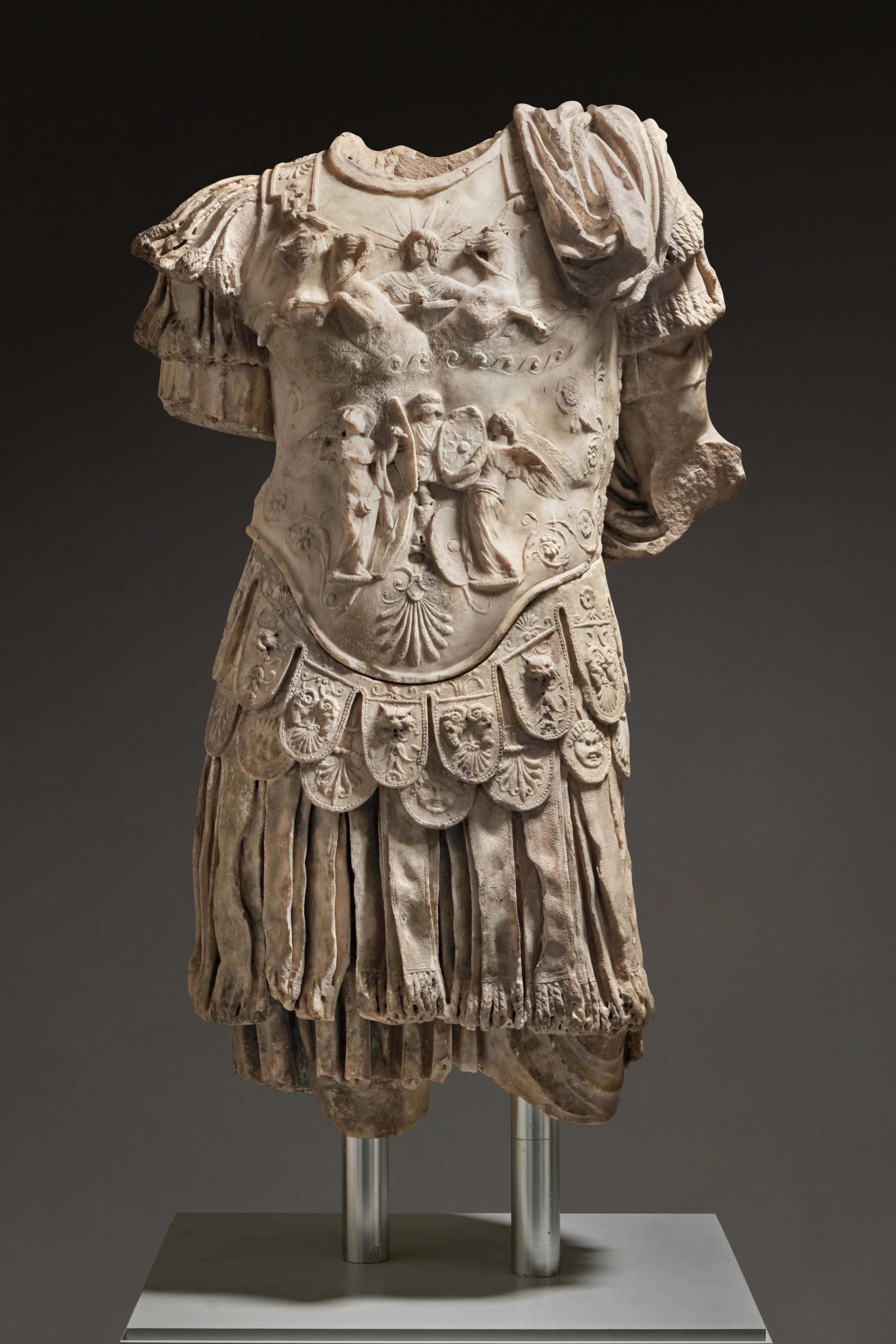
A first-century marble torso depicting a Roman emperor in ornate armor sold for $34.3 million at Sotheby's New York on October 21, becoming the most expensive Roman antiquity ever sold at auction. The result followed a 14-minute bidding contest among five collectors, during which the sculpture flew past its $12 million presale estimate to reach nearly triple its high figure. It was the star lot of the first evening sale in Magnum Opus, a single-owner series in which all 64 lots sold for a combined $63 million against a high estimate of $47.6 million.
The three-and-a-half-foot sculpture, carved in the first half of the first century, likely originates from Salona in modern-day Croatia, where it would have stood in a temple on the city's civic forum. Its execution is so sharp that scholars believe it was carved in Rome by sculptors of Greek origin, and the stone has been traced to quarries on the Aegean island of Paros. The cuirassed armor presents the emperor as a divinely sanctioned guarantor of universal order, imagery closely associated with the line of Augustus.
The torso carries a long documented history. It was part of the collection of Wilhelm Aloys Maximilian Neumann, a 19th-century collector in Graz, Austria, and at the end of World War II the family concealed it between two plastered-over doors as Soviet troops advanced. It was rediscovered during a home redesign, and Sotheby's had previously sold it in 2010 for $7.4 million, meaning its value has more than quadrupled in 16 years. Previous auction highs for Roman antiquities were a bronze Artemis with a stag, which brought $28.6 million at Sotheby's in 2007, and a marble Aphrodite that fetched $24.5 million in 2021.
The sale opens the Magnum Opus series, an unnamed single collection of more than 900 works spanning 25 categories that Sotheby's will offer across sales in New York and Paris through 2027. The record result for the torso signals continued appetite for ancient sculpture at the very top of the market, with the evening's full sell-through pointing to cross-category collecting as a growing force.


