Museum report·Houston
'Radiant Geometries' Traces Indigenous Knowledge Systems Across the Americas at Houston's Moody Center
The Moody Center for the Arts at Rice University is showing 'Radiant Geometries: Vectors of Knowledge from the Indigenous Americas', an exhibition curated by Noor Alé that brings together contemporary Indigenous and Latin American artists working with ancestral mathematics, science and technology.
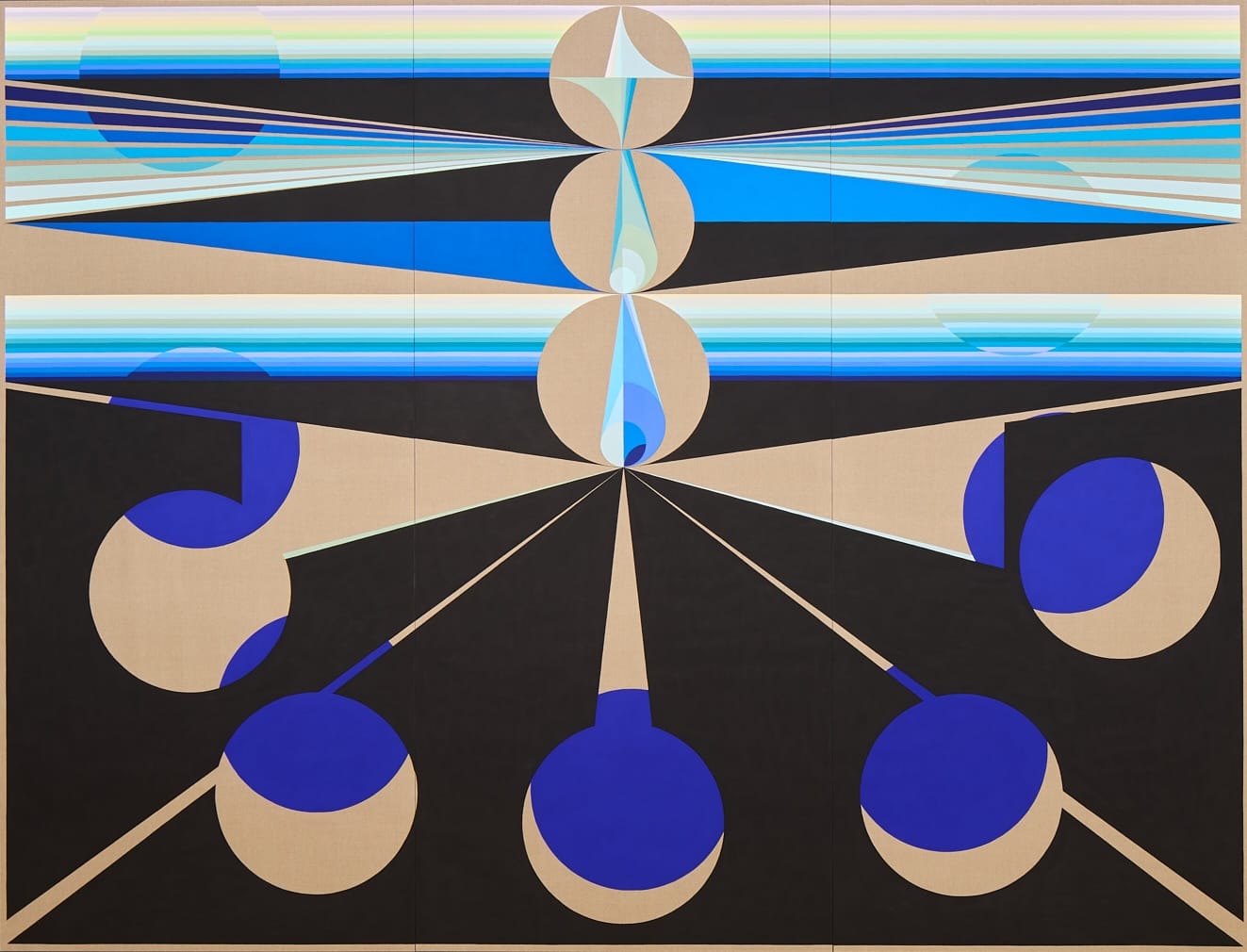
The Moody Center for the Arts at Rice University in Houston has opened Radiant Geometries: Vectors of Knowledge from the Indigenous Americas, an exhibition that approaches mathematics, science and technology as Indigenous knowledge systems rather than Western inventions. Curated by the centre's associate curator Noor Alé, the show runs from 4 September to 19 December 2026 and spans South, Central and North America. The exhibition gathers contemporary artists whose practices channel ancestral ways of knowing. Navajo/Diné weaver Melissa Cody builds on three generations of textile tradition, merging classic motifs with contemporary designs worked on both a vertical Navajo loom and a mechanised Jacquard machine. Eamon Ore-Giron contributes large-scale geometric abstractions that draw on Native American medicine wheels, Amazon Basin tapestries and twentieth-century hard-edge painting. Aymara artist Natalia Montoya Lecaros shows Tótems de emergencia, four freestanding mixed-media sculptures installed in a circle and evoking ceremonial dance. A site-specific commission anchors the presentation. Nanibah Chacon, a Diné and Chicana painter based in Albuquerque, has created Where Two Rivers Meet, a wall-spanning installation of taut music wires strung over guitar pickups that visitors are invited to pluck like a stringed instrument. The title refers to the confluence of the Colorado and Little Colorado rivers, a place of emergence in Diné cosmology. The curatorial argument runs through every room: geometry here is not an abstract system of forms but a spatial practice through which correspondences between land, sky, time and community are observed and carried forward. In that framing, the exhibition proposes an Indigenous historiography of mathematics, architecture and science — one that counters ideas of progress rooted in extraction and dispossession.