Policy brief·Abu Dhabi
Abu Dhabi's Public Art Biennial Asks Who 'Home' Belongs To — in a City Where Only 12% Hold Citizenship
The second Public Art Abu Dhabi Biennial, titled 'Home: A Glossary for a Communal Sense of Place', places 22 mostly new commissions across the city and the oasis town of Al Ain until 15 February 2027. Artistic director Elvira Dyangani Ose frames the show around everyday life and the many publics who share the emirate's streets without sharing its histories, rights or relationship to the land.
Abu Dhabi's second public art biennial is using the city's streets, farms and coastline to ask who the emirate really belongs to. Titled 'Home: A Glossary for a Communal Sense of Place' and organised by the Department of Culture and Tourism, it runs until 15 February 2027 and brings 22 works, most of them new commissions, to public sites across the capital, with four more in the oasis town of Al Ain. Artistic director Elvira Dyangani Ose writes about how a communal sense of place is formed by different cultures.
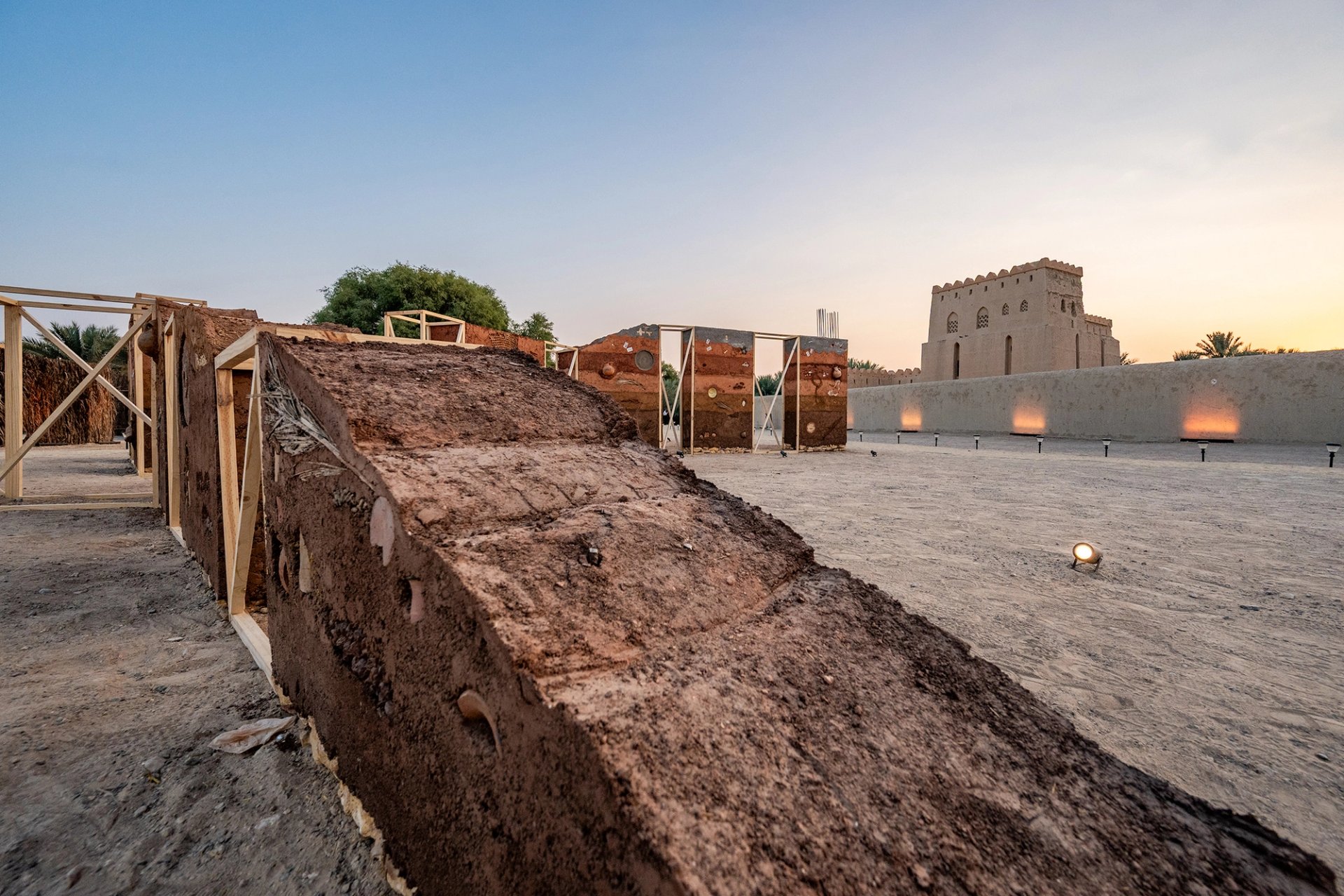
The works take everyday life as both backdrop and method. Outside the city, Asuncion Molinos Gordo has built a rammed-earth sculpture, 'Bil Hana wa Al Afia' (2026), among working farms, drawing on Iron Age irrigation systems still in use today. In the city, Shama Al Hamed has turned the cooling vents of the former industrial port into an installation of fluorescent aluminium ducting, while families gather at sunset on Ivan Argote's see-saw and animal-shaped slides.
The show also builds in permanence. Around half of the first edition's works were acquired by Public Art Abu Dhabi and remain on display, including a crescent of silver oyster sculptures by Emirati artist Farah Al Qasimi recalling the Gulf's pearl-diving past. Director Clemence Bergal says a similar acquisition round will follow this edition.
Migration and labour run through the biennial. Ghanaian artist Serge Attukwei Clottey has installed thousands of interlocking yellow plastic pieces made from Kuffuor gallons, Accra's containers for carrying oil, water and fuel, as a comment on unequal relations of labour and extraction. Yinka Shonibare's towering metal plume, painted in Dutch wax and Bedouin textile patterns, doubles as shade for outdoor labourers in the midday sun. The context is stark: only around 12 percent of Abu Dhabi's population holds citizenship, and migrant labour conditions have drawn criticism from leading human rights groups. Dyangani Ose concedes the show operates within limits, telling The Art Newspaper that little in it could be read as openly critical of the UAE — yet she argues its public setting opens conversations other institutions avoid.