Exhibition preview·Frankfurt
Memes, Bot Farms and Fascist Codes: Frankfurt Show Dissects Propaganda in the Post-Truth Era
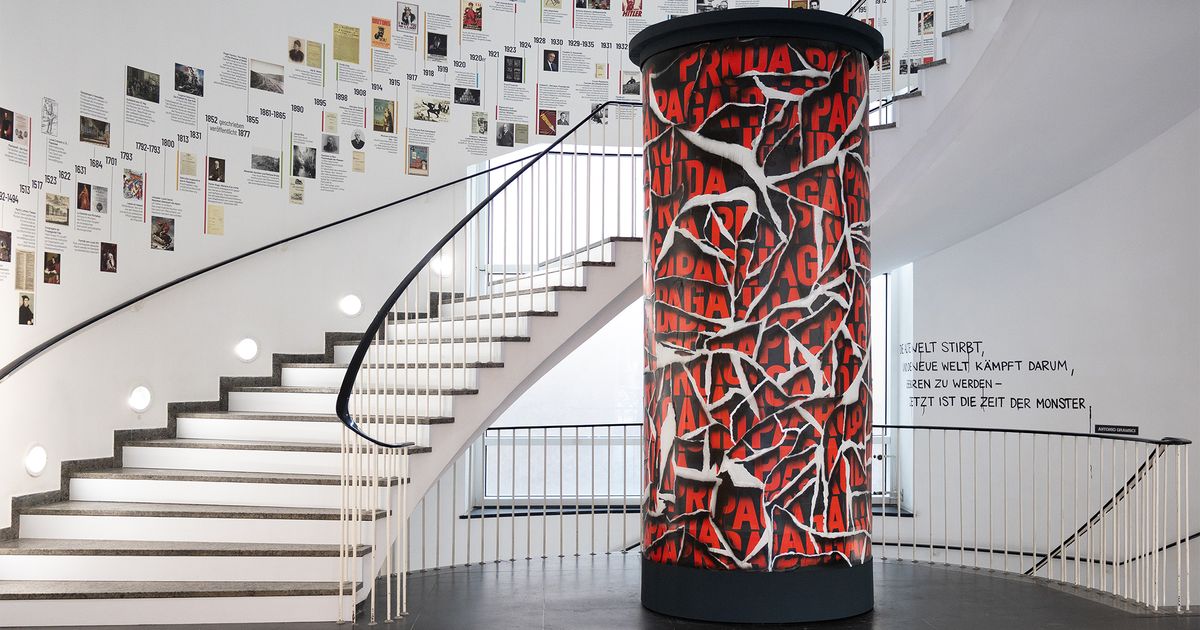
Frankfurter Kunstverein opens Propaganda on 14 November 2026, a group exhibition examining how propaganda works in the post-truth era, from memes and online subcultures to bot farms and fascist codes.
Frankfurter Kunstverein opens Propaganda on 14 November 2026, a group exhibition that asks how propaganda works in a post-truth era, not through state broadcasts alone, but through memes, online subcultures, bot farms and coded imagery. The show runs until 7 March 2027. Its subtitle, Flooding the Zone with Shit, It's About Money, Stupid!, borrows the language of information warfare to frame the argument: that today's propaganda is driven as much by commercial incentives as by ideology.
The participating artists are Joshua Citarella, Ganslmeier and Zibelnik, Ben Grosser, Playfool and Oguz Sen. Their works track how political messaging travels through the platforms and visual languages of the internet, from the ironic memes of fringe forums to the automated amplification of bot networks, and how extremist ideas are smuggled into mainstream culture through jokes, aesthetics and design. Several of the artists have built their practices around the internet's political undercurrents, documenting online subcultures and the hidden workings of the platforms that carry them.
The exhibition was developed with the Institute for Democracy and Civil Society in Jena and a research group at Goethe University Frankfurt and the Technical University of Darmstadt, grounding the show in current research on disinformation, radicalisation and digital culture. The collaboration reflects the Kunstverein's aim to treat the gallery as a place where academic research and artistic practice can meet.
Propaganda joins a growing number of exhibitions examining the politics of the feed, as museums and kunstvereins respond to a decade in which social media has reshaped how public opinion is formed. Where earlier shows about propaganda focused on posters and state media, this one starts from the premise that the most effective persuasion today is the kind that does not look like propaganda at all.