Market dispatch·Paris
£1.2m Pissarro Sale Annulled as French Court Orders Return of Nazi-Looted Landscape
A French court has voided the 2024 Sotheby's sale of a Pissarro view of Dieppe and ordered the painting returned to the heirs of Jewish banker Salomon Flavian, ruling it was seized in Paris in 1941 and rejecting claims it had left his collection earlier.
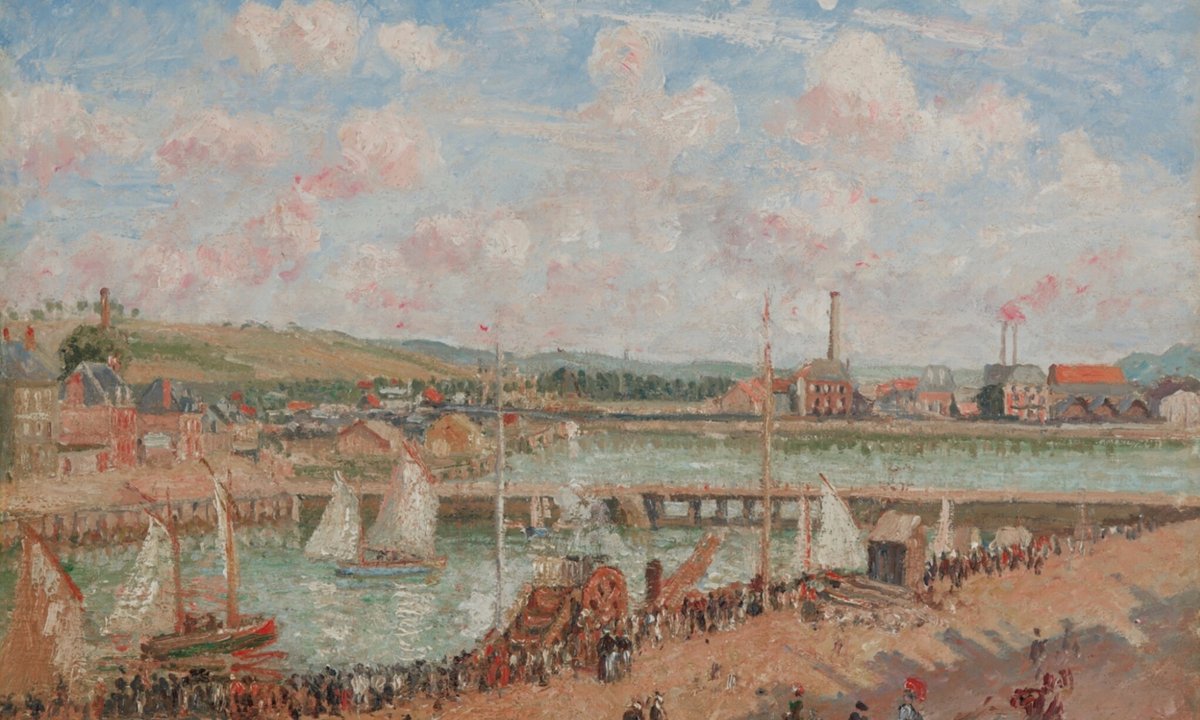
A court in France has ordered the return of a Camille Pissarro landscape to the family of a Jewish banker whose collection was seized during the Second World War, overturning a sale that took place at Sotheby's in London two years ago. The ruling, handed down on 5 November, cancels the 2024 transaction and requires the auction house to identify the buyer within two months, under a daily penalty of 1,000 euros.
The painting, a 1902 view of the fishing harbour at Dieppe in Normandy, was sold in London on 25 June 2024 for 1.2 million pounds. Its owner from 1935, Salomon Flavian, lost the work when his property was taken in Paris in 1941, and it appears in a French government register of looted art published in 1947. Sotheby's catalogue noted both facts, while stating that the picture was being offered under an agreement reached with Flavian's heirs.
That agreement became the centre of the dispute. Sotheby's said the heirs' consent had been arranged by Mondex Corporation, a Toronto firm that specialises in recovering looted art. But the lawyer for seven of Flavian's heirs told the court that only two relatives had signed, and the rest had not been consulted. The auction house and Mondex argued that the painting had in fact been bought in the late 1930s by the British artist and collector Edward Le Bas from the dealer Paul Rosenberg, and so had already left Flavian's hands before the seizure.
The judges rejected that account, finding no direct and convincing evidence of the supposed earlier sales, while the family's research offered a consistent body of evidence that the work was indeed looted during the war. Sotheby's said it was disappointed by the judgement, though it welcomed the dismissal of all claims against the company itself, and it is considering whether to join an appeal. Mondex has said it intends to appeal. The ruling could have wider consequences, since the court held that the annulment of the 1941 confiscation makes every later sale of the work void, a principle that may encourage similar claims elsewhere.