Profile·Global
A forgotten crate of glass negatives brings Philippe Halsman's unseen 1930s Paris to light
Thames & Hudson publishes Philippe Halsman: The French Crate on 17 November, presenting hundreds of glass-plate negatives from the photographer's early Paris years, rediscovered by his grandson Oliver Halsman Rosenberg in a long-forgotten wooden crate.
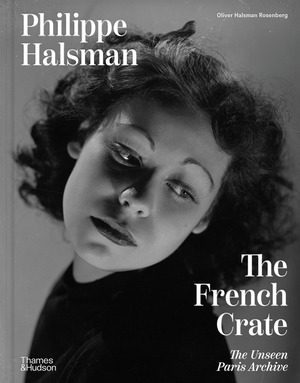
Hundreds of glass-plate negatives from Philippe Halsman's formative years in 1930s Paris, long believed lost, are published for the first time in a new Thames & Hudson book. Philippe Halsman: The French Crate was released in the United States on 17 November, and was presented at the Magnum Book Festival in Paris on 14 November.
Halsman fled Paris in 1940 as Nazi forces invaded, carrying only his camera and twelve prints. With Albert Einstein's help he settled in New York, where he later became famous for portraits of Einstein, Marilyn Monroe and Salvador Dali. After the war, a wooden crate of his glass plates was returned to him, only to sit forgotten for decades in the family archive.
The crate came to light when his grandson, Oliver Halsman Rosenberg, was clearing the family's former studio and home. Tucked in a far corner of a room he had been excavating layer by layer, it held hundreds of negatives alongside the original boxes used to store the plates. Rosenberg, who co-directs the photographer's estate, has built the book around that material, reproducing the glass surfaces, markings and storage boxes so that the physical character of the archive is part of the story.
The 168-page volume, with 126 illustrations, 25 of them in colour, captures Paris during a period of profound cultural and political change, and shows a young photographer developing the sharp eye and psychological insight that would define his later portraits. It is, in the publisher's words, a record of an artist and a city on the cusp of change, and a reminder of what analogue photography could hold.