Museum report·Frankfurt
Solved After 40 Years: Lost Parthenon Pediment Rebuilt in Frankfurt — but Greece Pulled Its Marbles
A Frankfurt research team says it has reconstructed the Parthenon's destroyed east pediment, depicting the birth of Athena, using clues from Roman sarcophagus lids. The show opens 18 November at the Liebieghaus, days after Greece withdrew its loans in protest at British Museum pieces in the display.
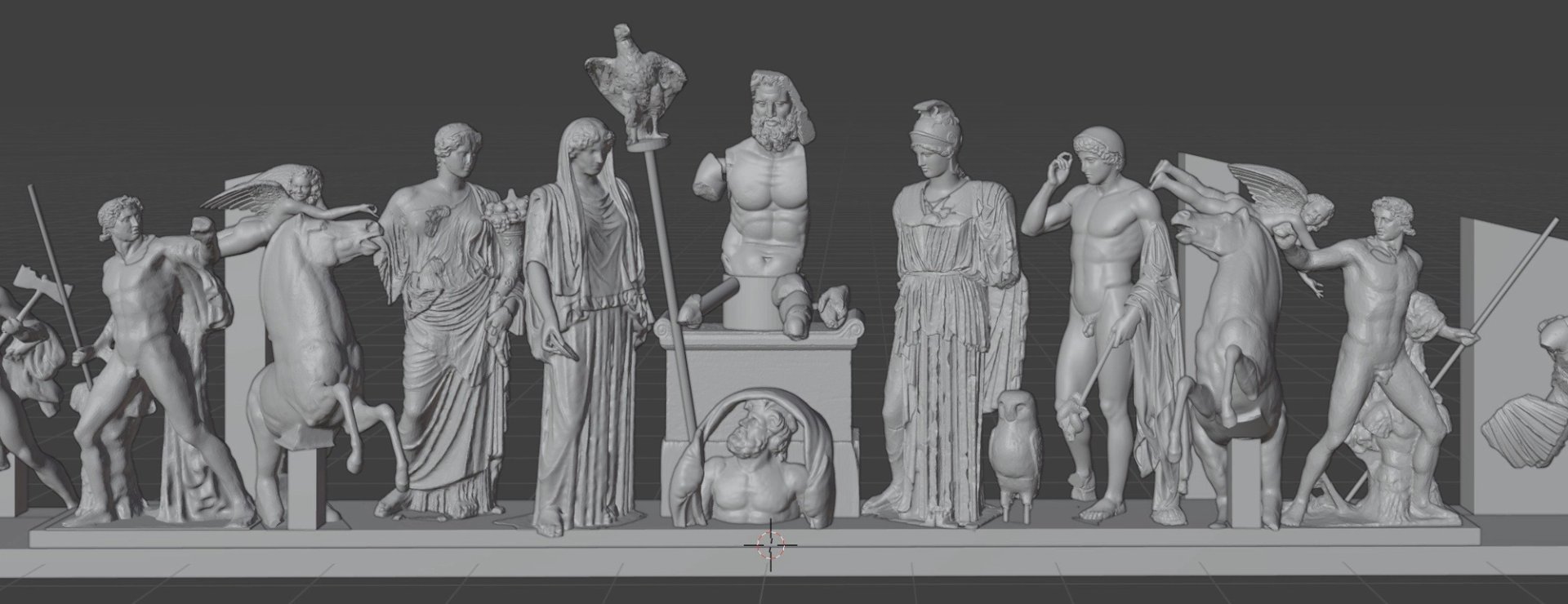
Four decades after he scaled the Parthenon by rope in the dark to hunt for traces of its lost sculptures, archaeologist Vinzenz Brinkmann says he has finally solved the puzzle of the temple's destroyed east pediment. The result goes on show at Frankfurt's Liebieghaus Sculpture Collection from 18 November, in an exhibition built around a full reconstruction of the scene of Athena's birth.
The pediment, once crowned by 39 figures up to 3.5 metres tall, was destroyed at some unknown point between the fifth century AD and 1670, and about 80 percent of it is still missing. Brinkmann, now head of antiquities at the Liebieghaus, describes the task as assembling a jigsaw without all the pieces. The breakthrough came from an unexpected place: the lids of Roman sarcophagi. During a 2014 visit to the Hermitage in St Petersburg, his team spotted a relief closely related to the pediment's composition, and eventually found nine such sarcophagi, most of them in Rome and the Vatican. Computer analysis showed the fragments and the reliefs matched exactly.
The reconstruction produced surprises. The twin horsemen Castor and Pollux, known to the Romans as the Dioscuri, appear on the pediment for the first time in any reconstruction, shown struggling to control rearing horses as Athena bursts from the forehead of Zeus. Other figures react to the same cosmic upheaval: Hermes clutches his hat as Mount Olympus shakes and the sea swells.
The scholarship, however, has been overtaken by politics. The exhibition was meant to include marble fragments from both the British Museum and the Acropolis Museum, but Greece withdrew its loan of nine fragments after its archaeological council objected to them being shown beside pieces removed from the Acropolis by Lord Elgin. The British Museum is still lending two fragments, and the Liebieghaus insists the withdrawal does not weaken the show, which rests on its own research. The episode is a reminder that, two centuries on, there is still little sign of a lasting settlement between Greece and the British Museum.