Museum report·L'Espluga de Francolí
280 Ice Age Engravings Hid in Plain Sight in a Spanish Tourist Cave for 19,000 Years
Archaeologists have identified 280 Palaeolithic engravings, including 55 animal figures, on the walls of Cova de la Font Major in Catalonia — a cave tourists have walked through for decades without noticing them.
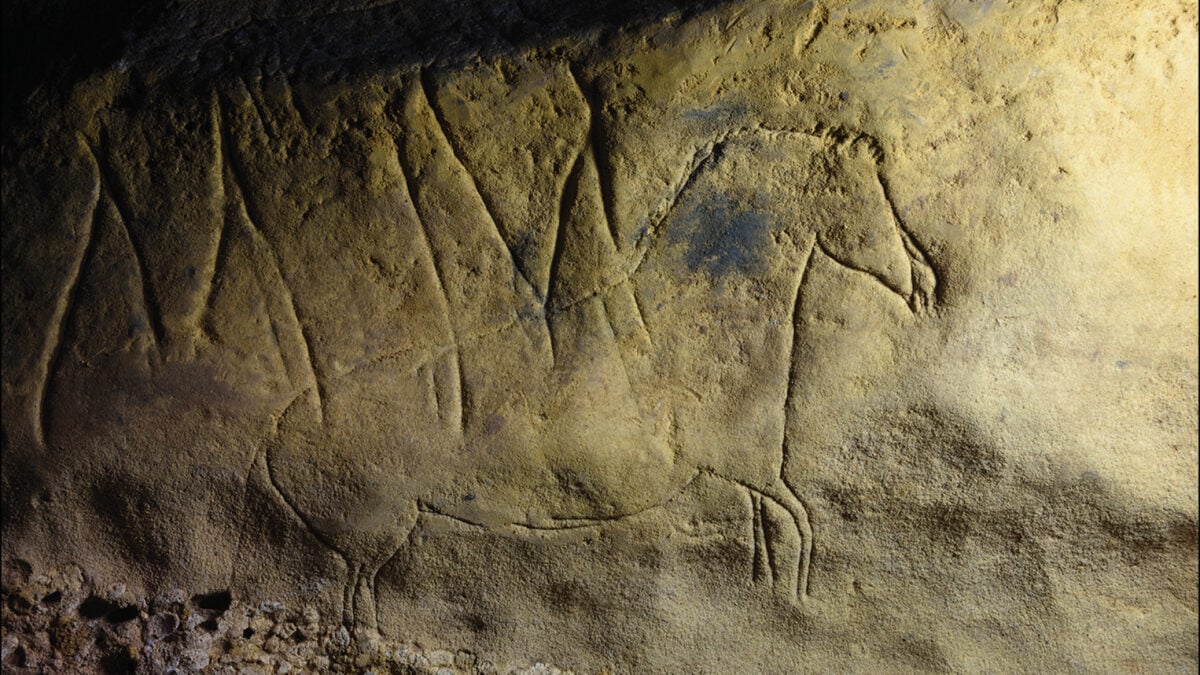
Thousands of visitors have wandered through the Cova de la Font Major in Catalonia over the past six decades, past walls that experts had long assumed were too soft to hold Ice Age art. They were wrong. Archaeologists have now identified 280 Palaeolithic engravings on the cave's walls and ceilings, including 55 animal figures, in what is one of the largest collections of Ice Age art on the Mediterranean side of the Iberian Peninsula.
The discovery began in 2019, when archaeologist Josep Maria Verges noticed a series of vertical lines on the cave walls. Working with colleague Miriam Salas-Altes, both of the Catalan Institute of Human Palaeoecology and Social Evolution, he went on to document the full assemblage: horses, deer and bovids alongside 40 parallel lines and a wide range of geometric shapes and signs. Their findings were published in the journal Antiquity on 5 November 2026.
Dating the engravings has proved harder than finding them, but the team has narrowed their age to at least 19,000 years, placing them in the Upper Palaeolithic, during the last glacial period. The cave, near the village of L'Espluga de Francoli, has been visited since the 12th century, and its entrance was sealed by sediment until 1853. Some of the engravings only came to light where researchers spotted older lines beneath modern graffiti in a side passage.
The find fills a conspicuous gap in the map of Palaeolithic art in western Europe, a region where such imagery had seemed scarce. Among the most striking images is a deer scene in which the artist used a natural fissure in the rock as a water feature, possibly one of the earliest depictions of water in human art. The engraved chambers are too fragile to open to the public, and the team hopes to refine the dating further, with more galleries still blocked by sediment deposits that may hide further work.