Museum report·Essen
How a German Collector Built One of Europe's First Islamic Art Collections: Folkwang Traces the Trail to Damascus
Museum Folkwang in Essen opens Following Damascus on 6 November, a 340-object exhibition tracing how founder Karl Ernst Osthaus gathered Islamic applied arts from the 4th to the 19th centuries, creating one of the first Islamic art collections in the German-speaking world.
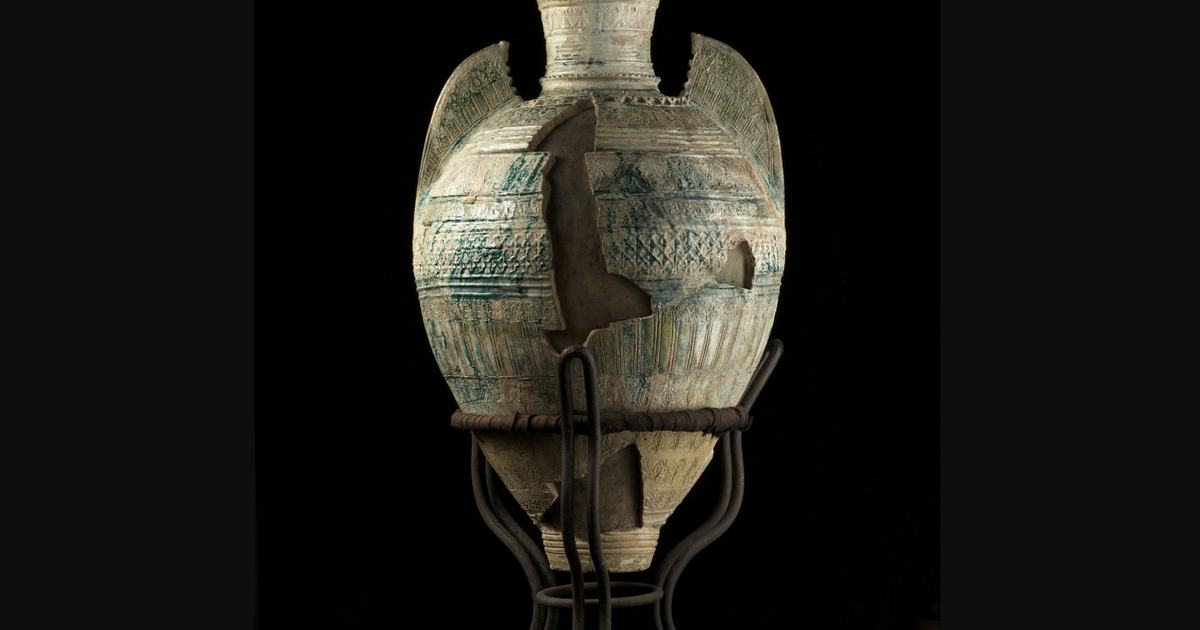
Museum Folkwang in Essen is devoting a major exhibition to the Islamic art collection assembled by its founder more than a century ago. Following Damascus, which opens on 6 November and runs until 21 February, brings together around 340 objects, from ceramics and textiles to metalwork and glassware, spanning the 4th to the 19th centuries. It is the first time the museum has examined this part of its own history in such depth.
The story begins with Karl Ernst Osthaus, who founded the museum in 1902 and died in 1921. From 1898 onwards, before paintings by Renoir or Van Gogh entered the collection, Osthaus was travelling through North Africa and West Asia buying applied arts, including in Syria. Those purchases laid the foundations of an Islamic department that took shape in Hagen and reached its final form in 1919, ranking among the first museum collections of Islamic art in the German-speaking world. The show follows his journeys and charts the collection's development, including the museum's role in the landmark Munich exhibition Masterpieces of Muhammedan Art in 1910.
Among the loans are a precious 17th-century Persian manuscript of the Shahnameh, the Book of Kings, now in Berlin and rarely shown in public, and a beam from the so-called Damascus Room, now in Dresden, presented as a key witness to the collection's history. The historical objects are set in dialogue with European modernism: a painting by Henri Matisse, a fabric design by Peter Behrens, mosaic designs by Johan Thorn Prikker and an architectural project by Bruno Taut.
A contemporary work by the Palestinian-Saudi artist Dana Awartani closes the exhibition, offering a present-day perspective on the historical material and on the Eurocentric assumptions behind early collecting. Curated by Salvatore Settis, Anna Anguissola and Chiara Ballestrazzi, with a design by Rem Koolhaas and AMO/OMA, the show asks how Islamic art was perceived and presented in Europe a century ago, and what those early encounters still reveal today.