Exhibition preview·Barcelona
The Painter Who Never Built: Museu Picasso Traces Picasso's Hold on Modern Architecture
The Museu Picasso in Barcelona opens Picasso and Architecture on 20 November 2026, a six-section show on how the painter's experiments with space shaped modern architecture.
The Museu Picasso in Barcelona is opening an exhibition on a subject its subject never practised: architecture. Picasso and Architecture runs from 20 November 2026 to 7 March 2027 and offers a new perspective on Pablo Picasso's work through his relationship with architecture and the transformation of contemporary space.
Picasso never designed a building, but his influence on 20th-century architecture was enormous, and the show is organised in six sections. It moves from his treatment of architectural space and his early views of Barcelona to the studios, rooms and terraces he painted, and from his Cubist experiments with fragmented houses and facades to the open sculptures of the late 1920s, known as space cages, which made empty space part of the work itself.
The final sections cover his links with Le Corbusier and the ideal of a synthesis of the arts, in which painting, sculpture, architecture and urban planning sought new connections in exhibitions, monumental interventions and public spaces. The museum notes that his formal experiments, rooted in Cubism, challenged traditional conventions of perspective and opened up new ways of understanding and representing reality. The exhibition is curated by Enrique Granell, Emmanuel Guigon and Maisa Navarro, and it forms part of Barcelona's year as World Capital of Architecture.
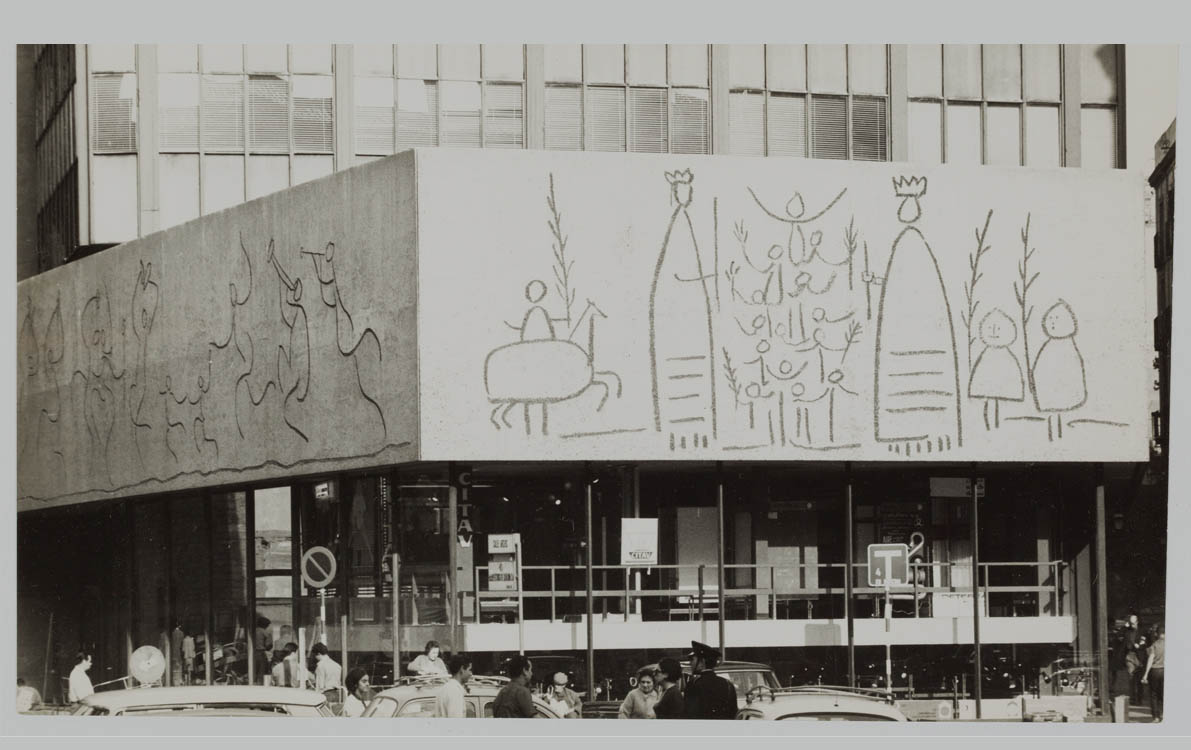
The show's emblem is a photograph by Lucien Clergue from 16 October 1968, showing the sgraffito friezes on the building of the Official College of Architects of Catalonia, made by Carl Nesjar after Picasso's drawings. A short walk from the museum, the friezes give visitors a reason to carry the exhibition out of the galleries and into the streets Picasso himself once painted.