Exhibition preview·New York
Met Pairs Lee Krasner and Jackson Pollock in First Joint Career Survey
The Metropolitan Museum of Art opens "Krasner and Pollock: Past Continuous" on October 4, the first major show to trace the full careers of Lee Krasner and Jackson Pollock side by side, with more than 120 works on view through January 31, 2027.
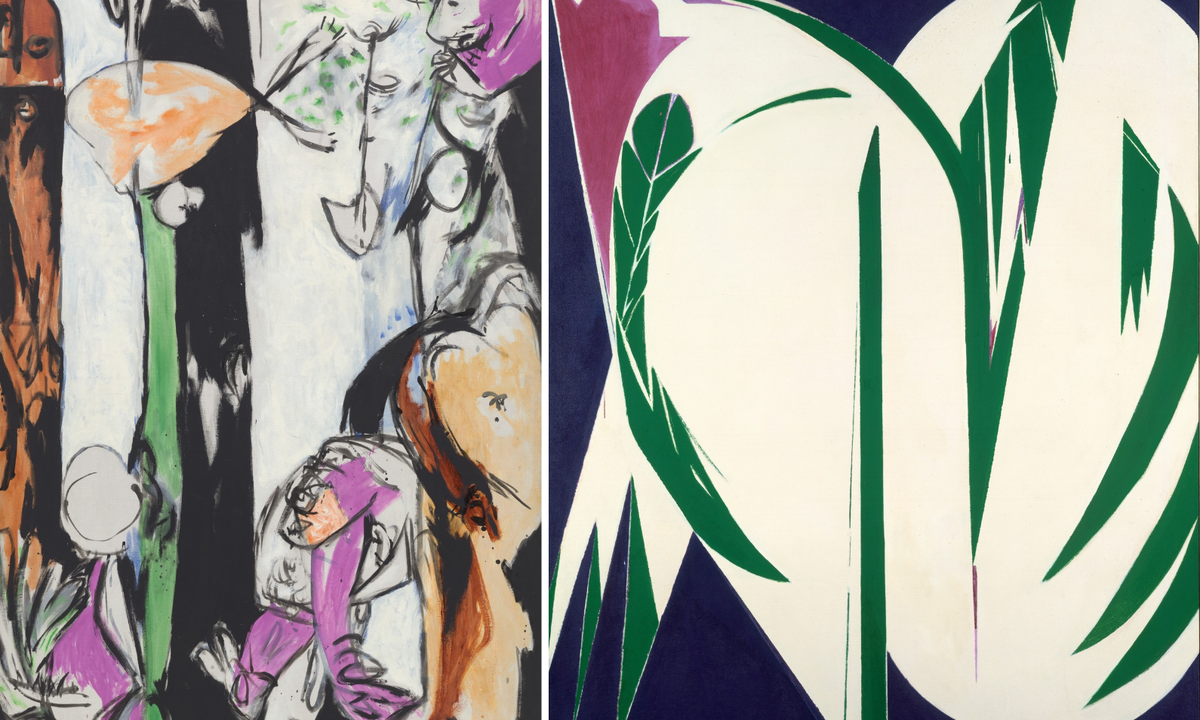
The Metropolitan Museum of Art opens "Krasner and Pollock: Past Continuous" on October 4, the museum's first major exhibition devoted to either Lee Krasner or Jackson Pollock and the first to present the full arc of both careers side by side. Spanning more than 120 paintings, works on paper and ephemera — some from private collections and rarely shown in public — the show runs through January 31, 2027 at the Met Fifth Avenue. Krasner and Pollock met in the early 1940s while preparing for the same New York group show; when Krasner saw the artist list, Pollock's was the only name she did not recognize, so she visited his studio to introduce herself. By the time the exhibition opened, they were dating. They married in 1945 and moved to Springs, Long Island, remaining entwined personally and professionally until Pollock's death in 1956. "We always knew that Krasner was a great artist who was overshadowed by her famous husband," said curator David Breslin, who organized the show with Brinda Kumar. "But if you look at her reputation in the 1930s and 40s, she was very well connected. There was a real social dynamic to her work, which helped Pollock a lot." The curators argue that exhibitions focused only on 1942–56 are unfair to Krasner: Abstract Expressionism was dominated by scale, Pollock had the whole barn as a studio while she had a smaller space, and her most productive decades came after his death, when she took over the barn herself. Pollock's famous drip paintings are installed at varying angles and incorporate reflective surfaces, with the show's centerpiece works including "Autumn Rhythm: Number 30" (1950). Kumar and Breslin hope the exhibition undoes the idea of the great artist as a solitary figure. "I hope the show undoes this idea that a great artist is a lonely person," Breslin said, emphasizing the collaborative nature of artmaking — a fitting thesis for an exhibition about two artists who shaped each other as much as they shaped American modernism.