Museum report·Oslo
Oslo Pairs a Sculpture Survey on Translation with the First Big Pushwagner Show Since His Death
Astrup Fearnley Museet in Oslo opens two exhibitions: Material Shifts, a 15-artist group show on sculpture as translation, and the first major Norwegian museum survey of Hariton Pushwagner since the artist's death in 2018.
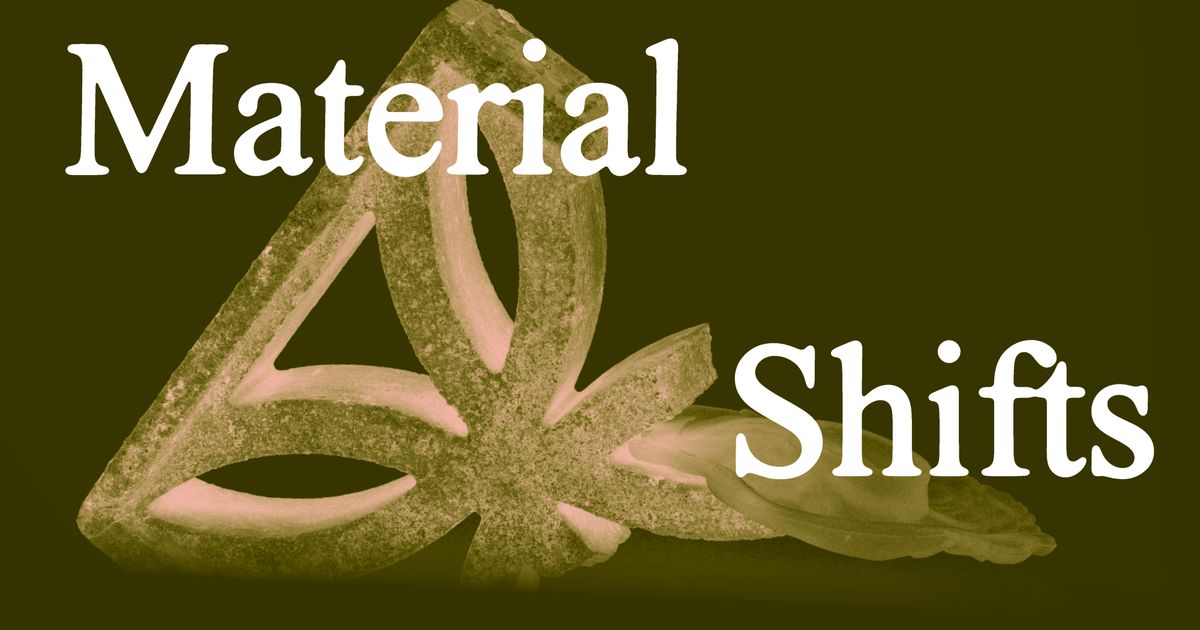
Astrup Fearnley Museet in Oslo is opening its autumn season with two exhibitions that approach sculpture and drawing from opposite directions. Material Shifts, an international group show on contemporary sculpture, opens on 13 November and runs to 28 February 2027, while a solo presentation of the Norwegian artist Hariton Pushwagner follows on 28 November, running to 11 April 2027.
Material Shifts brings together fifteen artists, among them Olga Balema, Katinka Bock, Ludovica Carbotta, Rhea Dillon, Miho Dohi, Vincent Fecteau, Ane Mette Hol, Brad Kronz, Jean-Luc Moulène, Germain Ngoma, Kaare Ruud, Stein Rønning, Diane Simpson, Dima Srouji and Mungo Thomson. Curated by Owen Martin and Steinar Sekkingstad, the show treats sculpture as an act of translation: a process of carrying something from one state into another, from mould to cast, from sketch to three-dimensional form, from an idea to a physical object.
The works span conceptually driven pieces, material explorations and installations that activate the spaces they occupy, alongside existing objects repurposed as art. For some artists in the show, translation means transformation, remaking one thing into something materially or conceptually different; for others it is a slower transition. The idea connects practices that move between media, materials, languages and ideas, from the two-dimensional to the three-dimensional and from the fleeting to the permanent.
The Pushwagner exhibition returns to the origins of an artist who built an exceptional, idiosyncratic world in drawings, paintings, prints and friezes, in which modern life and dystopian visions played out in a science-fiction language of comics. Drawing on key series from his early phases in the 1970s to the 1990s, it traces how he reused and redeveloped his own motifs across media, capturing the zeitgeist with a critical eye on the homogeneity of modern capitalist society, from crowded high-rise cities to authoritarian leaders waging remote technological warfare. Curated by Live Drønen and Solveig Øvstebø, it is the first major presentation of his work in a Norwegian museum since his death in 2018.