Exhibition preview·New York
Neon Flames on Black: Mary Lovelace O'Neal's First Posthumous Show Opens at Boesky
Requiem, the first posthumous exhibition of abstract painter Mary Lovelace O'Neal, who died in May 2026 aged 84, is on view at Boesky Gallery in New York through 19 December, showing her monumental blackened canvases marked with neon gesture.
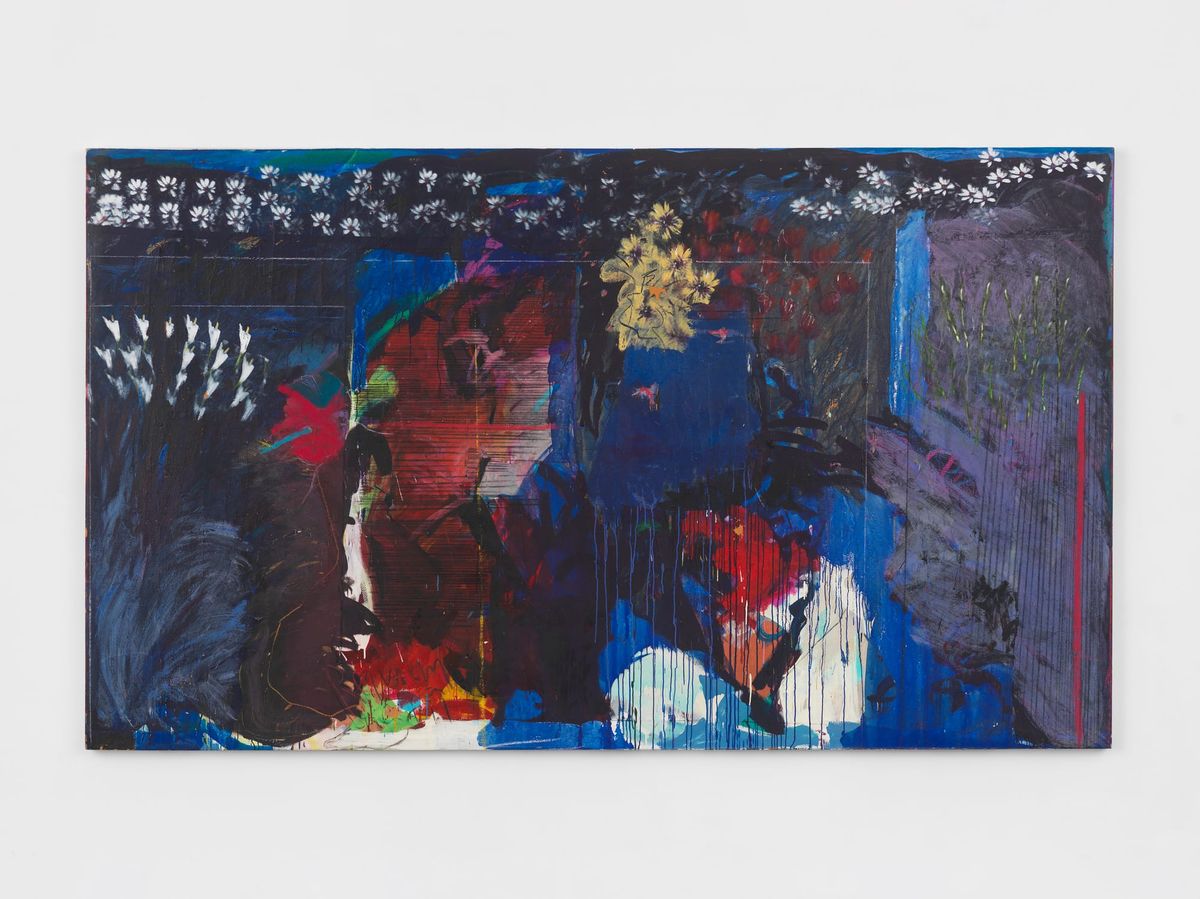
Seven months after her death, the abstract painter Mary Lovelace O'Neal is the subject of her first posthumous exhibition. Requiem, on view at Boesky Gallery in Chelsea through 19 December, gathers the monumental canvases that defined her late work: vast blackened surfaces broken by fluid, ecstatic gestures in neon paint, like the afterimage of a moving flame.
O'Neal died in May 2026, aged 84, in Merida, Mexico. Born in Jackson, Mississippi, in 1942, she grew up under Jim Crow, when Black families in her home town were admitted to museums only on certain days of the month. She went on to become the first Black woman to earn a fine art master's degree from Columbia University, in 1969, and in 1985 the first African American artist to receive tenure in the art practice department at the University of California, Berkeley, where she taught until 2006.
The exhibition's centrepiece is Requiem for a Daffodil, from 1997, a cascading composition in deep navy and black, its finger-like dark marks reaching toward floral clusters and reeds at the top of the canvas. Other works, including Race Woman Series No. 7 from 1992 to 1993, hover between abstraction and figuration, with half-formed human and animal shapes emerging from the darkness. A back room of archival material traces her life against the wider sweep of American history, from Howard University in 1960, where she studied alongside David Driskell and Lois Mailou Jones, to her activism and her friendship with Stokely Carmichael.
O'Neal worked with lampblack, the soot-derived pigment, to explore blackness as a colour, a metaphor and a lived experience, setting it against punchy neons in a way that set her apart from the Color Field, Abstract Expressionist and Minimalist movements she is often grouped with. The show, organised by the gallery, presents that achievement as a self-elegy that feels anything but mournful.