Museum report·São Paulo
São Paulo's MAM Reopens After Two-Year Renovation with Sweeping Brazilian Art Survey
São Paulo's Museu de Arte Moderna has reopened after a two-year renovation, returning to its Niemeyer-designed pavilion with the 39th Panorama of Brazilian Art, curated by Diane Lima.
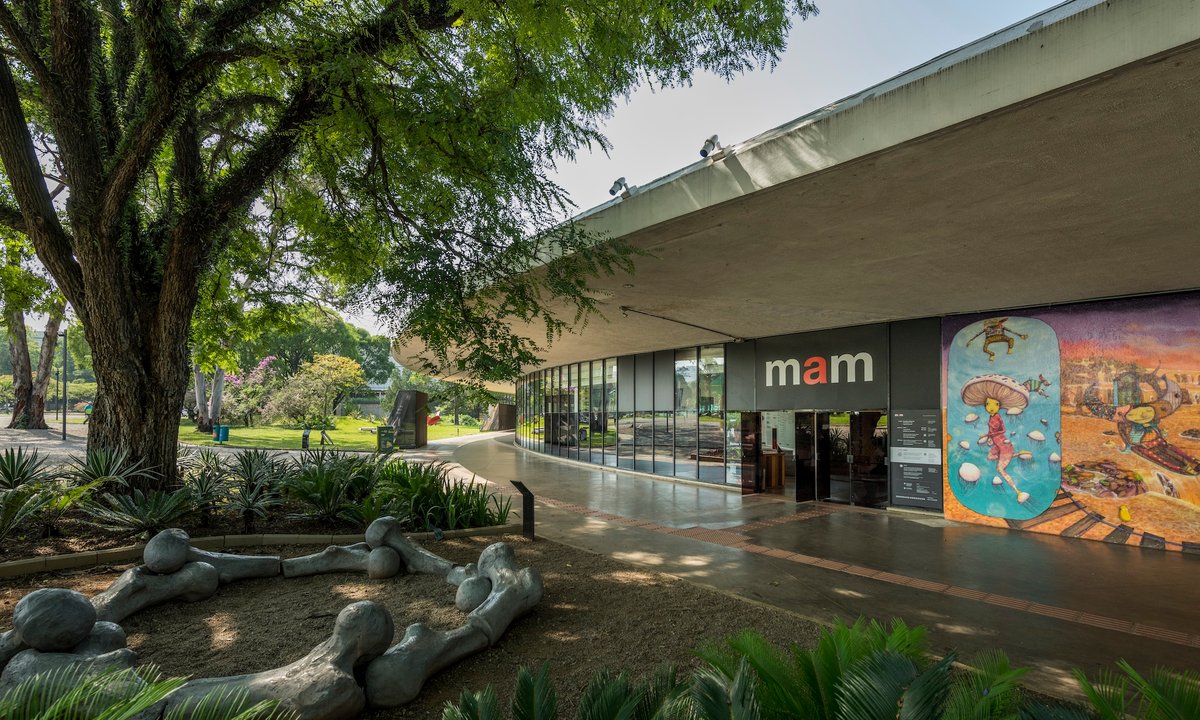
São Paulo's Museu de Arte Moderna has reopened its doors after a two-year closure for renovation, returning to its Oscar Niemeyer-designed pavilion in Ibirapuera Park on 12 September. Rather than opening with its permanent collection, the museum chose the 39th Panorama of Brazilian Art, Depois Que Tudo Foi Dito (After It's All Said), on view until 24 January 2027 — a deliberate nod to history, since the first Panorama in 1969 was staged in the very same pavilion. The Panorama, held annually until 1991 and biennially since 1993, has long functioned as a seismograph of Brazilian contemporary art. This year's edition is curated by Diane Lima, who also curated Brazil's pavilion at this year's Venice Biennale, making her one of the country's most influential curatorial voices. The show's title is borrowed from the work of Denise Ferreira da Silva, the Brazilian philosopher and visual artist known for her anti-colonial Black feminist thought. Lima says the phrase opened questions about where Brazilian art stands after decades of debate over representation — and whether some practices are now expanding representation's limits through radical imagination. The exhibition gathers 33 artists, none of whom has appeared in a previous Panorama, and its participants, Lima says, refuse to perform what is expected of Black, Indigenous and dissident artists, experimenting instead with form, materiality and representation. The museum's history runs deep. Founded in 1948 in downtown São Paulo, where it initially shared a building with the Museu de Arte de São Paulo, MAM staged the first six editions of the Bienal de São Paulo between 1951 and 1961 from its park premises. Chief curator Cauê Alves says the closure was far from dormant: the museum mounted more than a dozen exhibitions at other venues, showing more of its collection than ever before — a lesson in exhibiting beyond its walls that the reopened institution intends to keep. 'We can exhibit the collection in other venues, in other partner museums, create dialogues,' he said.