Exhibition preview·Paris
Louis Soutter's late finger paintings take over a Paris gallery
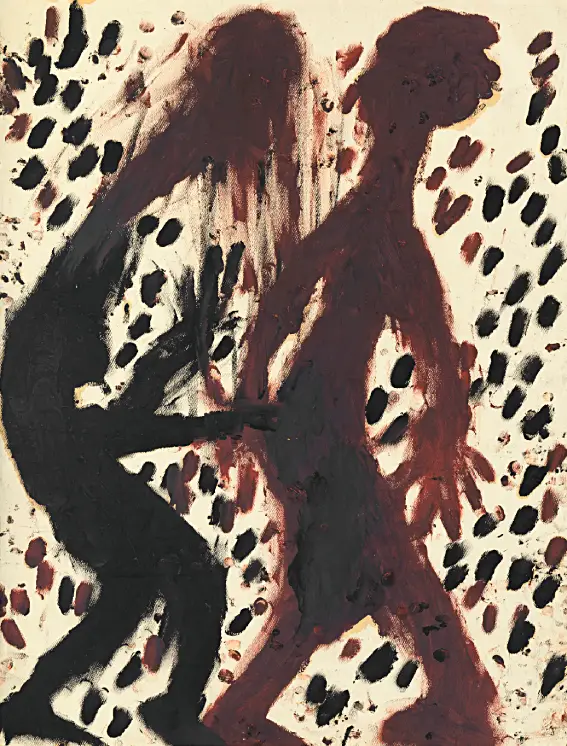
Galerie Karsten Greve opens Louis Soutter: Finger Painting, 1937–1942 in Paris on 14 November, devoted to the ink drawings the Swiss artist made with his fingertips in the last five years of his life.
Galerie Karsten Greve opens Louis Soutter: Finger Painting, 1937–1942 at its Paris space on 5 rue Debelleyme on 14 November, running to 30 January 2027. The show is devoted to the works the Swiss artist made in the last five years of his life, applying ink to paper with his fingertips instead of a brush.
Soutter was born in Morges in 1871 and trained widely — in art, architecture and music, studying the violin in Brussels under Eugène Ysaÿe — before moving to the United States, where he taught drawing and led the fine arts department at Colorado College. After his marriage ended in 1903 he returned to Switzerland, and in 1923, aged 52, his family placed him in the hospice at Ballaigues, where he lived until his death in 1942.
It was there, in seclusion, that his drawing became most radical. From 1937 he worked with his fingers, building figures from restless lines and pools of black ink, sometimes broken by flashes of colour. Dancers, processions, biblical figures and scenes from classical myth emerge from the darkness — images that feel at once ancient and immediate, as if drawn from a private theatre.
During his lifetime his work drew the attention of the writer Jean Giono and the Vallotton brothers, and his cousin Le Corbusier wrote about him in Minotaure in 1936. After his death his drawings came to be seen as a forerunner of Art Brut and an influence on Jean Dubuffet, though their sophistication resists any simple label. Today they are held by the Kunstmuseum Basel, the Kunsthaus Zürich, the Centre Pompidou and the Museum of Modern Art in New York. The Paris exhibition is accompanied by a catalogue with texts by Julie Borgeaud and Peter Sloterdijk.