Exhibition preview·Kaohsiung
Five Decades of Light and Colour: Lai Chun-Chun's Free-Form Retrospective Opens in Kaohsiung
Taiwanese artist Lai Chun-Chun's retrospective Dancing with Light is on view at the Soka Art Museum in Kaohsiung, tracing more than 50 years of her practice from 1970s painting to large-scale public art, organised around her idea of a freely generative aesthetic.
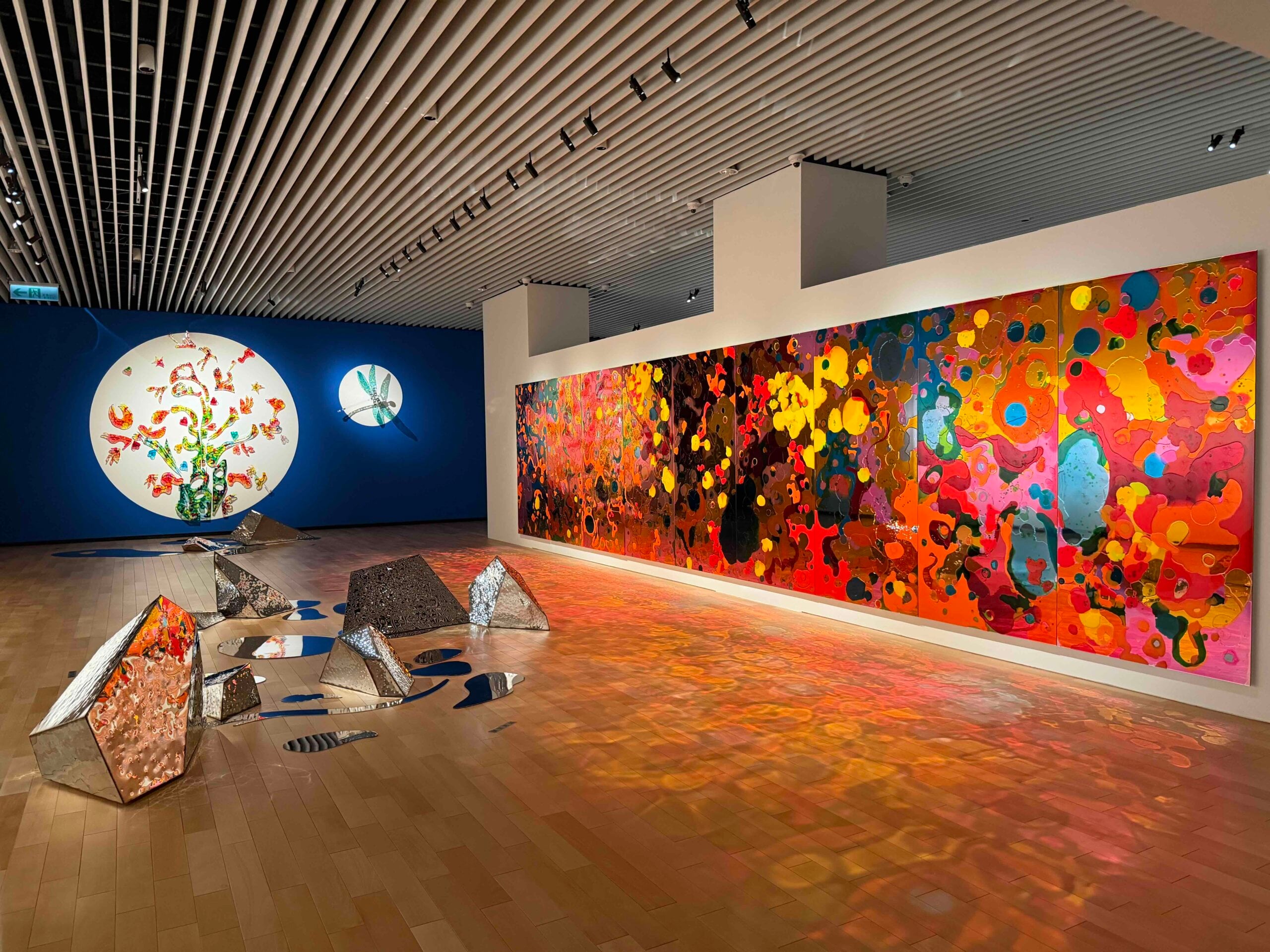
The Soka Art Museum in Kaohsiung is presenting a retrospective of Lai Chun-Chun, one of Taiwan's best-known artists, spanning more than half a century of her work. The exhibition, titled Dancing with Light, brings together major pieces from the 1970s to the present, alongside models of her public artworks and a timeline of her career, across two floors of the museum and an outdoor space on the sixth floor.
Rather than arranging the work in chronological order, the show begins with Lai's most recent pieces. The ground floor concentrates on what she has made since 2000, while the floor above traces how her practice moved from flat painting into three dimensions, installation and public art, before the display extends outdoors. The structure reflects the artist's own account of her development: a slow accumulation of ideas over four or five decades, recently gathered into a single outlook she calls a freely generative aesthetic.
That outlook is given its fullest expression in the Wonder Flower series, versions of which appeared at the Osaka Expo and the Taipei Fine Arts Museum in 2025. At Kaohsiung it takes the form of Strange Garden Soka, an installation built from three elements, Sky Flower, Flower of Life and Prototype Earth, which carry the series' imagery of blooming forms into the museum's galleries.
The museum's relationship with the artist goes back to 2019, when it hosted her exhibition Absolute Light at its Yancheng art centre. This new show, which the organisers describe as a homecoming of sorts for her work in southern Taiwan, presents the full arc of a career that has moved steadily from the studio into shared civic space, insisting that art belongs in everyday life rather than only on gallery walls.