Profile·Global
Cages, animals and bodies: a photobook asks when restraint is shelter, and when it is coercion
ArtReview reviews Kristina Rozhkova's photobook Gut Feeling, published by Void at 50 euros. By sequencing images of animals and people being held, fed, bred and restrained, the book argues that a gesture of control only gains meaning from its context, consent and power.
Kristina Rozhkova's photobook opens with images that are hard to look away from: a man gripping a goose, hands pulling back a dog's lips, live rats in a glass jar, and fish organs spread across a table. Elsewhere a chain tightens around a man's neck, and people suck the toes of other people. Presented side by side, scenes of feeding, breeding, injury and restraint begin to blur the line that is supposed to separate human behaviour from animal instinct.
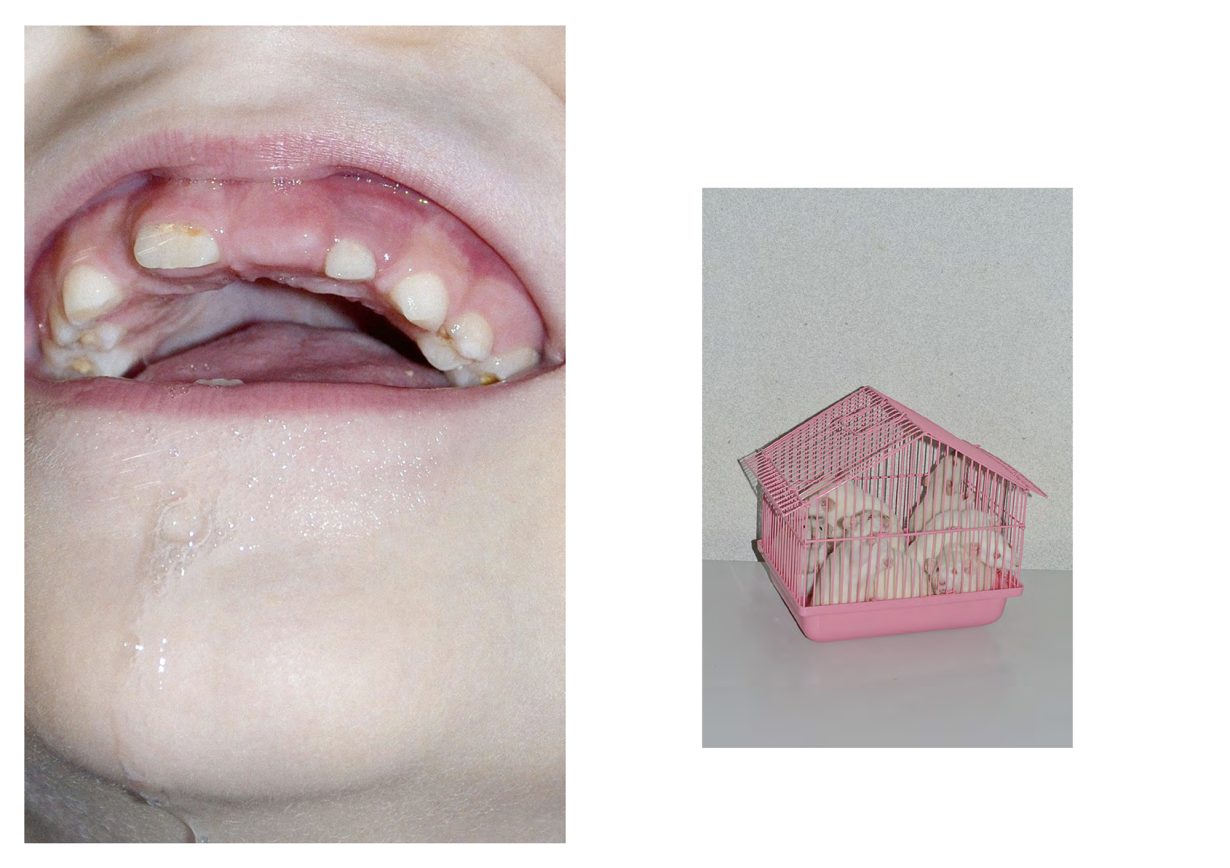
The sequencing does much of the argument. A child's mouth, with new teeth pushing through pink gums, faces white rodents in a pink metal cage. Breastfeeding appears beside calves at udders and industrial milking equipment. Cages, ropes, traps and harnesses recur throughout, but their meaning keeps shifting: one body may be held against its will, while another may be taking part in consensual play. The same object can therefore read as a prison in one picture and as a refuge in the next.
That ambiguity is personal for the photographer. In a short text at the back of the book, Rozhkova recalls growing up around dogs bred by her mother and loving to sit inside a dog crate, which felt like a small house of her own. The distinction became more fraught in 2024, when she was detained after a semi-nude photoshoot at a cemetery in St Petersburg and charged with desecrating burial sites. She spent two months in detention before being transferred to house arrest, an experience that gives the book's interest in confinement a sharper edge.
The review argues that Gut Feeling is strongest when it refuses to settle the question for the viewer. Violence and control, it suggests, cannot always be read from a gesture alone; they depend on who holds power, whether consent is present, and what choices remain open. At 50 euros in hardcover from Void, the compact volume turns a set of stark photographs into a sustained question about how bodies, human and otherwise, are managed, displayed and cared for.


