Museum report·Bentonville
Kiowa-Tongan Curator Jordan Poorman Cocker Puts Living Native Artists at the Centre of Crystal Bridges
Jordan Poorman Cocker, Crystal Bridges' first full-time curator of Indigenous art, has led a reinstallation of contemporary Native art at the Bentonville museum, arguing that Indigenous work underpins American art collections yet still makes up only 3 per cent of its own holdings.
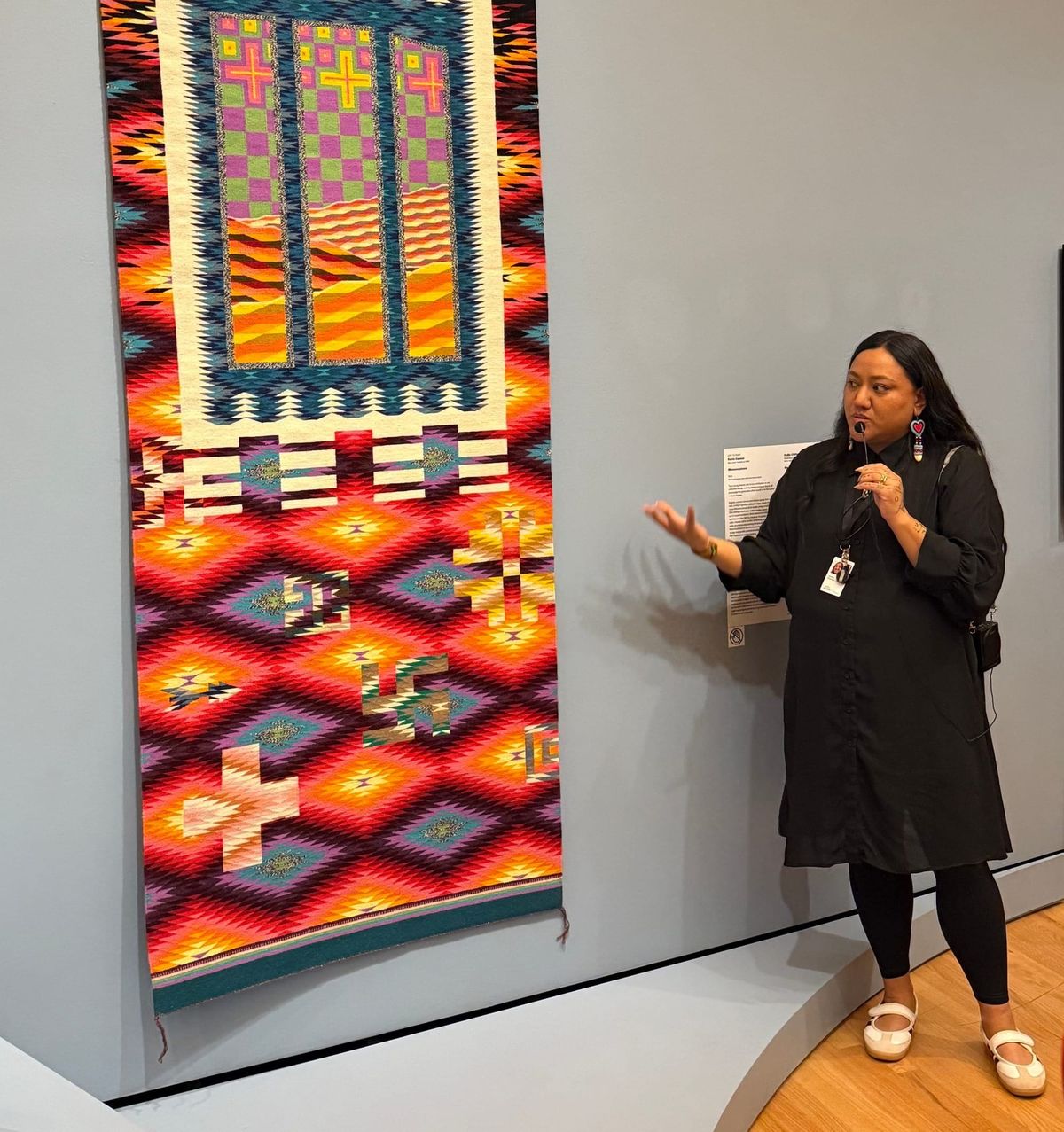
Jordan Poorman Cocker, the first full-time curator of Indigenous art at the Crystal Bridges Museum of American Art, is using a major rehang to put living Native artists at the centre of the institution. A Kiowa and Tongan citizen, she joined the Bentonville museum in 2023 as its Native American Graves Protection and Repatriation Act officer, and has since led a reinstallation of contemporary Native art alongside Ashley Holland of the Cherokee Nation.
The rehang was the focus of a two-day symposium on contemporary Native art held at the museum on 16 and 17 October, which Poorman Cocker opened with a land acknowledgment. Crystal Bridges stands on the ancestral homelands of the Osage, Quapaw and Caddo nations, peoples forcibly relocated in the 19th century. Choctaw and Cherokee artist Jeffrey Gibson gave the keynote, Dine weaver Melissa Cody traced the lineage of her work in conversation with her mother Lola Cody, and Lehuauakea led a workshop in kapa, the traditional Hawaiian barkcloth practice.
Poorman Cocker, who drives an hour and a half from Tahlequah, Oklahoma, to reach the museum, says the rehang aims to recentre two areas: the Indigenous art collection and the craft collection. She argues that Native and Indigenous art underpins every American art collection, yet makes up only 3 per cent of Crystal Bridges' permanent holdings, and that museums still have far to go in presenting Indigenous artists and their stories.
Her outlook is shaped by study in museum practice at Victoria University of Wellington in New Zealand and by an idea of global Indigeneity that refuses the borders drawn by colonial states. She cites the 2019 exhibition Hearts of Our People: Native Women Artists at the Minneapolis Institute of Art as a touchstone. A beadwork and textile artist herself, working in Kiowa and Tongan traditions, she has used acquisition proposals and commissions to support artists, apprenticeships and community teaching, and says the museum's 114,000-square-foot expansion gives it more room to sustain that work.