Exhibition preview·Global
Izumi Kato's dreamlike figures swim between painting and sculpture at Perrotin
Tokyo- and Hong Kong-based artist Izumi Kato has opened a new solo exhibition at Perrotin where two- and three-dimensional works converge, with floating stones, morphing bodies and totem-like figures drawn from his long-running hitogata motif.
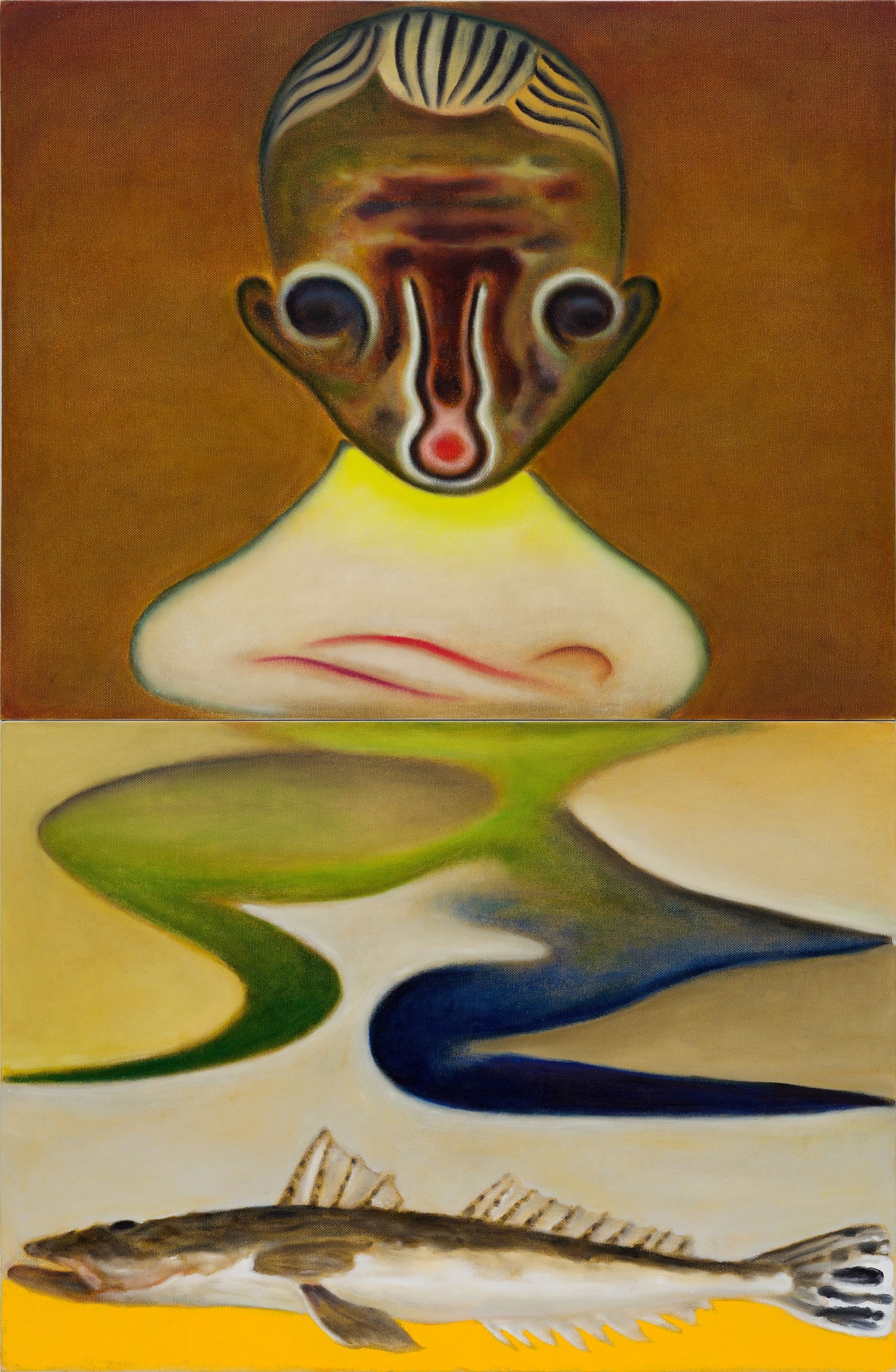
The Tokyo- and Hong Kong-based artist Izumi Kato has opened a new solo exhibition at Perrotin in which painting and sculpture converge in a dreamlike grouping. Stones appear to float, bodies disappear into water, and feet become fish tails, as time slips and space is flattened, divided and stretched at once.
Kato's practice has grown from painting to include wood forms, soft vinyl sculptures and cast metal, all handled with the same almost alchemical approach he brings to canvas. He paints his small wooden figures the way he paints a flat surface, and his stones are in fact lightweight cast aluminium, sometimes suspended from the ceiling in a play on perception.
At the heart of the show is the motif Kato has pursued for years: the hitogata, literally meaning dolls in Japanese. These humanoid figures often rise from totem-like stacks of canvases that recall the surrealist exquisite corpse game. Their eyes swirl like small pools, and their noses and mouths merge uncannily into nebulous forms around the forehead or the mind.
Sometimes limbs or torsos transmogrify into amphibious legs or the refractions of light in water. The figures' enigmatic features and vacant stares seem to transcend time, as though they might be visitors from the future or survivals from an ancient past. It is this ambiguity, between the familiar and the strange, that has made Kato's world so distinctive.
Kato's figures have travelled widely, appearing in exhibitions and public projects in Japan and beyond, and his move between painting and sculpture has become a signature. By treating a wooden carving and a canvas with the same hand, he dissolves the boundary between the two, so that the exhibition feels less like a display of separate works than a single inhabited world.