Profile·London
Ibraaz revives its Platform series to ask what 'Global Majority' really means
Ibraaz Publishing is relaunching its Platform series after a nine-year pause, with Platform 011 taking the term 'Global Majority' as its central question and gathering artists, writers and thinkers from different geopolitical contexts over the next nine to twelve months.
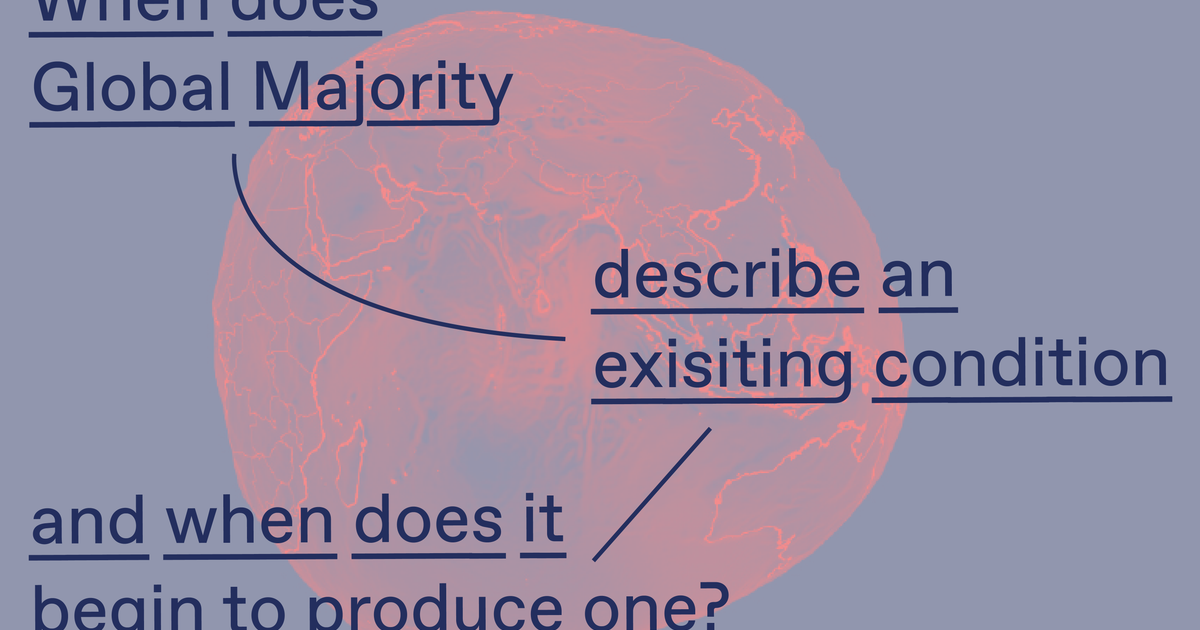
Ibraaz Publishing is bringing back its Platform series, the publishing project it ran between 2011 and 2017, with a new edition that takes the phrase 'Global Majority' as its starting point. Platform 011 launched this month from Ibraaz's London base, and it will unfold over the coming nine to twelve months through essays, conversations, visual and sonic work, fiction, poetry and moving image.
The series previously produced ten platforms, each gathering responses to a question about art and its wider political contexts. The new edition asks a single framing question: when does the term 'Global Majority' describe a condition that already exists, and when does it begin to produce one? Contributors working in different geopolitical contexts and disciplines have been invited to test what the idea can and cannot do, and to examine the part played by art, language, organisational structures, political affiliations, developing technologies, archival research and publishing in imagining new forms of transnational solidarity and planetary belonging.
The launch brings together a wide roster of contributors, including photographer and activist Shahidul Alam, writers Louisa Yousfi, Gargi Bhattacharyya and Omar El Akkad, geographer Kathryn Yusoff, artist and researcher Maya Indira Ganesh, artist Nadim Choufi, philosopher Djamila Ribeiro, and artists Amanda Tropicana, Najlaa Eltom, Mayada Ibrahim, MK Harb, DJ Diaki and Su Yu Hsin, among others. More contributors are expected to join as the platform develops.
The relaunch comes at a moment when the language of the Global Majority is used widely across cultural institutions, often without much precision about what it claims. By returning to the open, question-led format of its earlier platforms, Ibraaz is treating the term itself as something to be examined rather than assumed, and giving artists and thinkers an extended space in which to argue over where it helps and where it misleads.